

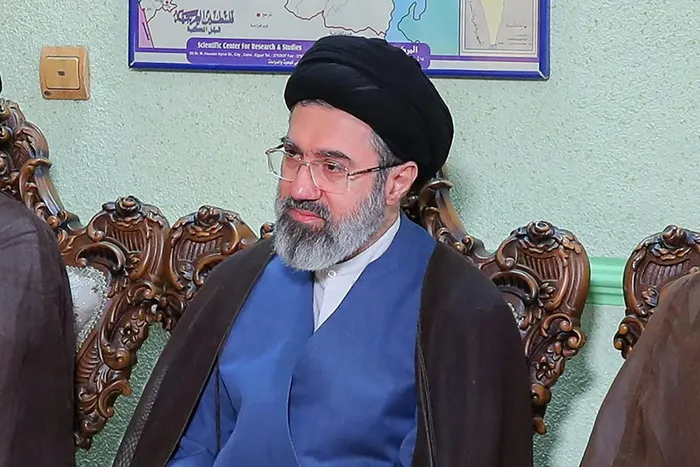
This handout picture taken in Tehran on October 30, 2024, and provided by the office of Iran's supreme leader, shows Mojtaba Khamenei, the son of Iran’s slain supreme leader Ayatollah Ali Khamenei, who was killed on February 28, 2026 in a US-Israeli military strike. Iran's Assembly of Experts announced Mojtaba Khamenei, the son of the slain Ayatollah Ali Khamenei, as the country's new supreme leader on March 8, 2026.
Image: - / Khamenei.IR / AFP
Seyyed Mojtaba Khamenei has been elected as the new Supreme Leader of the Islamic Republic of Iran.
The decision follows the assassination of his father, Ayatollah Ali Khamenei, in a United States–Israeli strike, bringing to an end nearly four decades of leadership after he succeeded the founder of the Islamic Republic, Ayatollah Ruhollah Khomeini, in 1989. The vote by Iran’s clerical establishment marks a decisive moment in the political and religious history of the Islamic Republic and signals the continuation of the revolutionary system established in 1979.
The decision was taken by Iran’s Assembly of Experts, an 88-member clerical body responsible under the Iranian constitution for selecting and supervising the Supreme Leader. The assembly convened following the vacancy created by his death and voted to appoint Mojtaba Khamenei as the third Supreme Leader of the Islamic Republic.
Within Iran, senior clerics and commanders of the country’s revolutionary institutions have described the swift transition as evidence of institutional continuity and national resolve during a period of heightened regional tension.
The leadership transition occurs during a period of escalating confrontation involving Israel, the United States and Iran’s regional allies. The new Supreme Leader therefore assumes office in the midst of conflict, economic strain and a volatile geopolitical environment that will test the resilience of the Islamic Republic’s institutions.
Mojtaba Khamenei, born in 1969 in Mashhad, has spent decades within the religious and political networks of the Islamic Republic. Educated in the seminaries of Qom, the centre of Shiite theological scholarship in Iran, he studied under senior clerics and developed a reputation within the Hawza system for disciplined religious scholarship.
He belongs to the generation shaped by the Iran–Iraq War (1980–1988), the conflict that profoundly influenced the political outlook of the revolutionary state. During that period he joined the Islamic Revolutionary Guard Corps (IRGC) and participated in the mobilisation that defended the Islamic Republic during the war. The experience forged strong ties with the revolutionary institutions that continue to anchor Iran’s political and security structure.
Over the years Mojtaba Khamenei became closely associated with the office of the Supreme Leader and developed relationships with influential clerics and senior figures within the IRGC. Although he did not seek elected office, he was widely regarded within Iran as an influential figure within the religious establishment and the networks of governance surrounding the state.
The appointment has drawn significant attention internationally because it represents the first time leadership of the Islamic Republic has passed from father to son. Iran’s revolutionary system emerged from the overthrow of the Shah in 1979 and was founded in explicit rejection of hereditary monarchy.
Criticism has come primarily from Israel and segments of the Western press, where commentators have portrayed the transition as evidence of dynastic politics. Supporters of the decision argue that this interpretation ignores the constitutional process through which the selection was made. The authority to appoint the Supreme Leader rests solely with the Assembly of Experts, not with family lineage.
The geopolitical context surrounding the succession has further intensified international scrutiny. Israel and several Western governments have criticised the outcome, while Iran’s regional partners have expressed support and called for unity in the face of rising tensions.
Within Iran, religious authorities and state institutions have urged stability and cohesion as the country confronts ongoing military pressure and economic challenges. Senior clerics and officials have publicly pledged allegiance to the new Supreme Leader, signalling a determination to preserve continuity in the leadership of the Islamic Republic.
The Supreme Leader is the most powerful political authority in the Islamic Republic. The position holds ultimate oversight over Iran’s armed forces, judiciary, state broadcasting system and major strategic decisions, including foreign policy and nuclear policy.
While the president manages day-to-day governance, the Supreme Leader functions as the final authority on the ideological direction of the state and on questions of national security.
Under the constitution, the Assembly of Experts retains the theoretical authority to remove the leader should he no longer meet the required religious or political qualifications. In practice, however, such a step has never occurred in the history of the Islamic Republic.
The election of Ayatollah Mojtaba Khamenei marks the beginning of a new phase in the political life of the Islamic Republic. Supported by Iran’s clerical institutions and by the structures that sustain the revolutionary state, the new Supreme Leader assumes authority during one of the most consequential periods in the country’s modern history.
For many supporters of the Islamic Republic, the transition represents a reaffirmation of the revolutionary system established in 1979. The leadership of Ayatollah Mojtaba Khamenei therefore opens a new chapter in which the institutions created by the revolution continue to guide Iran’s political trajectory while confronting the strategic pressures shaping the region and the wider international order.
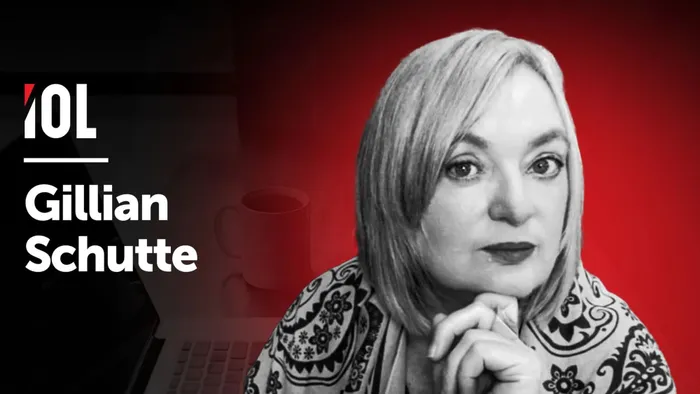
Seyyed Mojtaba Khamenei has been elected as the new Supreme Leader of the Islamic Republic of Iran, following the assassination of his father, Ayatollah Ali Khamenei. This pivotal moment not only marks a significant transition in Iran's leadership but also raises questions about the future of the Islamic Republic amid escalating regional tensions.
Image: IOL
* Gillian Schutte is a South African writer, filmmaker, poet, and uncompromising social justice activist. Founder of Media for Justice and co-owner of handHeld Films, she is recognised for hard-hitting documentaries and incisive opinion pieces that dismantle whiteness, neoliberal capitalism, and imperial power.
** The views expressed do not necessarily reflect the views of IOL or Independent Media.