

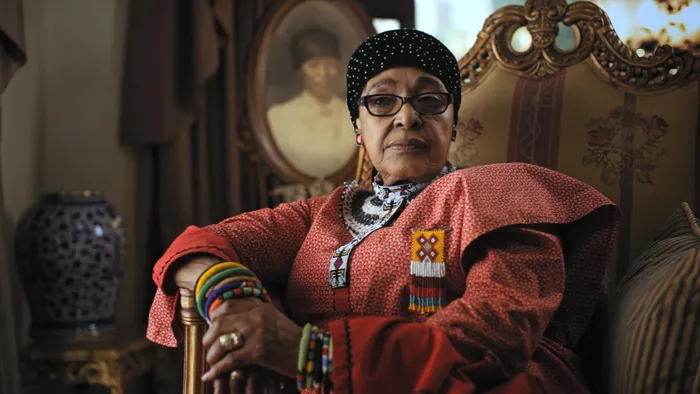
Dr Mathews Phosa's Reflections on Winnie Mandela, Her Legacy, and Netflix's 'The Trials of Winnie Mandela'.
Image: Supplied
Watching Netflix's 'The Trials of Winnie Mandela' has brought back a cascade of memories—some joyful, some painful, all deeply personal. As someone who stood beside Mama Winnie in her darkest hours, who witnessed her strength when others abandoned her, I feel compelled to share what the cameras cannot fully capture: the woman I knew. Not the icon that history has made her, not the caricature that media outlets have painted, but Mama Winnie—a real person of extraordinary contradictions, fierce love, and unwavering commitment to our people.
The Netflix series does important work in ensuring her story is told, particularly in Africa where her struggle remains a living memory. The producers and directors of this documentary have shown great skill and sensitivity in navigating the complexity of her life. What is most powerful about their work is that they allow Winnie to speak for herself, in her own words, in her most vulnerable moments. They do not shy away from her pain, her loneliness, her struggles. This is not a sanitized version of her life. It is the real woman—fighting, suffering, enduring, and never giving up. That takes courage from filmmakers, and they have delivered it with integrity.
The documentary captures something essential: Winnie's own testimony. Her voice. Her truth as she understood it. But there are moments, intimate moments that cameras cannot capture, that only those who stood beside her day after day can speak to. There are dimensions to knowing someone—the way she laughed in private, the depth of her love for those close to her, the weight of her loneliness—that no film, however brilliant, can fully convey. In what follows, I want to speak to those moments, to deepen and expand on what the film so powerfully presents. Together, the documentary and this testimony offer a complete portrait of a woman who was both extraordinary and deeply human.
My relationship with Winnie Mandela was unusual. I encountered her first in absence, not presence. I remember walking into a house in Orlando East, selling encyclopedias as a young man, and discovering it was Nelson Mandela's home. But she was not there. She could not be there. She had been banished to Brandfort, exiled from her own family by a government terrified of her influence.
Yet even in her absence, she inspired us. Like Mandela inspired us from Robben Island, Winnie inspired us from the isolated township where they had thrown her. This speaks to something fundamental about who she was: her power did not come from proximity to crowds or access to platforms. It came from within. It came from her absolute commitment to freedom.
When we finally met—when I was tasked with delivering messages to her from comrades in exile—she looked at me with a warmth that told me I was not just a courier. I was family. She asked how I was. She cared. And she would continue to care throughout her life, even as so many others turned away.
The Netflix series, like much commentary on Winnie's life, struggles with her duality. How could the same woman be both the fierce warrior and the loving mother? How could she be the inspiration of the people and yet controversial within her own movement? The answer is simple: she was human. She was real. The brilliance of the documentary is that it does not try to solve this contradiction. Instead, it presents both sides with honesty, allowing viewers to see how these two versions of Winnie existed simultaneously, sometimes in conflict, but always authentic.
I knew Mama as a mother par excellence. When I lay in hospital after a near-fatal car accident, she came. Not out of protocol. She came because she loved. She sat on my bed and asked me difficult questions about who wanted me dead, why another driver had taken my car. She was protective. She was concerned. She made jokes with her grandchildren, never raising her voice in anger, always laughing, always loving.
And yet this same woman would stand in stadiums and make statements that shocked even her allies. When Tutu and the ANC called for an end to necklacing, to the violence consuming our townships, she came forward and spoke of liberation by any means. Some heard a warrior's cry. Others heard irresponsibility. The truth, I believe, is that she was reading the nation's pain and speaking to it in the only language rage understands: defiance.
This is what made her dangerous to those who wanted to control the narrative of our liberation. She was unpredictable. She was not a diplomat. She was a soldier, a fighter who would not be managed or manipulated. And this is also what made her invaluable to our struggle.
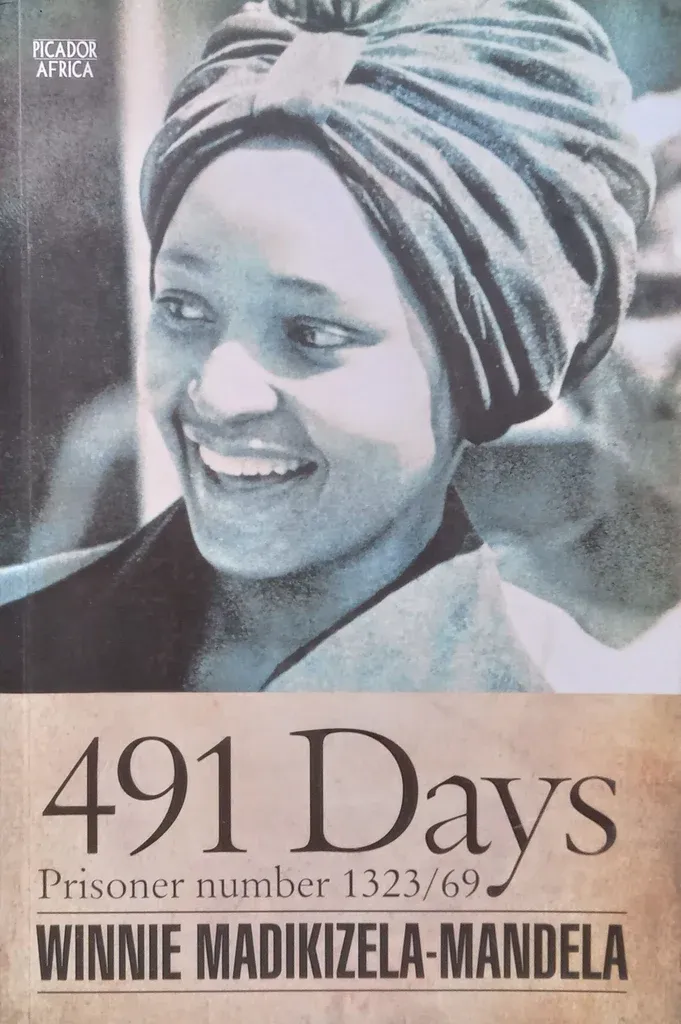
In '491 Days: Prisoner Number 1323/69', Winnie Madikizela-Mandela recounts her experiences while detained without trial by the apartheid government.
Image: Supplied
Netflix's 'The Trials of Winnie Mandela' cannot avoid the Stompie Seipei case. Nor should it. This is the shadow that haunted her, the albatross that was hung around her neck. The documentary treats this case with the seriousness it deserves, presenting the evidence, the testimonies, and the uncertainty that surrounded this tragedy. But I want to speak plainly about what I know as a lawyer and as someone who stood with her through the courts.
Did Winnie Mandela kill Stompie Seipei? No. I am confident in saying this. Could she have been involved in his death? The evidence suggests otherwise. What was she guilty of? Being associated with people and events in a chaotic, violent moment. Being in the middle of a struggle where dark things happened. Being a target of a government propaganda machine that was expert at making insinuation sound like evidence.
We as lawyers understood a principle: innocent until proven guilty. Yet within her own party, within the ANC that she had fought for, many were prepared to convict her in the court of public opinion before the evidence was even heard. We stood by her because the principle of justice demanded it. Mandela stood by her. I stood by her. And history should record that we were right to do so.
What the film shows and what the trials revealed is not a simple narrative of guilt or innocence. It is a complex picture of a woman caught in forces beyond her control, operating in a context of state violence and revolutionary struggle. That complexity is harder to film, but it is the truth.
What I witnessed, which Netflix cannot fully show, is the isolation that descended upon her. Members of the ANC, people who owed everything to her courage, began to distance themselves. They wanted to ostracize her. They wanted her gone. The party she had held together while in exile, the party she had represented while her husband was in prison, was turning on her.
This is where Oliver Tambo's wisdom became clear. From exile, he made a decision: we will not throw away a comrade. We will bring her into the center of the movement, not cast her to the margins. It was this decision that saved her. It was this understanding of loyalty and family that kept the ANC together.
When I later bought her a car as treasurer of the ANC—a simple BMW—I did so because she had been treated so shamefully. She did not have basic dignity in her own country, in her own party. She wept. She told me it was the first time anyone had truly respected her, the first time she felt acknowledged for what she had done. That broke my heart. That a woman who had sacrificed everything would weep at the simple gesture of respect.
Perhaps the most private and most important relationship in her life was with Nelson. The Netflix documentary captures the separation, the public pain of it, the difficulty. What is remarkable is that the film allows both of them to speak their truth—the complexity of their love and the political circumstances that tore at it. But there are aspects of their relationship that only those closest to them could witness, moments of private tenderness and unspoken understanding that reveal the depth of their bond.
I was there when Mandela called me to tell me he was separating from her. I stood behind him at the press conference. He asked me and Peter Mokaba to do something extraordinary: ensure that she never left the ANC, that her marriage to Mandela would not take her from the movement she had served so faithfully.
After that press conference, I brought him home to her. And she opened her arms to him—the same arms she would open until the moment he died. She related to him as his wife until his last breath. When he married Graça, Winnie made jokes about it, but she was never angry, never bitter. She remained his wife in every way that mattered to her.
This is the love story that history should remember: not a marriage that ended on paper, but a commitment that endured beyond separation, beyond politics, beyond even the boundaries society tried to impose. That is Winnie.
Beyond South Africa, Winnie was beloved across the continent. I traveled with her to inaugurations, to state functions, to moments of continental significance. She would walk into a room and light would literally shine. Presidents deferred to her. Military leaders like Gaddafi saw in her a kindred spirit—not in violence, but in her refusal to be broken by enemies.
She was a queen without ever needing a crown. She dressed beautifully, moved with dignity, carried herself with the bearing of someone who had been tested by fire and come out pure gold. I used to tell her she would make a beautiful corpse, and she would laugh with that naughty laughter that irritated the powerful but delighted those who loved her.
There is a moment in history when a nation shows its true self, and that moment came at Mama Winnie's funeral. Here was a woman who had been profoundly divisive throughout her political life. There were those in the ANC who despised her. There were those in civil society who questioned her methods. There were those internationally who debated her legacy. And yet, when she died, something extraordinary happened.
I stood on that stage and witnessed people from across the entire political spectrum coming together to mourn her, to celebrate her, to acknowledge what she had meant to our struggle. The EFF was there, with Julius Malema speaking with raw honesty about a woman he saw as a hero. The ANC was there, many of them the same people who had worked to isolate her during her life. The youth was there. The poor was there. People from the far left, from the centre, from the far right—all came to honour her memory.
This was not a simple moment. There was tension. There was contestation about who had truly stood by her, who had truly loved her, who had truly understood her. But beneath all of that tension, there was something pure: a recognition that Winnie Mandela had been exceptional. That she had mattered. That despite—or perhaps because of—her divisiveness, she had held up a mirror to South Africa's conscience.
What struck me most profoundly was that it took her death for this unity to emerge. While she lived, she continued to challenge, to provoke, to ask uncomfortable questions. She would not allow complacency. She would not accept mediocrity. And so many people found that unbearable. But when she died, that same uncompromising spirit was recognized as the greatest gift she had given our nation: the gift of refusing to accept less than what our people deserved.
Her funeral proved something I have always known: that Winnie was never really divisive in a way that was personal. She was divisive about principles. She divided people who wanted to settle from people who wanted to keep fighting for our people's dignity. She divided those who were satisfied with slow progress from those who demanded transformation now. She divided the comfortable from those who could not be comfortable while others suffered. And in that funeral moment, our nation recognized that this was not a weakness. It was her greatest strength.
The Netflix series captures much about her later years—her struggles with health, her continued grace and dignity, her refusal to be diminished by age or illness. The documentary allows viewers to see her vulnerability in ways that powerful political figures rarely permit. But there are moments of intimacy, conversations held in quiet homes away from cameras, that reveal dimensions of her character that cannot be filmed because they exist in the space between people who love each other.
I remember going to see her at home, and instead of asking me about my health, she asked me about mine. I was a younger man dealing with diabetes, and she counseled me: take a grape when your sugar is low. It will keep you going. That was Winnie. Always thinking of others. Always the mother.
And at the end of her life, she found a kind of peace. She reconciled with Roelof Frederik Botha, commonly known as "Pik" Botha, South Africa's long-serving Foreign Minister during the apartheid years—the man she had once called an enemy. She mellowed into love and forgiveness. She did not die with hate in her heart. She died in pain, yes, but not in bitterness. That is a remarkable thing to achieve after a life like hers.
What did Winnie Mandela want as her legacy? A free South Africa where discrimination had no place. A society where the sick were cared for, where the poor were lifted up, where women and children were respected. She wanted a nation that loved its people—not in rhetoric, but in action.
Her legacy is a rebuke to all of us in leadership today. She asks us: Do you love the people who voted for you? Do you care for them? Do you wake up each morning thinking about how to improve their lives? For most of us, the answer is no. And that is our shame.
Winnie was not afraid to talk truth to power. She would tell our current leaders exactly what she told me: you are traitors to the people. You have moved away from the foundations of Mandela and Luthuli. You have forgotten what this struggle was for. And she would say it loudly, not caring if people liked her for it.
This is why she had to be ostracised. This is why the powerful needed to diminish her. She was too dangerous. She would not stay silent. She would not be managed. She represented the conscience of the nation, and conscience is an inconvenient thing.
As 'The Trials of Winnie Mandela' makes its way across Africa on Netflix, I hope viewers will watch it with open hearts. The power of this documentary lies not just in what the filmmakers show, but in allowing Winnie to speak for herself—in her own voice, in her own words, in her most vulnerable moments. This is her testimony. Listen to it. Yes, she was controversial. Yes, there were questions around her. But the broader truth is this: she was a woman of extraordinary courage who sacrificed her peace, her safety, her happiness for a cause larger than herself.
She was beaten by security police and came out stronger. She was isolated and came out more committed. She was ostracised by her own party and never abandoned her principles. She lived in pain at the end, but died with humour still on her lips and love still in her heart.
The trials she faced—the legal trials, the trials of conscience, the trials of leadership—made her not smaller, but larger. She grew into her role as Mother of the Nation not through government title or official position, but through the authenticity of her love for the people.
Today, we ask: where are the leaders like Winnie? Where are the women with her courage? Where are the people who will put the nation before themselves, the poor before the powerful, truth before popularity? We are missing a generation of such leaders. And our country is paying the price.
Mama Winnie is gone, but her legacy remains. Every time a young woman stands up for justice, every time someone speaks truth to power, every time the voiceless are heard, Winnie is there. Every time a leader actually loves their people, Winnie is there.
I was privileged to know her not as the icon, but as the woman. I loved her as a mother, respected her as a leader, and learned from her as a human being. The Netflix film will tell part of her story. But those of us who stood beside her carry the rest of it in our hearts.
Watch the film. Understand the trials. But know this: the real Winnie was bigger than any trial, any controversy, any single moment. She was, and is, the embodiment of what it means to love your people more than you love your own comfort. That is a lesson our continent desperately needs to learn.
Rest well, Mama. We will carry the torch.
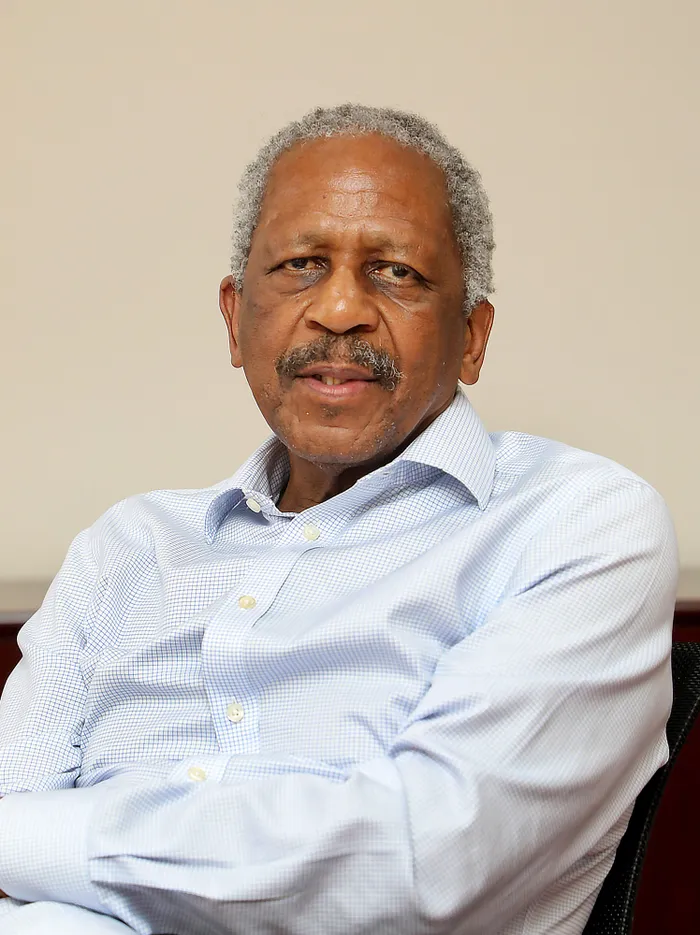
Former ANC treasurer-general, Dr Mathews Phosa.
Image: Timothy Bernard / Independent
* Dr Mathews Phosa is a prominent attorney, politician, anti-apartheid activist, and former ANC NEC member.
** The views expressed do not necessarily reflect the views of IOL or Independent Media.