

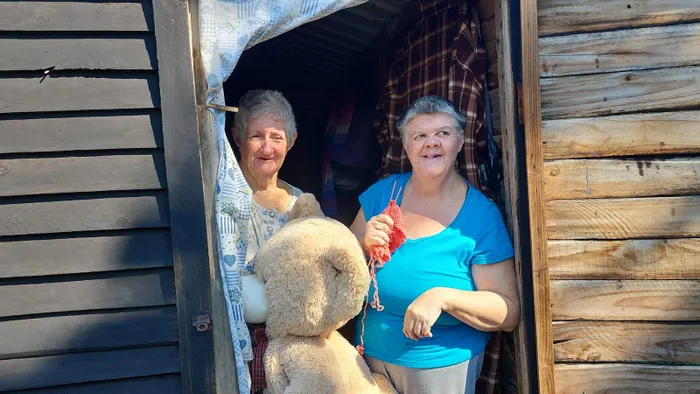
Two Sezela residents at the entrance to one of the many shared wendy houses on the property.
Image: Zohra Teke / IOL
It all began with a random post on a WhatsApp group for donations for a 'white squatter camp'. Of course Orania immediately came to mind. And so, freshly made granola as padkos in hand, I set off, nervously, wondering if I would be welcomed or be given a frosty reception. I was already imagining the headline: Orania comes to Durban.
An hour later, I arrive in Sezela, a picturesque town on the tourist south coast an hour away from Durban. Overlooking the beach, I'm at the gate of sprawling rolling land with a home dotted by wendy houses and an open beach coastline as far as the eyes can see. I called ahead and was greeted by Jenni, a beaming woman in her fifties, welcoming me with open arms. A good sign. No Orania vibes I thought as she ushered me into the office for a brief introduction before the 'tour' - dogs locked away for my safety.
Jenni is one of 60 white residents in this "squatter camp". Only it isn't. Instead, it's a huge property donated by a good samaritan and those who live there are expected to contribute R1,400 from their monthly SASSA grant for their upkeep. They receive three meals a day, a bed in a shared room, hot water, all their medical needs met, a dedicated driver and a vehicle and even a weekly hairdresser and access to all professional help needed. No alcohol or drugs are allowed.
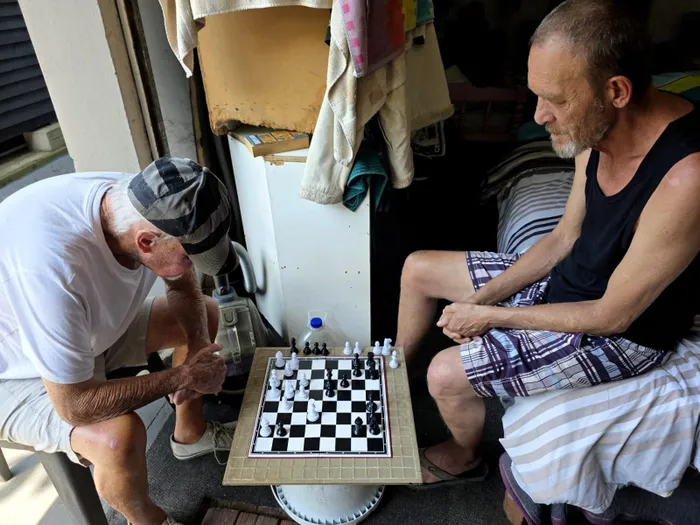
Two residents of Sezela play a game of chess.
Image: Zohra Teke / IOL
"I was looking for a place to die. I have lupus and my parents were elderly. I just couldn't bear to burden them anymore," Jenni, a former scientist explains. The bruises on her arm confirm her tale of the many falls and episodes she experiences as a result of her condition. "I wanted to die and this place gave me life instead. I do all the admin here and care for the people who need saving, like 7-year-old Angie, a child just dumped at our gate," she says, her voice trailing off as she recalls that day.
It costs around R40,000 to maintain the property, with 23 of the 60 residents able to contribute R1,400 each from their grant. In addition, five sponsors contribute R35,000 towards the upkeep. It's a decent amount collectively. It also allows them to live in dignity and regain their will to live. And, if you cant afford to stay, its not a deal breaker – nobody is turned away if they are desperate and meet the criteria.
I ask about the all white demographics, Orania still playing on my mind, despite the warm welcome.
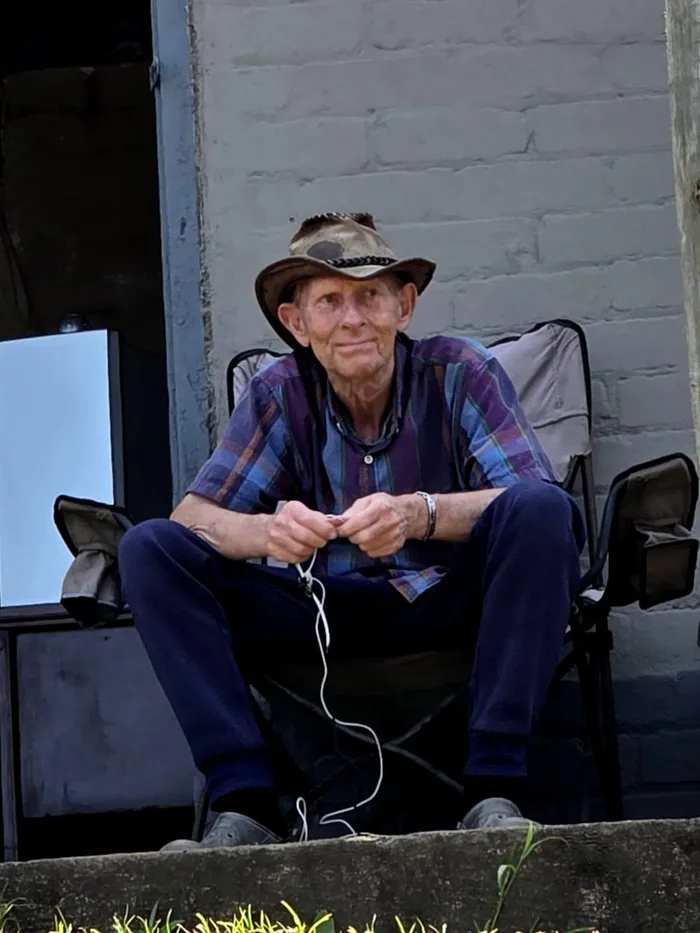
The Sezela residents pool their skills and SASSA grants to support themselves and each other.
Image: Zohra Teke / IOL
"We are a group which began living together almost 15 years ago, an all white community of homeless people and decided to just do things for ourselves. As a minority group, we were not getting any help from government and felt we needed to come together because we had nonody else to depend on. At Sezela we don't discriminate on colour. Our criteria is you must have a valid South African ID and go through screening to be accepted. We've had people of other races living here but I suppose because we are a mainly all white group they don't stay long, but nobody is excluded on the base of race," explains Jenni.
As we chat, seven year old Angie – who was dumped at the gate a few years ago, comes running in, excited to see who is visiting. She greets me warmly, introduces herself and I ask about school. Turns out she is thriving – is a top learner. She also receives psychological counselling and occupational therapy each week – all at no cost. "I didn't have a grandpa when I was born now I have so many here!" Angie tells me excitedly as wraps her arms around Jenni in a warm embrace.
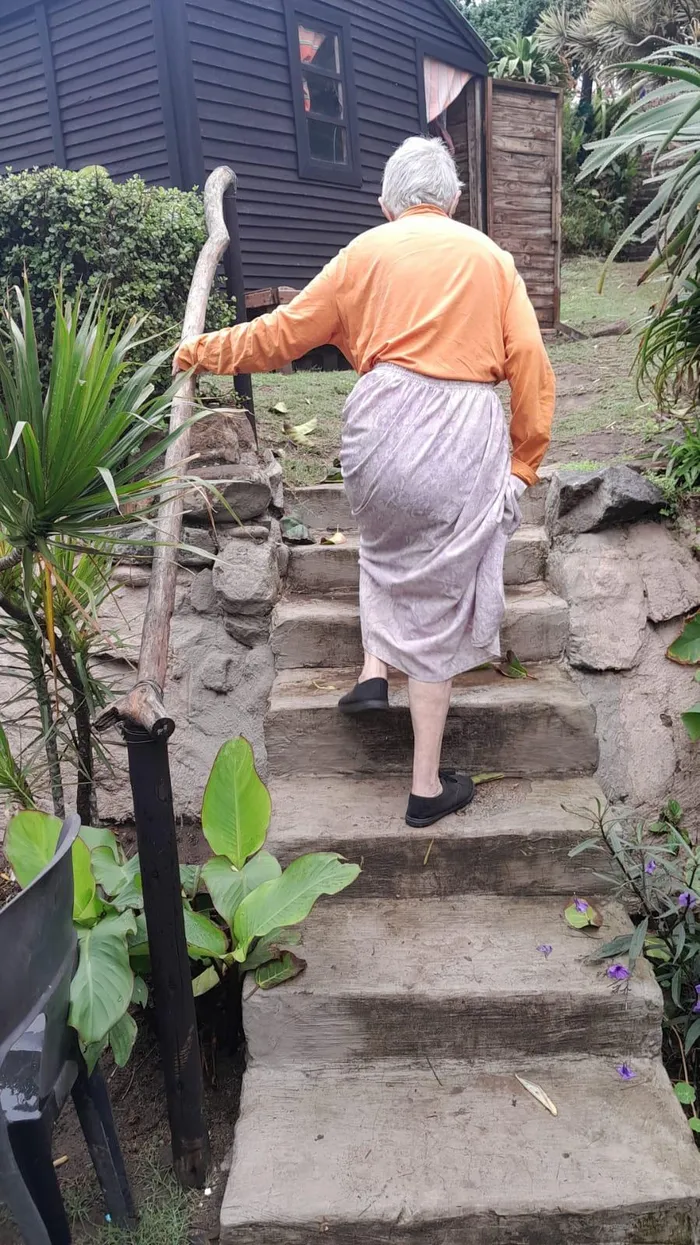
An elderly resident walks up the stairs towards her cabin.
Image: Zohra Teke / IOL
Sezela, I realise, is a nurturing community for those who lost their will to live. A place of belonging and healing for the marginalised and isolated homeless minority who decided to fight for survival through forming a new family rather than die on the streets, alone.
It's not about race, its about survival. Among the group I meet a former pharmacist, a lawyer, a forensic accountant who once worked for SARS and tells me how he used to earn R1 million a year. Each has a story to tell of how their lives fell apart and how Sezela offered a new lease on life, a reason to keep living and a people who gave them that sense of belonging.
It's a remarkable tale of resilience. As Jenni takes me on a tour, I'm greeted with open arms, smiles and eyes that tell stories to the soul. Like Uncle Mikey, a former land owner who was also just abandoned by a family member at Sizela's gates.
"Its a heartbreaking story. He had his own home, land, everything. It was sold without his knowledge and he was just dumped here. He has dementia and we take care of him," adds Jenni as she shows me around.
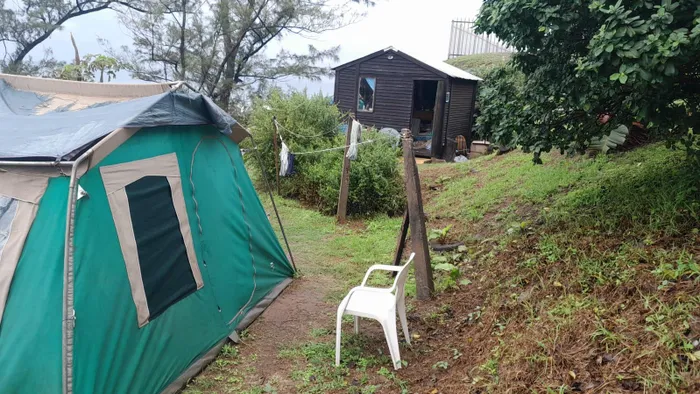
Some of the accommodations at Sezela includes wendy houses and tents.
Image: Zohra Teke / IOL
The wendy houses accommodate couples in each one - all spotlessly maintained. Jenni shows off the bathroom which the men tiled themselves thanks to sponsorship from a tile company. In the kitchen, Jenni is keen to show off the cupboards.
"All of this was built by one of the men staying here, he was a carpenter so did everything for us and does all the maintenance around the house," Jenni explains.
Sezela is not a squatter camp. It's home to a community which refused to give up simply because life happened. They refused to go out with a begging bowl and, instead, collectively used whatever trade and skills they have to give, as a tool for sponsors to assist them.
"You have to give back in some way. Everyone living here contributes their skills and trade to make this community work," adds Jenni.
And that explains their success – the tenacity to survive, that 'boer maak 'n plan' attitude. It's a model which should be replicated even without sponsors. In government funded social housing too. Its about regaining self worth and the power of love as a collective Because with love, anything is possible.
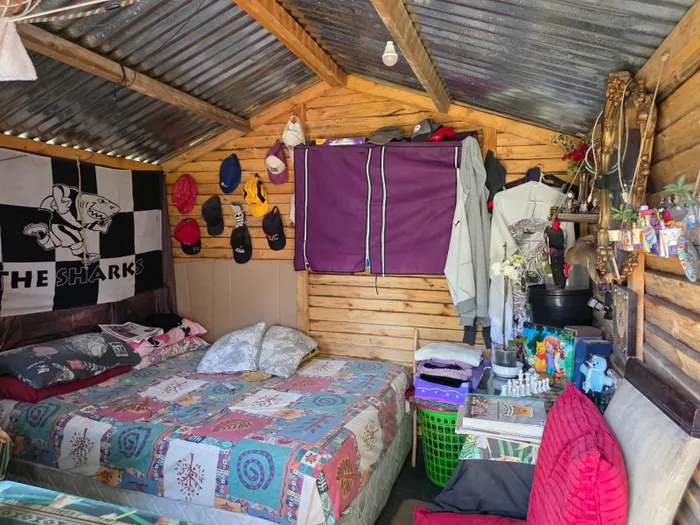
Inside one of the Sezela wendy houses.
Image: Zohra Teke / IOL