

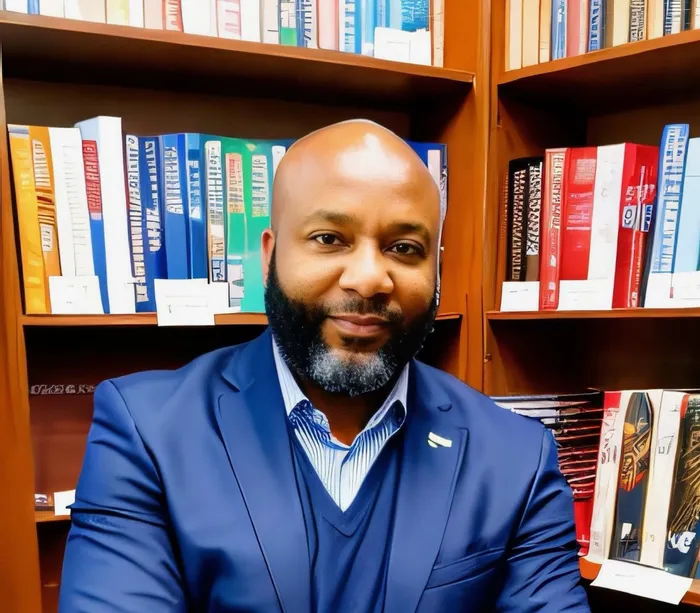
Nco Dube, a political economist, businessman and social commentator
Image: Supplied
A second-term president unshackled from the fear of re-election ought to possess the backbone to speak unvarnished truths and make decisions that place the nation above party interests. When those truths breach party orthodoxy, they can serve as a jolt to complacent cadres and force genuine introspection. This week, President Cyril Ramaphosa did just that. From the stage of Soweto’s FNB Stadium, he delivered a public rebuke of his own governing party’s track record in municipal governance to thousands of ANC councillors assembled for their Roll Call Summit. Acknowledging that DA-run councils consistently outperform their ANC counterparts on core service delivery metrics. It was a bracing admission, one delivered in the full glare of the nation rather than behind closed doors.
Ramaphosa’s remarks echoed the Auditor-General’s latest assessments, in which DA-led municipalities dominated the top ranks for clean audit outcomes, infrastructure spend efficiency and debt recovery rates. In the 2023/24 financial year, nine of the ten best-performing municipalities received DA leadership, while many ANC-run councils were saddled with qualified or adverse audit opinions and soaring irregular expenditure. These audit outcomes translate into tangible consequences: communities under effective management receive reliable water and sanitation, well-maintained roads and efficient revenue collection to fund further improvements.
Yet data alone cannot capture the full picture. Across Cape Town, the city’s CBD and affluent northern suburbs boast clean streets, well-lit thoroughfares and tightly controlled budgets. Meanwhile township residents in Khayelitsha, Mitchells Plain and the Cape Flats endure rolling water cuts, broken sanitation infrastructure and skyrocketing crime. At a recent Khayelitsha imbizo, aggrieved residents forced a DA councillor off stage, demanding answers for persistent service failures in their area. In Gate 7 near Maitland Cemetery, months-long water and sanitation outages prompted community activists to block Voortrekker Road with burning tyres, demanding equitable access to basic municipal services.
These contradictions reveal a critical flaw in the DA’s approach. Its traditional support base of middle-class professionals and business interests has shaped policy priorities, resulting in responsive management in higher-revenue wards but chronic neglect in poorer, predominantly black areas. Informal settlements suffer from underinvestment in preventive infrastructure like drainage, fire breaks and street lighting, thereby heightening residents’ vulnerability to floods, fires and crime. When disasters strike, emergency responses lag behind. During the summer of 2023, informal settlement fires in Nyanga and Delft claimed multiple lives and razed hundreds of shacks, exposing glaring weaknesses in risk-mitigation planning.
By contrast, there are standout exceptions that underscore the potential for equitable governance. In KwaZulu-Natal’s uMngeni Municipality, DA Mayor Chris Pappas has overseen a programme of cross-suburb upgrades that deliberately targets rural and township areas alongside wealthier suburbs. Despite coping with R260 million in electricity theft losses and high outstanding rates debt, his leadership collective instituted participatory budgeting, extended street-lighting projects to under-resourced villages and launched a mobile customer-care unit that travels to remote hamlets. Their transparent publication of budget allocations by ward has forced councillors to account publicly for service-delivery backlogs, earning praise from community organisers who say they finally feel included in decision-making.
This brings us back to Ramaphosa’s intervention at the ANC’s Roll Call Summit. For the first time, a senior ANC figure publicly conceded that the party’s municipal performance had fallen “way off course.”
In so doing, he boosted the opposition’s argument while performing a rare exercise in internal accountability. He did not hide behind slogans or promise yet another commission of inquiry. He held up the DA’s achievements as benchmarks. Clear evidence that improved governance is possible when political will and managerial competence align.
Within the ANC, the reaction has been swift and polarised. Some cadres saw Ramaphosa’s comments as a betrayal, arguing that public finger-pointing ahead of local elections was tactical folly. Others welcomed the wake-up call, admitting that internal reporting mechanisms had long been “gamed” by provincial bosses keen to mask failures. Indeed, insiders confess that for years poor audit outcomes in key metros and district councils were glossed over by thick layers of political spin. Only by acknowledging hard truths in public can the party begin to repair its frayed relationship with communities who have lost faith.
The consequences of this moment are profound. Egos will bruise, and the ANC campaign for next year’s local elections faces heightened scrutiny. But Ramaphosa’s intervention also resets the terms of the debate. It signals that the ruling party must compete on the basis of demonstrated competence, not on liberation-era legacy alone. For voters, the message is clear: your councillors must deliver results or face accountability at the ballot box.
Critically, this debate should not descend into a simplistic DA-versus-ANC trope. Both parties have qualities to commend and major faults to correct. The DA must bring its managerial strengths to bear in historically marginalised areas, demonstrating through equitable budgeting and targeted infrastructure investment that all communities matter equally. Meanwhile, the ANC would do well to institute routine public audits of municipal performance, empower technical experts over politicos in key decision-making roles and revive local anti-corruption units that were sidelined in favour of centralised investigations.
Ramaphosa’s public rebuke does not absolve him of his own controversies. His ANC presidential campaign in 2017 attracted questions over its financing, and his track record on anti-corruption has sometimes appeared selective, shielding certain cadres while targeting others. His own Union Buildings office has faced allegations of irregular expenditure, and he remains vulnerable to criticism for the slow pace of economic transformation. Yet on this singular occasion he rose to the stature of statesman, choosing candour over convenience and country over career.
If he sustains this approach, he stands to redefine the politics of accountability in South Africa. Imagine a political culture where public admission of deficiencies is celebrated rather than stigmatised; where leaders earn respect for integrity rather than enforce loyalty through patronage; where citizens judge politicians by what they deliver, not by what they promise. That is the future Ramaphosa alluded to, even if unwittingly.
President Ramaphosa’s bold public admission is a welcome start. Now it is up to all of us, ANC, DA and citizens alike, to ensure that his words bear fruit beyond the stadium steps and reshape our municipalities into engines of service, dignity and hope.
(Dube is a noted political economist, businessperson, and social commentator on Ukhozi FM. His views don't necessarily reflect those of the Sunday Tribune. This is an edited version. Get the full version at: sundaytribune.co.za)