South Africa's dangerous search for saviours
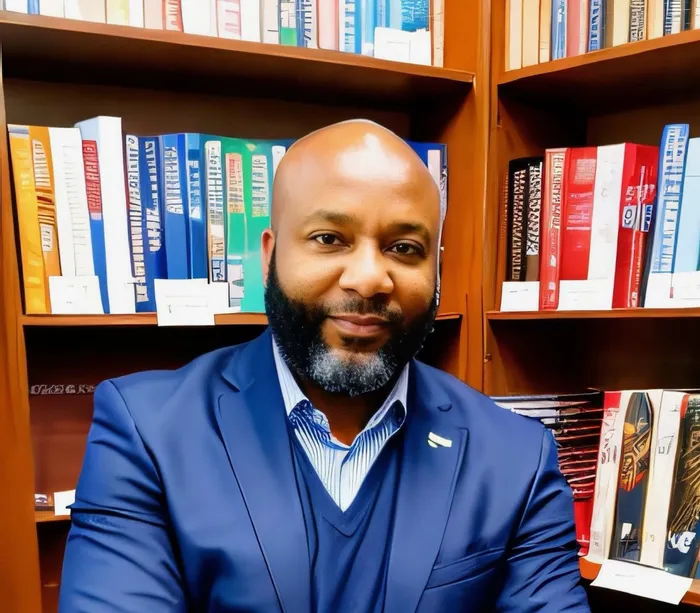
Nco Dube, a political economist, businessman and social commentator
Image: Supplied
South Africans are a people in search of deliverance. After decades of betrayal by those entrusted with power, we are desperate for ethical leadership, for integrity, for someone who will finally embody the values we have been promised since 1994. This desperation is understandable. It is also dangerous.
The danger lies not in the yearning itself, but in what it does to our political imagination. It blinds us. It makes us susceptible to the seduction of saviours. The moment a leader emerges who speaks with conviction, who appears untainted by scandal, who seems to embody the moral clarity we crave, we rush to embrace them with almost obsessive loyalty. We want to believe every word, every gesture, every promise. We want to believe that this time, finally, we have found the one who will lead us out of the wilderness.
But this hunger for salvation is not a strength. It is a weakness. It is the very weakness that has allowed corruption, authoritarianism, and betrayal to flourish in our politics.
The Myth of Saints and Sinners
South Africans often frame politics as a morality play. Leaders are cast as either saints or sinners, heroes or villains, liberators or oppressors. This binary is comforting. It simplifies a complex reality into a story we can easily consume. But it is also profoundly misleading.
The truth is that politics is never a battle between saints and sinners. It is a contest of interests, a negotiation of power, a messy struggle between competing visions of justice. Leaders are not angels or demons. They are human beings, shaped by ambition, ideology, circumstance, and compromise.
When we insist on seeing them as saints, we strip them of their humanity. We deny their flaws, excuse their mistakes, and silence their critics. In doing so, we create the perfect conditions for abuse of power.
Zuma and the Cult of Loyalty
Few examples illustrate this better than the Jacob Zuma era. Despite overwhelming evidence of corruption and alleged state capture, Zuma retained a fiercely loyal base. His supporters saw him not as a flawed leader but as a persecuted champion of the poor, a man targeted by elites for daring to challenge entrenched economic power.
The Zondo Commission laid bare the scale of looting under Zuma’s watch, yet his popularity in KwaZulu-Natal and beyond remained intact. Even after his resignation in 2018, Zuma re-emerged through the uMkhonto weSizwe (MK) Party, which quickly became a formidable force in Parliament. His charisma, his ability to present himself as “one of the people,” and his narrative of persecution allowed him to maintain a cult-like following.
This loyalty is sometimes not rational. It is emotional, rooted in identity, history, and a desperate need to believe in a leader who could embody the frustrations of the marginalised. It can also be destructive, shielding him from accountability and enabling the hollowing out of state institutions.
Ramaphosa's illusion of a "new dawn"
When Cyril Ramaphosa succeeded Zuma in 2018, his presidency was celebrated as a “New Dawn.” Hopes were high for reform, with markets and the public buoyed by optimism. Yet, this optimism faded as Ramaphosa’s image as a reformer was undermined by a series of controversies.
The first blow was the CR17 campaign funding. Leaked records showed nearly R200 million raised from private donors, some with questionable ties. Though not illegal, the secrecy around donors and Ramaphosa’s partial involvement raised ethical concerns, casting doubt on his promise to tackle corruption.
Next was the Phala Phala scandal. In 2020, cash was stolen from Ramaphosa’s game farm, reportedly from a buffalo sale. Allegations of a cover-up and money laundering followed, and although cleared by the Public Protector, the president’s reputation for transparency suffered.
Finally, Ramaphosa’s response to the Zondo Commission’s findings further damaged his standing. Despite pledging action against those implicated in state capture, many of implicated loyalists remain in high office. Former Chief Justice Raymond Zondo lamented seeing implicated ministers promoted, highlighting Ramaphosa’s reluctance to upset his factional internal power base.
The “New Dawn” proved to be an illusion, leaving many South Africans disillusioned.
The Mkhwanazi/Mchunu Allegations
The recent allegations by KwaZulu-Natal police commissioner Lt-General Nhlanhla Mkhwanazi against Police Minister Senzo Mchunu expose another dimension of the problem. Mkhwanazi accused Mchunu of interfering in police operations, including the disbanding of the Political Killings Task Team, in KZN.
The allegations and the Madlanga Commission evidence led so far strongly suggest that political interference has compromised law enforcement, with syndicates allegedly involving politicians, prosecutors, and even judges. Whether or not every detail proves true, the mere plausibility of such claims reflects the depth of public mistrust.
Here again, loyalty plays a corrosive role. Ministers and senior officials are shielded by party structures and factional alliances. Criticism is dismissed as factionalism, and whistle-blowers are vilified. Instead of institutions protecting the public, they protect the powerful.
The Mkhwanazi saga is a reminder that loyalty to individuals or factions, rather than to the Constitution and the rule of law, corrodes accountability.
The Role of Citizens
The uncomfortable truth is that South Africans are complicit in the failures of our politics. By refusing to question, by choosing loyalty over scrutiny, by treating leaders as saints rather than servants, we enable the very corruption we claim to despise.
If we truly want ethical leadership, we must first become ethical citizens. Citizens who question without fear, who hold leaders accountable without apology, who refuse to be seduced by charisma or blinded by loyalty.
This is not easy. It requires courage. It requires us to confront our own complicity, to admit that we have been seduced by saviours, to acknowledge that we have chosen loyalty over truth. But it is the only way to build a democracy that can endure.
The Provocation
Here is the provocation: South Africa does not need another saviour. It needs citizens who refuse to be seduced by saviours. It needs citizens who understand that democracy is not about finding saints to worship, but about building systems that hold sinners accountable.
Until we break free from the cycle of blind devotion, we will continue to mistake saviours for saints, and we will continue to be disappointed when they reveal themselves to be human after all.
The future of this country will not be decided by the rise of a single leader. It will be decided by whether we, as a people, can build a democracy that values truth over personality, accountability over loyalty, and justice over power.
That is the challenge before us. That is the work of democracy.
(Dube is a noted political economist, businessperson, and social commentator on Ukhozi FM. His views don't necessarily reflect those of the Sunday Tribune or Independent Media.This is an edited version. The full version is available at: sundaytribune.co.za.)