Clueless chiefs of staff expose gatekeeping crisis in SA
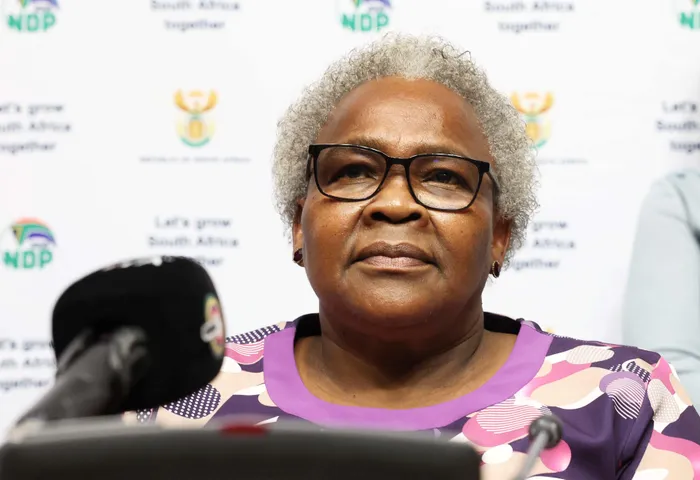
SOCIAL Development Minister Sisisi Tolashe who this week defended her department's hiring practices and denies defying Cabinet, following reports of a R1.4 million salary paid to her 22-year-old personal assistant.
Image: Jairus Mmutle/GCIS
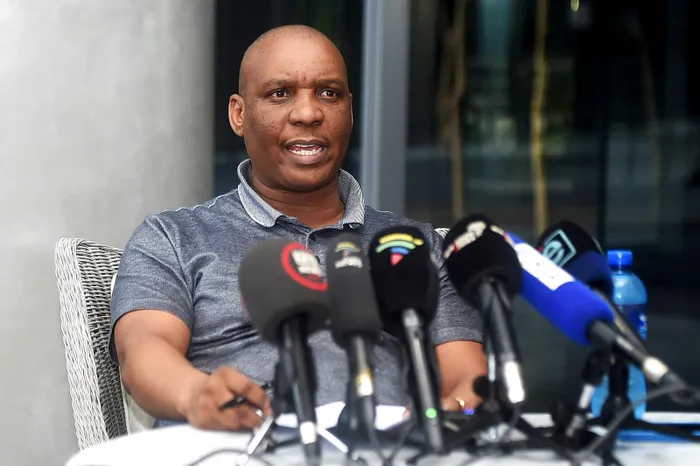
SENZO Mchunu’s Chief of Staff, Cedrick Nkabinde who seems at sea at his job.
Image: ITUMELENG ENGLISH Independent Newspapers

Nco Dube, a political economist, businessman and social commentator
Image: Supplied
The appointment of a 22-year-old with no track record to the role of Chief of Staff in Minister Sisisi Tolashe’s Social Development office is not merely a footnote in our unfolding political theatre. It is a glaring symptom of a much deeper malaise. A system in which key strategic positions are treated as political spoils rather than vital levers of governance.
When Lieutenant General Nhlanhla Mkhwanazi told Parliament’s Ad-Hoc Committee that on-leave Police Minister Senzo Mchunu’s own Chief of Staff, Cedric Nkabinde, “had no clue” what his job entailed, he punctured the illusion that chiefs of staff are always the consummate operators behind the scenes. Instead, we see a growing parade of ill-prepared gatekeepers who wield enormous influence without having earned the right or acquired the skills to do so.
Chiefs of staff occupy one of the most critical roles in any political office. They are the ultimate gatekeepers, filtering information, coordinating policy decisions, managing crises, and ensuring that the political principal’s agenda is translated into action.
Internationally, these roles are filled by seasoned operatives with deep experience in administration, policy formulation, stakeholder engagement and crisis management. In Washington, London or Berlin, chiefs of staff are the right hands of prime ministers and presidents; they move seamlessly between Cabinet committees, diplomatic channels and parliamentary debates. They command respect from career officials and private-sector partners alike.
By contrast, in South Africa, too many chiefs of staff are political appointments first and administrators second. The Sisisi Tolashe Chief of Staff scandal is the latest example of this trend. A barely qualified 22-year-old with no prior government or policy experience was parachuted into one of the most demanding supporting roles in the executive branch.
No amount of youthful enthusiasm can substitute for the institutional memory, network of relationships and strategic insight that the job demands. Instead of hitting the ground running, this appointee would have spent months or longer, learning the basics: how to brief a minister, how to co-ordinate with directors-general, how to manage stakeholder expectations, and how to navigate the brutal politics of Cabinet. Meanwhile, real policy fences would have gone unfenced, and vulnerable communities will wait for decisions that never arrive.
Cedric Nkabinde’s brief but disastrous tenure as Chief of Staff to Senzo Mchunu shows how damage accumulates when the role is misunderstood or ignored. In Mkhwanazi’s testimony, we heard that operational directives were lost, that shady political operators like Brown Mogotsi with links to the underworld got direct access to the minister, that competing priorities paralysed the minister’s office, and that investigative leads in politically sensitive cases faltered at the gatekeeper’s desk. A chief of staff who does not grasp the fundamental purpose of the job becomes a liability. Instead of protecting the integrity of the portfolio, he becomes an obstacle to justice and good governance.
This pattern of under-resourced, inexperienced chiefs of staff is neither new nor confined to one ministry. Across provinces and at national level, we find a revolving door of appointees who lack either the technical knowledge or the authority to fulfil the role.
A chief of staff is meant to be the nerve centre of a political office: they co-ordinate policy teams, manage communication strategies and ensure that the minister’s office speaks with one voice. They are entrusted with confidential briefings, sensitive stakeholder relationships and crisis planning. Yet when these positions are handed out as badges of political favour, the ministry’s capacity to deliver is hollowed out from within.
Compare this with the British system, where chiefs of staff to secretaries of state are often former special advisors or private-sector leaders seconded to government. They bring hardened judgement, networks of expertise and the ability to marshal complex policy machines. Whitehall and parliamentary committees hold them accountable under defined performance contracts. In the United States, the White House Chief of Staff is the single most powerful unelected official in the Executive Branch because the role has clearly defined responsibilities, rigorous performance metrics and unwavering oversight.
In South Africa, we have neither the performance metrics nor the oversight. Instead of rigorous selection processes or merit-based appointments, we too often rely on political patronage. Chiefs of staff become dispensers of access and approval. They determine who sees the minister, which submissions progress to Cabinet, and which scandals are plushly managed or buried. They hold the minister’s ear and the bureaucracy’s leash. This gatekeeping power demands competence, integrity and courage. When any one of those qualities is absent, the entire office is diminished.
The public fallout from ill-equipped Chiefs of Staff is immediate and corrosive. Policy gridlock stifles service delivery. Civil servants become demoralised by erratic directives. Stakeholders like NGOs, business leaders, and community organisations lose faith in the minister’s commitments. Worse, in portfolios like Social Development or Police, where human welfare and public safety hang in the balance, lives are put at risk. A single mismanaged submission can delay much-needed social grant policies.
A bungled operational directive can leave the public unprotected from crime. A naïve gatekeeper can turn strategic decision-making into bureaucratic chaos.
What then must change? First, we need a professionalisation drive in political offices. Ministries should establish transparent, merit-based criteria for Chiefs of Staff: proven experience in administration or policy, demonstrated leadership in complex environments and an unassailable record of ethical conduct. We should benchmark performance against clear targets like policy deliverables, stakeholder satisfaction, communication effectiveness and subject chiefs of staff to routine parliamentary oversight.
Second, DPSA must partner with political offices to co-design on-the-job training for chiefs of staff. A six-month induction programme covering government procedures, Cabinet coordination, media management and stakeholder engagement could turn raw appointees into effective operators. Retired senior public servants, seasoned diplomats and former special advisors should be tapped as mentors and trainers.
Third, ministers themselves must claim ownership of the process. A chief of staff is not a puppet but a partner. Ministers should set explicit job descriptions, key performance indicators and reporting lines. They should hold regular reviews, not only for operational efficiency but also for alignment with strategic vision. If a chief of staff fails to deliver, the minister must act swiftly to replace them rather than defend expedient appointments.
Finally, Parliament must sharpen its teeth. Ad-hoc committees like the one investigating Mkhwanazi’s explosive allegations are a start, but routine parliamentary committees and portfolio committees on social development, police and others must task themselves with scrutinising ministerial support structures. They must call chiefs of staff to account, demand evidence of competence and track whether service-delivery outcomes improve.
This is not a call to abolish political appointments. Each minister deserves support from individuals they trust. But trust must be earned through credibility, competence and demonstrable performance. The Sisisi Tolashe appointment reminds us how far we have drifted from that ideal. We appoint novices to manage the levers of social welfare while seasoned operators are sidelined. We tolerate Chiefs of Staff who “have no clue” about their roles. Then we wonder why ministries underperform.
We must insist on a new standard. One that treats roles as a profession, not a perk. We owe it to frontline families waiting for foster-care grants and to communities shattered by crime to demand more than “no clue” from the gatekeepers of government. Our future depends on it.
(Dube is a noted political economist, businessperson, and social commentator on Ukhozi FM. His views do not necessarily reflect those of the Sunday Tribune or IOL. You can get more of his writings at: http://www.ncodube.blog)