

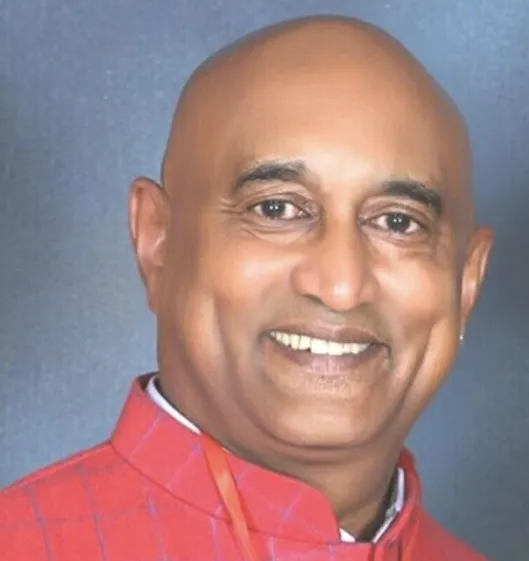
Dr Rajendran Govender is a Social Anthropologist and a Researcher; Social Cohesion Advocate; Commissioner in the Cultural, Religious and Linguistic Rights Commission; Board Member of the Pan South African Language Board; Global Coordinator of the Global Repository of Ancient Cultural Endeavours.
Image: File
WHEN a sportsperson performs exceptionally, it should be a moment that unites us all — a celebration of human excellence, resilience and discipline. Yet, time and again, those moments are overshadowed by conversations that have little to do with the game itself.
The recent online backlash against Indian cricketer Jemimah Rodrigues is a case in point. After her brilliant, match-winning century in the Women’s World Cup semi-final, she became the target of social media abuse — not because of her technique or performance, but because she publicly thanked Jesus in her post-match interview.
That reaction is deeply unfortunate and, indeed, unnecessary. Rodrigues’ expression of gratitude was a personal reflection of faith, not a political statement. Yet it sparked outrage from some quarters who accused her of “mixing religion with sport.”
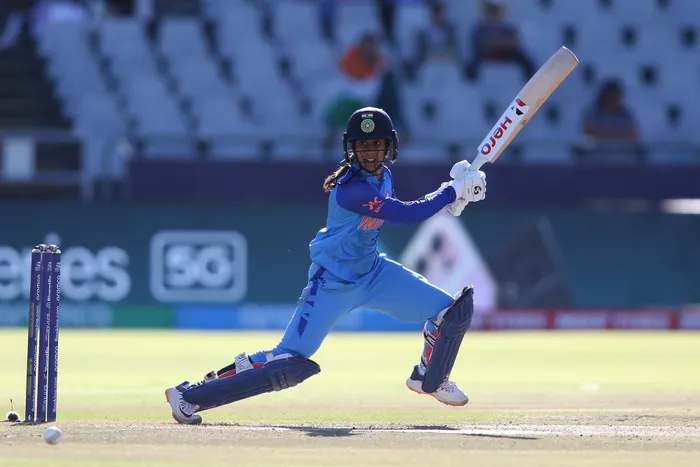
Indian cricketer Jemimah Rodrigues after her brilliant, match-winning century in the Women’s World Cup semi-final, became the target of social media abuse because she publicly thanked Jesus in her post-match interview.
Image: File
In truth, faith has always been part of the human journey in sport. From football to athletics to cricket, athletes have long drawn inspiration and comfort from their spiritual beliefs. But their faith should never become a measure of how their achievements are viewed or celebrated.
Across the world, countless sporting heroes have, in moments of triumph, lifted their hands to the heavens, bowed their heads in prayer, or invoked the divine. The Egyptian footballer Mohamed Salah of Liverpool famously falls into sujud — the Islamic act of prostration — each time he scores, an expression of humility and gratitude.
His teammate, Brazilian goalkeeper Alisson Becker, once said after an extraordinary last-minute goal, “God put His hand on my head today.”
South Africa’s own Olympic champion, Wayde van Niekerk, had “Jesus I’m all yours” written on his running spikes when he broke the 400-metre world record in Rio, later exclaiming, “Jesus did it!” American tennis sensation Coco Gauff, after winning the US Open, knelt and prayed on court, saying later that she didn’t pray for victory, only for the strength to give her best.
The list goes on: British triple-jump legend Jonathan Edwards was so devoted that he refused to compete on Sundays early in his career; Canadian sprinter Andre De Grasse has spoken about how faith anchors him before every race; English footballer Kieran Richardson described himself as being “saved by Jesus Christ” and dedicated his success to his newfound faith. These athletes represent different faiths, cultures and nations, yet their gestures share a common thread — a moment of spiritual acknowledgment born of humility, not arrogance.
Even here in South Africa, the intertwining of sport and faith is evident. Cricket legend Hashim Amla, one of the most respected figures in the game, has never shied away from expressing his Islamic faith quietly and consistently. He declined alcohol sponsorship logos on his playing shirt, setting an example of dignity and conviction without controversy. Similarly, spinner Keshav Maharaj has openly shared his Hindu beliefs, often seen wearing sacred symbols and speaking about his faith as a guiding force in his cricketing journey. Both have demonstrated how faith can coexist with professionalism, humility, and respect for diversity. Such expressions are entirely human.
But what is troubling is the growing tendency of society — and sometimes the media — to politicise or ridicule these moments. When an athlete thanks God, it is often misinterpreted as a display of superiority or religious assertion. In reality, it is often a simple gesture of gratitude from someone who has poured years of effort into a fleeting, glorious moment.
The real danger arises when that gesture becomes the subject of division, when the focus shifts from the performance to the prayer. Sport has always been one of humanity’s greatest unifiers. It brings together people of every race, language and belief under one flag, one anthem, and one emotion.
When South Africa plays in a World Cup, or when India lifts a trophy, fans of all faiths celebrate together. In those moments, no one asks whether a player is Hindu, Christian, Muslim or atheist. We are simply human beings, united by joy and pride. That is the true spirit of sport — and it is worth protecting.
To preserve that unity, we must learn to separate personal belief from public celebration. Athletes are free to draw strength from their faith, and they should be respected for it. But as spectators, commentators and citizens, we should celebrate them for their skill, their discipline, and their contribution to national pride — not for the creed they follow or the words they utter in gratitude.
When we let religion dominate our discourse on sport, we lose sight of what makes it beautiful: its power to transcend the very boundaries that divide us elsewhere. Jemimah Rodrigues should be celebrated for her batting brilliance and composure under pressure, not judged for her personal faith.
Mohamed Salah should be admired for his artistry and humility on the field, not defined by his religion. Coco Gauff’s prayer, Wayde van Niekerk’s faith inscription, Hashim Amla’s quiet conviction, and Keshav Maharaj’s devotion all reflect deeply personal human responses to moments of triumph. None of these gestures detract from the athletic mastery that earned them their victories.
In the end, the greatness of sport lies not in whom an athlete thanks, but in how they play, persevere and inspire. Faith may motivate the athlete, but it is dedication, skill and courage that move the world. Let us, therefore, keep religion out of sport — not out of disrespect for faith, but out of respect for the universality of sport itself. By doing so, we honour the true essence of competition: the pursuit of excellence, the triumph of the human spirit, and the shared pride that unites us all.
Dr Rajendran Govender is a Social Anthropologist and a Researcher; Social Cohesion Advocate; Commissioner in the Cultural, Religious and Linguistic Rights Commission; Board Member of the Pan South African Language Board; Global Coordinator of the Global Repository of Ancient Cultural Endeavours.
The views expressed do not necessarily reflect those of the SUNDAY TRIBUNE or IOL.