
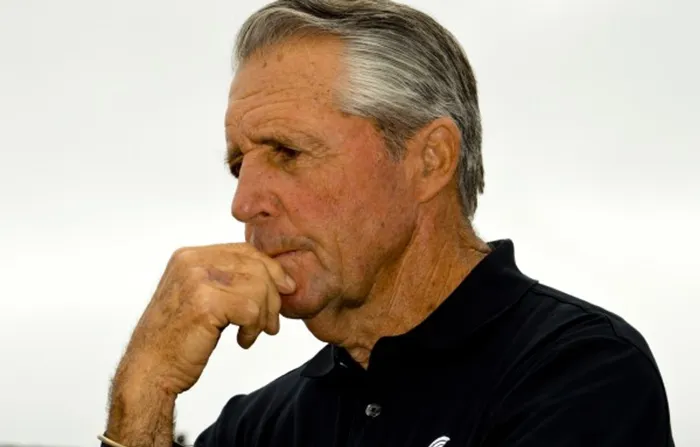
A reader is challenging legendary golfer, Gary Player's remarks on his 90th birthday, especially his potrayal of South African citizens and his silence during apartheid even as he witnessed the ill-treatment of golfer, Papwa Sewgolum.
Image: MICHAEL SHERMAN/IOL
I felt moved to respond, particularly in light of Gary Player’s remarks on his 90th birthday, which have understandably stirred deep controversy.
The comments by this racist, one of the apartheid government's ambassadors, must be treated with the contempt they deserve. His portrayal of South Africa as a land of squatter camps was not only bleak, it was deeply disappointing.
Many South Africans, myself included, found his comments insensitive and out of touch with the realities and resilience of our people. Frankly, Mr Player, your words come far too late. To me, they ring hollow.
They echo not the voice of a patriot, but that of someone who stood on the sidelines when it mattered most. During the Papwa Sewgolum era, racism in sport and society was both clearly visible and subtle.
Papwa, a gifted golfer, was banned for seven years during the height of apartheid from all local tournaments. And yet, Gary Player, a towering figure in the sport, chose silence over solidarity. He did not raise his voice, nor did he lift a finger to challenge the injustices that plagued our nation.
We must remember these truths. Not to dwell in bitterness, but we should hold our icons accountable. Legacy is not built on trophies alone; it is shaped by courage, conscience, and the choices made when history calls.
The words of LeBron James are so true: "Sports can unite, but it can't ignore the racism that exists in society." | Dhayalan Moodley, Mobeni Heights