

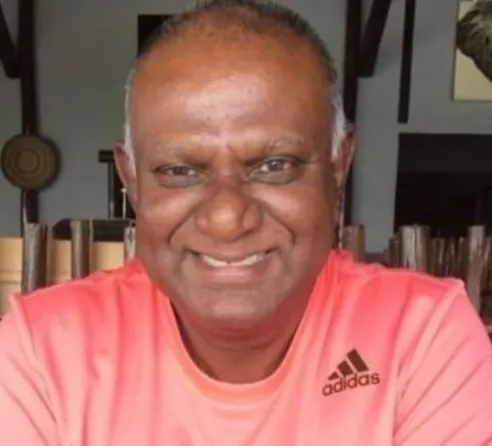
Kiru Naidoo
Image: File
AT THE very moment Mohammed bin Salman sneered at the garish gold makeover in the Oval Office and sniggered at a courageous woman journalist lobbing questions about Washington Post columnist, Jamal Khashoggi’s 2018 murder in the Saudi embassy in Istanbul, consequential world leaders were kissing their spouses goodbye as they boarded for Johannesburg.
It has been a long journey to Africa’s financial capital. Twenty-six years ago, in the wake of the 1997–1998 Asian financial crisis, the world's major economies were forced into recognising that the global financial system could no longer be effectively managed by a small club of wealthy western nations.
The G7 was too narrow, too detached from the realities facing emerging markets. The first G20 summit in Berlin in 1999 boldly moved beyond exclusivity to a broader forum that consciously brought advanced and emerging economies together to prevent and manage crises that crash across borders.
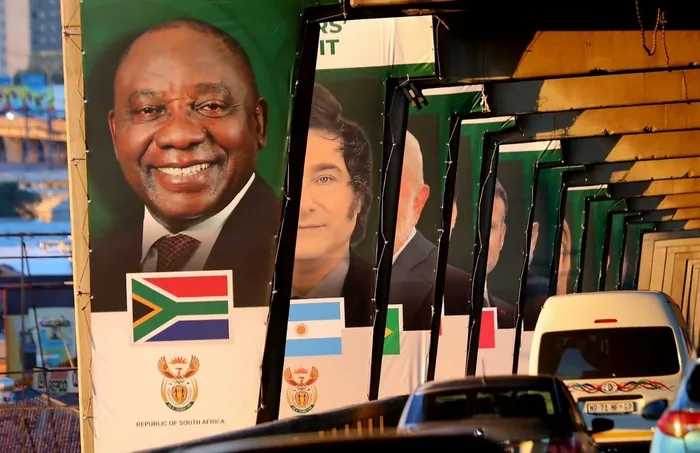
Johannesburg welcomes global leaders for the G20 Summit.
Image: Timothy Bernard / Independent Newspapers
The founding impulse of inclusive dialogue to achieve shared stability and prosperity was revolutionary for its time. It acknowledged that shocks in Thailand or Indonesia could destabilise London and Wall Street, and that sustainable global growth required voices from Brasília, Beijing, New Delhi, and Pretoria at the table.
A decade later, the 2008 global financial crisis pummelled the G20 to leaders' level, cementing its role as the ‘premier forum’ for international economic cooperation.
Today, as the G20 concludes in Johannesburg in the first-ever summit on African soil, that original, nominally inclusive spirit has evolved into something even more profound. The consecutive sequence of Global South presidencies India, Brazil and South Africa has decisively shifted the agenda toward the urgent priorities of the majority of humanity.
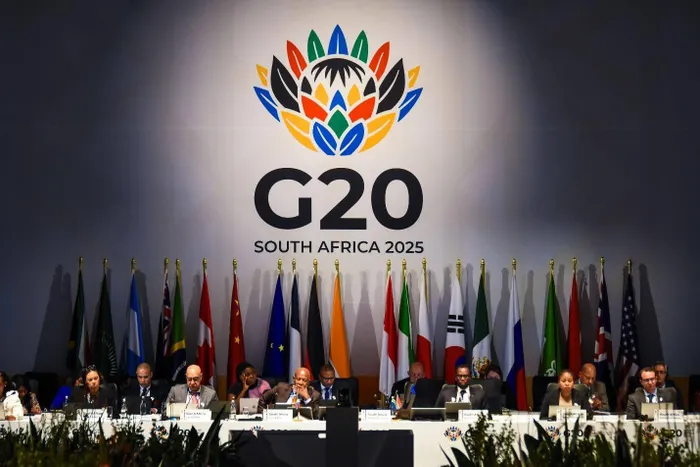
The South African presidency has pushed for firm commitments to raise both the quantity and quality of climate finance to developing countries, reform risk premiums that punish emerging economies, and mobilise private capital for climate justice.
Image: Supplied
‘Solidarity, Equality, Sustainability’ is a powerful theme rooted in the inclusivist African philosophy of ubuntu. In the build up to the summit, South Africa effectively used its presidency to place poverty reduction, sustainable development, and climate justice at the very heart of global economic policymaking.
The past three years have marked an historic turning point. India's 2023 New Delhi Summit delivered the permanent inclusion of the African Union, transforming the G20 into a more representative body overnight.
Brazil's 2024 Rio Summit launched the Global Alliance Against Hunger and Poverty as a coalition of more than 150 countries and organisations. It also established the world's first G20 Task Force on a global billionaire tax, proving that progressive taxation can be a serious topic even among the planet's richest economies.
South Africa has been unflappable in moulding its presidency to build on both legacies by accelerating practical delivery in the crucial five-year runway to the 2030 Sustainable Development Agenda deadline. With only 17% of SDG targets currently on track, Johannesburg represents perhaps the last major multilateral opportunity this decade to bend the curve on poverty, hunger, inequality, and the climate crisis.
The agenda has been structured around interlocking pillars in ministerial work streams that directly echo the G20's founding motivation while zeroing in on contemporary challenges. Expectations are that Johannesburg will strengthen and expand Brazil’s Global Alliance Against Hunger and Poverty, potentially securing new financing mechanisms and national investment plans from dozens more countries.
The South African presidency has pushed for firm commitments to raise both the quantity and quality of climate finance to developing countries, reform risk premiums that punish emerging economies, and mobilise private capital for climate justice. Agreements to strengthen platforms like the Just Energy Transition Partnerships could unlock billions in new investment for renewable energy and adaptation across Africa, Asia, and Latin America.
Building on Brazil's taxation breakthrough, the promise of Johannesburg is the prospect of advancing implementation of fair international tax regimes. This includes progressive taxation on extreme wealth while pushing for deeper reforms to the international financial architecture.
Rare earth minerals and their link to a global clean energy transition were expected to receive dedicated attention. African nations have long sought to ensure that resource-endowed countries and local communities actually benefit from the green economy rather than being exploited by it.
When finance ministers gathered in Berlin in 1999, they could scarcely have imagined a G20 summit in Johannesburg advancing an African-hosted agenda on climate justice, wealth taxes, and continental industrialisation. Yet this is precisely the inclusive future the group's founders were forced into accepting, that emerging and developing economies do not merely participate, but lead.
The Johannesburg Summit offers the G20 a chance to prove its continuing relevance by delivering tangible progress on the issues that matter most to the world's majority. There are billions still trapped in poverty, vulnerable people on the frontlines of climate change and a growing army of youth demanding decent work and sustainable futures.
If the G20 leaders are able to tame the bull by the horns, the summit will not only accelerate the SDGs and Agenda 2063, but reaffirm the G20's founding purpose. Regrettably, the South African presidency will hand over to an empty gilded chair, the sort of space one leaves vacant to remember someone who has departed for the quiet field of obscurity. Regrettable too, is that the whereabouts of Khashoggi’s dismembered body parts remain unknown.
Kiru Naidoo is a founder of the Indian Diaspora Research Academy (INDRA) and an occasional columnist.
His views do not necessarily represent those of the Sunday Tribune or IOL.