
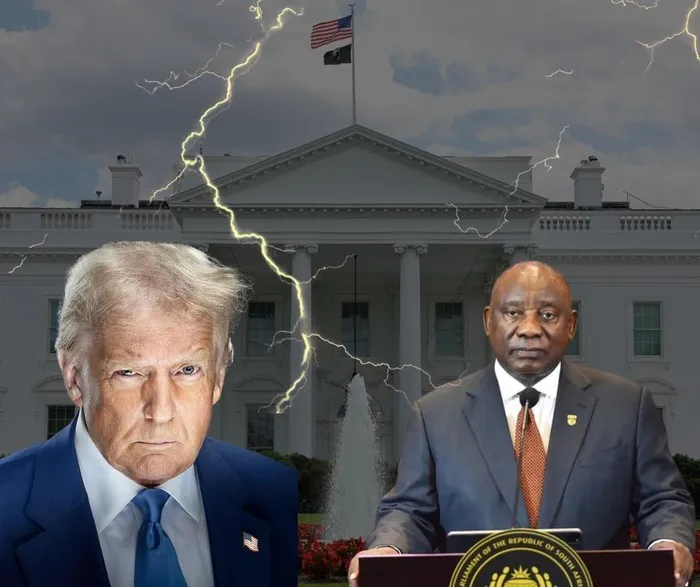
SOUTH Africa successfully hosted the first G20 Summit on African soil despite Donald Trump's deliberate boycott. The Johannesburg Declaration marked a bold victory for multilateralism and elevated African priorities on the global stage, demonstrating that cooperation can prevail over isolationism, argues the writer. This analysis examines the Summit's significance for South Africa, Africa, and the Global South.
Image: IOL Graphics
The Johannesburg G20 Summit this past weekend was destined to be extraordinary. It was the first time the world’s most powerful economies gathered on African soil. It was the first time the African Union sat as a permanent member of the G20. And it was the first time the summit had to contend with the deliberate absence of the United States, led by Donald Trump, who chose to boycott the meeting and lob infantile jabs at South Africa from afar.
What unfolded was a paradox: a summit marked by absence, yet defined by presence. Trump’s boycott was meant to diminish the event, but it only amplified South Africa’s stature. His attacks were meant to undermine Pretoria’s credibility, but they only highlighted Ramaphosa’s poise. And his isolationism was meant to fracture multilateralism, but it only strengthened it.
Trump’s Boycott: Infantile Jabs and Political Theatre
Trump’s decision to boycott the summit was framed around baseless accusations that South Africa persecutes its white minority and seizes farms. These claims, recycled from his earlier rhetoric, were deployed as political theatre. They were not grounded in fact, nor in the realities of South Africa’s land reform policies. They were designed to inflame, to distract, and to undermine.
Trump’s refusal to send even a delegation was unprecedented in G20 history. It was accompanied by threats that South Africa should not adopt a declaration in Washington’s absence. It was the behaviour of a petulant child, not a statesman.
Ramaphosa’s response was measured yet firm. He refused to be bullied, insisting that “boycott politics never work.” His refusal to hand over the G20 presidency to a junior US embassy official underscored South Africa’s insistence on protocol and dignity. In doing so, Ramaphosa demonstrated poise in the face of Trump’s transactional diplomacy, which has long sought to reduce multilateral forums to arenas of US leverage rather than collective problem‑solving.
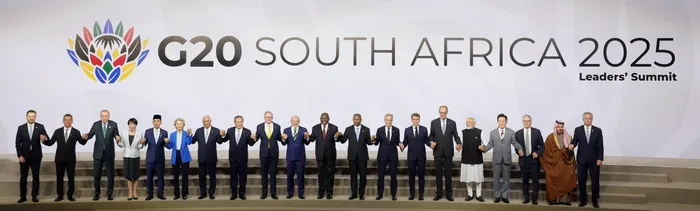
THE FAMILY photo of G20 Heads of State, government; invited leaders and heads of International Organizations during the G20 Leaders’ Summit, hosted by South Africa at the Johannesburg Expo Centre, Gauteng Province which has been described as a triumph not just for Africa but the Global South as a whole.
Image: Siyabulela Duda / GCIS
Multilateralism’s Triumph: The Johannesburg Declaration
The summit’s greatest achievement was the adoption of the Johannesburg Declaration at the very start of proceedings, a deliberate break with G20 custom. By securing consensus upfront, South Africa sent a clear signal: multilateralism can deliver, even in the face of US obstruction.
The declaration was endorsed by all G20 members except the absent US and its proxy acolyte, Argentina. Crucially, it was supported by over 20 invited non‑G20 countries. This expansion of participation reflected South Africa’s vision of inclusivity, echoing the African philosophy of Ubuntu: “I am because we are.” The presence of the African Union as a permanent G20 member further cemented Africa’s role in shaping global policy.
Multilateralism, not isolationism, was the summit’s winner. As Presidency spokesperson Vincent Magwenya noted, “Global cooperation is the biggest winner today.”
Comparing the Declaration to Previous Years
The Johannesburg Declaration marked a departure from the cautious, often diluted language of past G20 communiqués. Previous declarations, particularly under US influence, had shied away from strong commitments on climate change, debt relief, and inequality. The 2025 text, however, was revolutionary for Africa and the Global South.
It called for tripling renewable energy capacity and doubling energy efficiency improvements by 2030. It emphasised debt sustainability, strengthening the G20 Common Framework for Debt Treatments, and acknowledged that mounting debt is one of the biggest obstacles to development. It urged new approaches to critical minerals, positioning them as catalysts for inclusive growth rather than mere commodities for extraction.
On climate resilience, the declaration demanded that funding increase “from billions to trillions globally,” echoing commitments made at COP30 in Brazil. It recognised that climate‑driven disasters deepen poverty and inequality, and committed to integrated, inclusive approaches to disaster risk reduction.
Compared to previous years, the Johannesburg Declaration was bolder, more specific, and more aligned with the priorities of the Global South. It was not watered down by US scepticism, nor constrained by transactional diplomacy.
Direct Impact on South Africa, Africa, and the Global South
For South Africa, hosting the summit was a diplomatic coup. It showcased Johannesburg as a global diplomatic capital, affirmed Pretoria’s ability to convene consensus, and positioned Ramaphosa as a statesman capable of countering US bullying with dignity.
For Africa, the declaration’s emphasis on debt relief, climate resilience, and critical minerals has tangible implications. It promises greater financing for renewable energy, recognition of Africa’s vulnerability to climate disasters, and support for beneficiation strategies that could transform resource economies into engines of inclusive growth.
For the Global South, the summit affirmed that multilateralism remains viable. Despite Trump’s boycott, consensus was achieved. Despite Argentina’s refusal to endorse the declaration, cooperation prevailed. The summit demonstrated that the Global South can set the agenda, not merely react to it.
Ramaphosa’s Poise and the Symbolism of Africa’s Leadership
Ramaphosa’s leadership was central to the summit’s success. His decision to adopt the declaration upfront, his refusal to concede to US demands, and his insistence on Africa’s priorities reflected a new assertiveness in global diplomacy. His invocation of Pliny’s phrase, “Always something new out of Africa,” captured the spirit of the moment.
The symbolism of hosting the summit in Soweto, a township once synonymous with apartheid oppression, was profound. As Minister Ronald Lamola noted, it represented a bridge between the Global North and South, a reminder that cooperation must transcend historical divides.
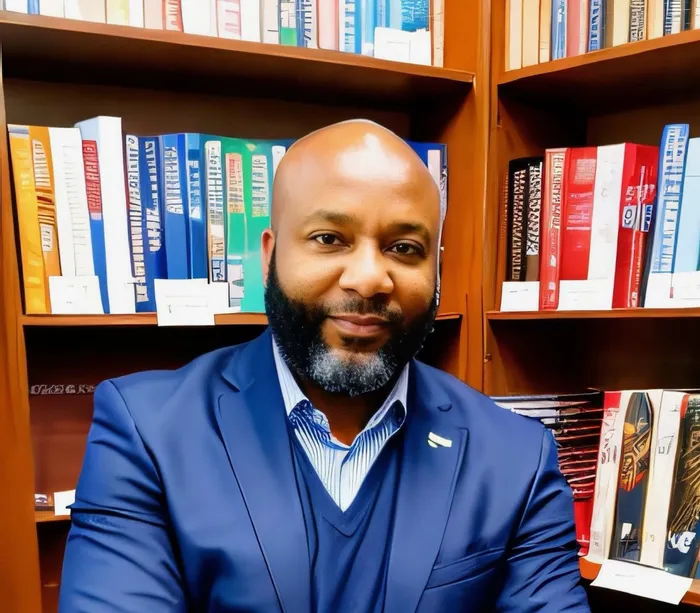
Nco Dube, a political economist, businessman and social commentator
Image: Supplied
Provocative Reflections: Trump’s Isolationism vs Africa’s Multilateralism
Trump’s boycott was not just a snub to South Africa, it was a snub to multilateralism itself. It reflected a worldview in which diplomacy is transactional, alliances are conditional, and cooperation is expendable. It was isolationism dressed up as principle.
But isolationism is a dead end. The challenges of debt, climate change, and inequality cannot be solved by one nation alone. They demand collective action. They demand multilateralism.
South Africa’s triumph was to show that multilateralism can prevail, even in the face of bullying. The Johannesburg Declaration was not just a document, it was a rebuke to Trump’s worldview. It was proof that cooperation can deliver, that inclusivity can strengthen, and that Africa can lead.
The Warning: Declarations Must Become Tangible
Yet let us be clear: all of this means nothing if it is not translated into direct, tangible benefits that change people’s lives in South Africa, across Africa, and throughout the Global South. Declarations, communiqués, and diplomatic victories are hollow if they do not reduce poverty, create jobs, deliver clean energy, and ease the crushing burden of debt. The Johannesburg Declaration must not gather dust in archives. It must be implemented in ways that touch the daily realities of ordinary people.
This is the real test of multilateralism: not the eloquence of its communiqués, but the impact of its commitments. If debt relief does not materialise, if climate finance does not flow, if inequality is not reduced, then the summit will be remembered as theatre, not transformation.
And there is another warning. The triumph of multilateralism in Johannesburg must be defended against the creeping isolationism, fascism, and unilateralism being pushed by the Trump Administration. Trump’s boycott was not just a snub to South Africa, it was a symptom of a worldview that seeks to dismantle collective action, to replace cooperation with coercion, and to reduce diplomacy to bullying. That worldview is dangerous. It undermines global solidarity at a time when humanity faces existential challenges.
South Africa’s poise in countering Trump’s attacks was commendable. But the struggle is ongoing. The Global South must continue to push back against isolationism, to resist fascist impulses that scapegoat minorities and weaponise lies, and to reject unilateralism that elevates one nation’s interests above the collective good.
Conclusion: A Defining Moment
The Johannesburg G20 Summit was more than a diplomatic event. It was a test of multilateralism in an era of fragmentation. South Africa passed that test with distinction. By securing consensus on a bold declaration, inviting over 20 non‑G20 countries, and elevating Africa’s voice, Pretoria demonstrated that co-operation can prevail over isolationism.
Trump’s boycott and attacks may have sought to undermine the summit, but they only underscored the irrelevance of transactional diplomacy in a world that demands collective solutions. The Johannesburg Declaration, with its emphasis on debt relief, climate resilience, and inclusive growth, will shape policy for years to come.
South Africa’s triumph was not merely in hosting the summit but in redefining its purpose. The G20 in Johannesburg affirmed that Africa is not a peripheral player but a central actor in global governance. Multilateralism, not isolationism, carried the day.
But the victory will only endure if the commitments made in Johannesburg are implemented. If they remain words on paper, they will be forgotten. If they become tangible benefits like jobs, energy, debt relief, resilience then they will transform lives. And if the Global South continues to resist isolationism, fascism, and unilateralism, then Johannesburg will be remembered not just as a summit, but as a turning point.
(Dube is a noted political economist, businessperson, and social commentator on Ukhozi FM. His views don't necessarily reflect those of the Sunday Tribune or IOL For further reading and perspectives, visit:http://www.ncodube.blog)