

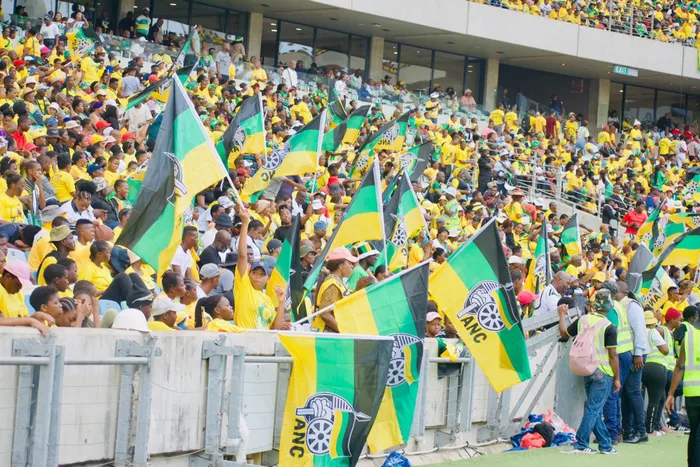
DESPITE its well-documented failures, many voters continue to choose the ANC at the polls. The writer argues that the failure of opposition parties to articulate their policies is one the many reasons why voters continue to choose the familiar as if they are trapped in some "Stockholm syndrome" of sort. Unfortunately the status quo normalises government dysfunction.
Image: Independent Newspapers Archives
South Africa’s democratic project is straining under the weight of compounding failures. To explain the ANC’s continued hold on power purely as “Stockholm syndrome” misses the deeper reality: our politics are trapped in a feedback loop where voters settle for the familiar (in the ANC or any of its offshoots like the EFF, uMkhonto weSizwe Party, etc), opposition parties fail to inspire confidence, and governance decays under the assumption that accountability is negotiable. The picture is not binary and blame is not singular. Responsibility sits with the voting public, the parties that seek power, and the ruling party that has governed for decades. Together, these dynamics have fashioned an ecosystem in which inertia masquerades as stability, and decline feels inevitable even when it is not.
The voters’ dilemma sits at the heart of this impasse. Millions are disillusioned with the ANC. They are exhausted by corruption, weary of failing infrastructure, and frustrated by the erosion of state capability across critical sectors. Yet, when it’s time to choose, many still return to the party they know. This is not merely nostalgia or uncritical loyalty. More often, it is a hard calculation in the absence of compelling alternatives.
For a large number of South Africans, politics is about proximate realities: the school nearby, the clinic’s hours, the reliability of water and electricity, the trustworthiness of the councillor whose phone number is saved in a WhatsApp chat. Where opposition parties have not rooted themselves credibly in local governance. Where they’ve appeared transient, disunited, inconsistent, or more interested in point-scoring than service, voters default to the imperfect option they can at least predict. Stability, even in decline, can feel safer than experiments with unknowns.
The Voters' Dilemma
That choice, however understandable, carries cost. Democracy cannot thrive on resignation. When voters repeatedly reward underperformance with continued support, they send a message to political elites that accountability can be negotiated, that the threshold for competence can be lowered, that decay can be tolerated in the name of loyalty or pragmatism. Over time, this normalises dysfunction as the price of continuity. The ballot becomes less a tool of renewal and more a ritual of endurance, and the cycle hardens: citizens demand change while entrenching the conditions that make it elusive.
Opposition politics has not meaningfully disrupted this cycle, except maybe in the case of the MKP at the 2024 national and provincial elections. Parties outside the ANC have struggled to offer a compelling, coherent alternative that speaks to national cohesion, local delivery, and a credible pathway to governance.
Fragmentation has been their defining feature. Splinters upon splinters, personality projects that flare up and fade, coalitions assembled hastily for convenience rather than principled alignment. Platforms drafted reactively to scandal rather than proactively to vision.
Too often, opposition leaders have told South Africans what they are against without convincing them what they are for. Voters remember the fights and press conferences, but not the grounded, costed, and consistently communicated programme for better governance.
Opposition Failures
The absence of this credible alternative has a compounding effect. When the opposition appears more invested in ideological purity tests or internal point-scoring than in persuasion and governance, it forfeits the moral leverage that comes from demonstrated competence.
Municipal coalitions that collapse noisily, policy positions that pivot opportunistically, and leadership contests that feel more like family feuds than national service all contribute to voter scepticism. In households where politics is judged by the bin collected, the streetlight repaired, the clinic staffed, and the official who shows up, opposition parties are remembered for turbulence rather than reliability. The result: an electorate that wants change but cannot, in good conscience, bet its school, clinic, or household stability on actors who have not earned trust where it matters most on the ground.
This interplay between voter pragmatism and opposition underperformance has deep consequences for the body politic. In a healthy democracy, competition for power compels parties to sharpen ideas, fix mistakes, build coalitions, and govern better.
In South Africa, the pattern has been that the ruling party remains in power less by strength than by default. Where competition exists, it is often fragmented and transactional; where governance fails, accountability feels more performative than structural.
That is how institutions erode. Quietly, cumulatively, through the corrosion of standards and the hollowing out of capacity. All the while, the public learns to lower expectations and ration outrage. When people predict load shedding like a weather report and treat water interruptions as normal, the political system has conditioned them to accommodate failure rather than demand rectification.
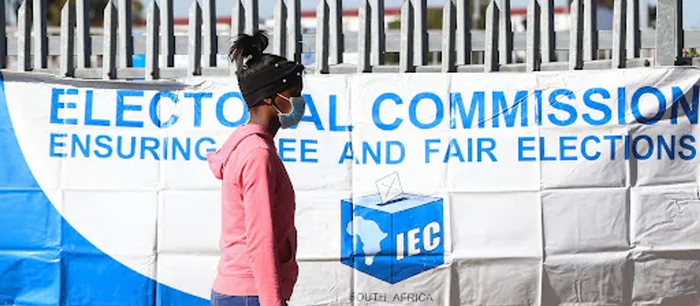
LAST year's provincial and national elections birthed the government of national unity (GNU). Next year, South Africa is headed to the local government elections with declining numbers of voters who show up and a new entrant who won the most votes in KwaZulu-Natal, the uMkhonto weSizwe Party.
Image: LEON LESTRADE Independent Newspapers
Voter Apathy
Apathy follows. Voter turnout declines. Civic energy, once channelled through organised movements and purposeful activism, gets diverted into private coping strategies. Generators, boreholes, private security, fee-based education. All creating an unequal parallel state for those who can afford it and a shrinking public compact for those who cannot.
The consequence is a double fracture: between citizens and the state, and among citizens themselves. Politics becomes something that happens to people, not with them. And the democratic promise, of a state that belongs to everyone and performs for everyone, recedes further into abstraction.
Assigning responsibility within this landscape requires clarity and fairness. Voters are not passive spectators; they are co-authors of the political story. The duty of citizenship does not end at the ballot box; it encompasses scrutiny, participation, community organising, and the insistence on higher standards.
Choosing the least-worst option, year after year, is understandable but ultimately unsustainable. It entrenches a politics of endurance rather than improvement. Citizens must demand better. Of the ruling party they may still support and of the opposition that seeks their vote. That means rewarding competence when it appears, punishing failure when it persists, and refusing to make peace with decay simply because the alternatives have not yet mastered discipline.
Opposition parties, for their part, need to rediscover public persuasion and demonstrate governing seriousness. South Africans are persuadable when they trust. Trust is built when parties reliably handle everyday matters, act credibly on major issues, govern transparently, maintain infrastructure, listen openly, form service-oriented coalitions, and communicate consistently. Not just during campaigns.
Policy depth matters, but it must connect to lived realities. A national platform that stitches together employment, energy, transport, safety, health, and education with costed plans and measurable timelines is not optional. It is the minimum threshold for aspiring governments. Opposition unity is not merely arithmetic; it is cultural. Voters can sense whether a coalition is held together by principle and shared service, or by convenience and ambition. The former can persuade; the latter tends to implode.
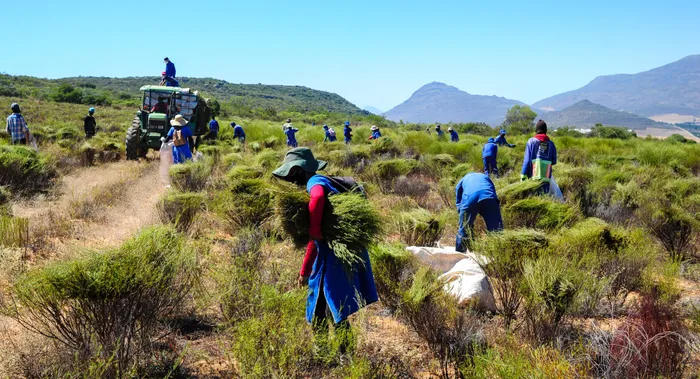
OPPOSITION parties' obsession with what they are against rather than what they stand for leaves many voters with little choice but to rather choose the familiar or just abstain from voting as seen in last year's national and provincial electons where these farmworkers who continue to face social and human rights issues, decided to stay away from the polls.
Image: HENK KRUGER Independent Newspapers
Ruling Party Responsibilities
For the ruling party, the challenge is stark. Longevity does not equal legitimacy in perpetuity. Liberation credentials cannot indefinitely substitute for competence. If renewal is to be more than a slogan, it requires a visible break with practices that hollow institutions, reward loyalists over professionals, and treat accountability as a political posture rather than a governance scaffold.
Service delivery does not improve through communications strategies. It improves through disciplined execution, transparent procurement, empowered professionals, aligned incentives, and a culture that protects capability rather than undermines it. Citizens have watched cycles of promise and backslide. They recognise the difference between performative reform and structural change. If the ANC wishes to remain the vehicle for national development, it must prove it through measurable improvements that are felt where politics is judged in the real. In the clinic, classroom, queue, and street.
The trajectory can still be altered. Decline is not destiny, but turning requires courage across the system. Citizens must be willing to recalibrate their choices in pursuit of renewal. Opposition leaders must be willing to subordinate ego to programme, to choose coherence over theatricality, and to demonstrate competence in the trenches of local government.
The ruling party must be willing to confront failure openly and fix it structurally, not rhetorically. None of this is romantic. It is painstaking work. The grind of rebuilding institutions, the discipline of budgeting honestly, the humility of listening, the resolve to prosecute corruption regardless of political cost, and the patience to let good governance speak through results rather than slogans.
The Path Forward
A more constructive politics is possible when accountability becomes reciprocal. Parties earn votes by governing well; voters reward performance and withdraw support from failure. Civil society monitors and engages, not as antagonists but as co-architects of a functional state.
Business participates through productive investment and integrity in procurement, not by insulating itself from public decay. Media interrogates with fairness and rigour, spotlighting both failure and competence. Universities produce the skills and ideas required to modernise systems. Communities organise to demand service delivery without becoming substitutes for it. This is the democratic compact renewed, not romanticised, but operationalised.
South Africa’s crossroads is real, but a path forward is equally real. It begins with a refusal by voters, parties, and institutions to normalise decay. It advances through a politics that persuades rather than polarises, governs rather than performs, and holds itself to standards that do not bend for convenience. The country is not short of talent, ideas, or will. It is short of alignment, discipline, and credible execution. Those are fixable deficits when the incentives are reset and the public insists on competence over comfort.
In the end, the burden of choice belongs to all of us. The ballot can be an instrument of continuity or a catalyst for renewal. The opposition can be a chorus of dissent or an alternative ready to govern. The ruling party can be an institution that protects the state or a machine that consumes it.
What we are witnessing is not fate but consequence. What we choose next will determine whether our democracy remains a promise deferred or becomes a promise delivered. A promise felt not in speeches or headlines, but in the everyday dignity of functional governance.
(Dube is a noted political economist, businessperson, and social commentator on Ukhozi FM. His views don't necessarily reflect those of the Sunday Tribune or IOL. For further reading visit http://www.ncodube.blog)

Nco Dube, a political economist, businessman and social commentator
Image: Supplied