

The preliminary report of the Madlanga Commission of Inquiry headed by Judge Mbuyiseli Madlanga offers crucial insights into our security apparatus, but requires more than casual reading. This article explores why information literacy is essential when engaging with complex official documents, and how citizens can better navigate between truth and misinformation.
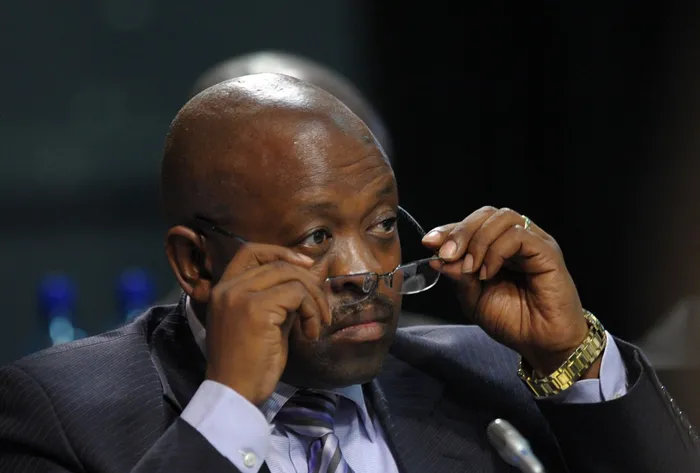
Image: Dumisani Sibeko/Independent Newspapers
The free flow of information is essential in exposing elected leaders and government officials who may try to escape facing the consequences of their lying, cheating, and stealing. That is why the preliminary report of the Madlanga Commission of Inquiry will be useful to clarify whether our security is in safe hands.
Following the provincial commissioner of KwaZulu-Natal Lieutenant-General Nhlanhla Mkhwanazi, for weeks we have seen and heard witnesses, coming forward and testifying: This is what I know, How I know, and Why people should know.
Thanks to technology, downloading the entire preliminary report will be convenient and quick. So, getting it is easy, right? Well, not necessarily. Getting hold of the document is one thing. Unpacking its content is a different matter. Making sense of complex ideas takes effort, concentration, and skill.
To fully grasp latest information, we must have the humility to confront our own ignorance, biases, and limitations. We need the ability to recognise what we don’t know, what we are expected to know, and what we should do to find this knowledge out. This is called information literacy. It involves posing unanswered questions, reading with understanding, sorting information, absorbing knowledge, and formulating logical perspectives. Always embracing the habit of taking a second look and reading between the lines, before jumping to conclusions. It is being open to live with constant doubt – that is to say, being sceptical.
The Madlanga Commission of Inquiry took us inside a shadowy world where monsters and angels look the same. A place where it is naïve to say too much because anything you say can be used against you. When forced to answer, plead ignorance: ‘I know nothing, I saw nothing, I said nothing, and I did nothing.’ Then again, we often forgive people who admit, ‘I don’t know,’ or ‘I don’t remember’ rather than lie. We also should not blame people when they refuse to tell us exactly what we want to hear. Eventually what matters is not what we believe about who is right or wrong, but what the evidence is telling us. Information literacy teaches us to handle the truth.
The preliminary report is a definite must-read, but it is by no means going to be easy to read. The distinction is important. People who feel intimidated to read for themselves may cling to any piece of commentary from their trusted sources. Sometimes even when the analysis is suspect – plain common sense from gatekeepers, interlocutors, and outside-insiders with dodgy agendas. Misreading by beginner readers also risks misinterpretation, which in turn can result in misleading conclusions.
We must cultivate information seekers who can appreciate stirring headlines, memorable quotes and soundbites, blinding spectacles, and viral memes – yet who are also able to absorb the boring but important details, the dry but useful facts, the abstract yet persuasive themes, and the compelling conclusions. Surely, it is time we realised how information literacy is an essential tool for citizen engagement.
(Machi writes in his personal capacity. His views don't necessarily reflect those of the Sunday Tribune or IOL)