

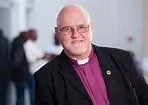
Reverend Mike Vorster is the former Bishop of the Natal Coastal District, Methodist Church of Southern Africa.
Image: Supplied
THE Christmas songs you would have heard in the shopping malls, and perhaps also in schools and churches, resound with the word ‘peace’. And peace is what the angels promised to the shepherds on that first Christmas morning 2,025 years ago. Looking at the situation around us today, in our country and in the wider world, peace seems like a distant dream.
Perhaps in some conflicts there might be one of those sentimental Christmas ceasefires. A recollection of the famous incident during the First World War when German and British soldiers put down their guns, sang Christmas carols together, and played football. It is a lovely image. But we have to remember that the very next day they went back to shooting each other – and indeed carried on for almost four more years after that. Hardly a good model of what peace looks like.
As many wise women and men have commented, peace is more than just the absence of war. Rather it shows an enduring commitment between two groups of people to live together in harmony, even if they do not agree about everything. It is an underlying recognition that what unites is more important than what divides us.
As South Africans – whatever our cultural background – we should immediately see how important this philosophy is given our history of division and the legacy that we still carry. But while racial division has been a scourge for us, we can take some pride in the success we have had in overcoming religious divisions.
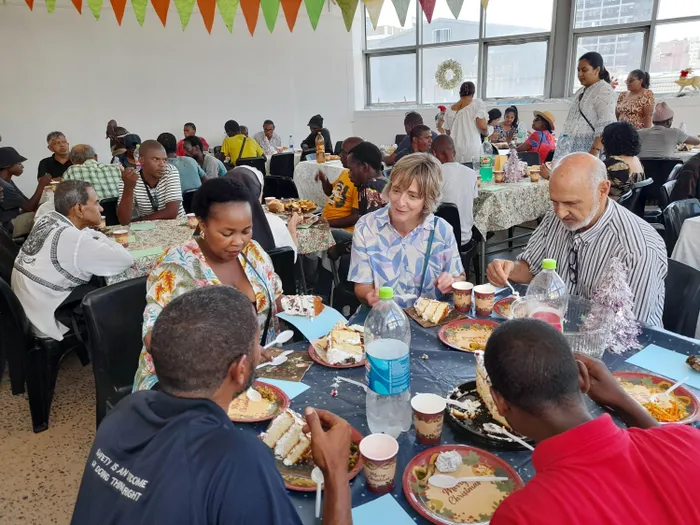
Mikaela York (seated in the middle) is the niece of Archbishop Denis Hurley who was a great inspiration to Rev Mike Vorster (seated on the right of her) as a fearless religious leader. She is seen attending the Meal of Reconciliation at the Denis Hurley Centre where both she and Vorster are patrons.
Image: Supplied
As a young Methodist minister, I was working with the Catholic Archbishop Hurley at Diakonia at a time when it was still unusual for different Christian denominations to respect each other, let alone work together. That strong ecumenical legacy continues today in the KZN Christian Council. Moreover, again inspired by Archbishop Hurley and also Ela Gandhi, we have a great heritage in this city of different faiths coming together. We saw this recently in the shared response to the tragedy at the Hindu temple being constructed in Verulam.
I have the honour of being a Patron at the centre named after Denis Hurley and, on the Day of Reconciliation on Tuesday, I attended their annual Meal of Reconciliation. This is an organisation which serves meals to over 250 homeless people, five days a week throughout the year. But on this day the invitation was not just to serve the homeless but to sit down and eat with them as fellow residents of this city: homeless and non-homeless; Christian, Muslim, Jewish and Hindu; disabled and able-bodied; South Africans and foreign nationals.
I do not think there can be anywhere else where I could experience such an eclectic gathering of human beings, each one of us wonderfully made in God's image. I know that there have been some peace prizes being handed out recently – some more deserved than others – but I definitely feel that the Denis Hurley Centre deserves a Peace Prize for organising such a wonderful symbol of unity.
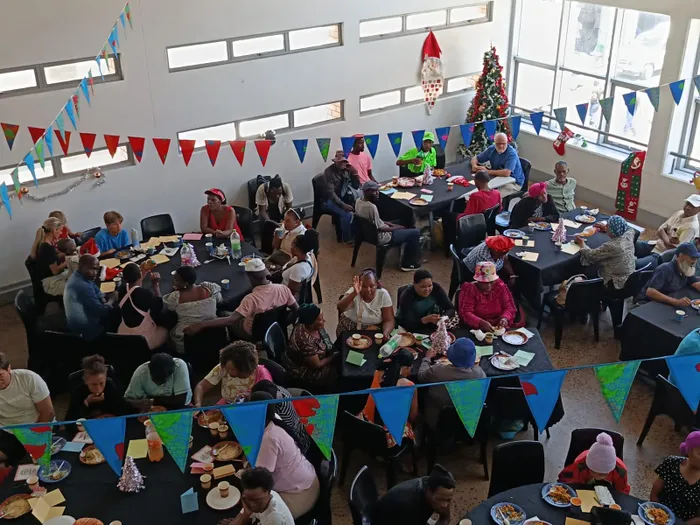
A view of the crowds from different backgrounds who gathered for the Meal of Reconciliation at the Denis Hurley Centre.
Image: Supplied
I was especially pleased to see the welcome given at the Denis Hurley Centre – that day and every day – to our fellow Africans from other parts of this continent. I have had the privilege over several years to visit the Democratic Republic of Congo (DRC). In response to an invitation this year by their Inter-Religious Council we arranged training to better equip religious leaders to deal with pre- and post-election conflict. While we often talk about African refugees coming to South Africa, we do not always have a good understanding of what the conflict is that they are fleeing. If we can help in some way to bring about peace in DRC, we are closer to bringing about peace in Africa – and giving people less reason to flee their home countries and seek refuge elsewhere.
Meanwhile, for as long as people are seeking refuge, we have a duty to welcome them: certainly, a Christian duty (the Bible is very clear about that) but I would say a shared human duty. Christmas is an especially poignant time to reflect on the plight of refugees when we remember that, almost as soon as he was born, the infant Jesus fled with his family into Egypt to escape persecution.
My complaint used to be that we used warm words about welcoming the stranger but then did very little about it. But in the last few years, perhaps fuelled by political rhetoric from the USA, we now do not even bother with the warm words. It increasingly seems perfectly acceptable for politicians to talk about creating division, marginalising certain groups, polarising opinion. Their focus is on what divides us rather than what we have in common – and they make political capital out of it. This is seen in the disgraceful behaviour by elected politicians in local, provincial, and national governance. Political killings being the nastiest form of this behaviour.
The noise and confusion that such protests create – and the direct harm they do to vulnerable people – is the very antithesis of the peace that the angels promised. But note that the first words from the angels to the shepherds were ‘Do not be afraid’. It seems sometimes that those of us who believe in peace and living together in harmony – and I still think we are the majority – have become afraid.
We are silenced by a loud and aggressive minority. Archbishop Hurley and Archbishop Tutu (who died four years ago this week) were never afraid to speak out for justice. I hope that today’s generation of religious leaders will also be listening when the angels sing ‘Do not be afraid – I bring you news of great joy’.
Each one of us can hear that news of great joy whoever we are. And like the shepherds we should be so overwhelmed with joy that we want to rush out and share it with every person we meet. Can I ask every reader to find a way of sharing news of great joy with a stranger this week?
Rev Mike Vorster, former Bishop of the Natal Coastal District, Methodist Church of Southern Africa.
The views expressed do not necessarily represent those of the Sunday Tribune or IOL.
SUNDAY TRIBUNE