

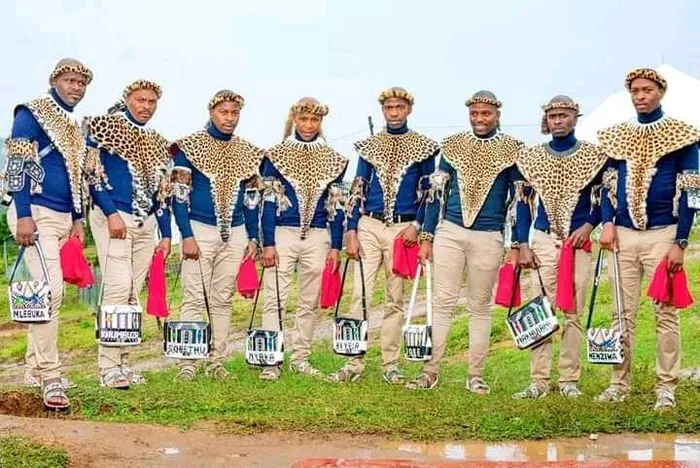
THE men of uMsinga in matching outfits paired with imvunulo (Zulu traditional attire) as they prepare for the local town's unique Christmas Eve tradition of celebrating the safe return of breadwinners from their cities of employ to spend time with their families. This is a far cry from a time when the December holidays were marked by factional wars.
Image: Menzi Majola | X
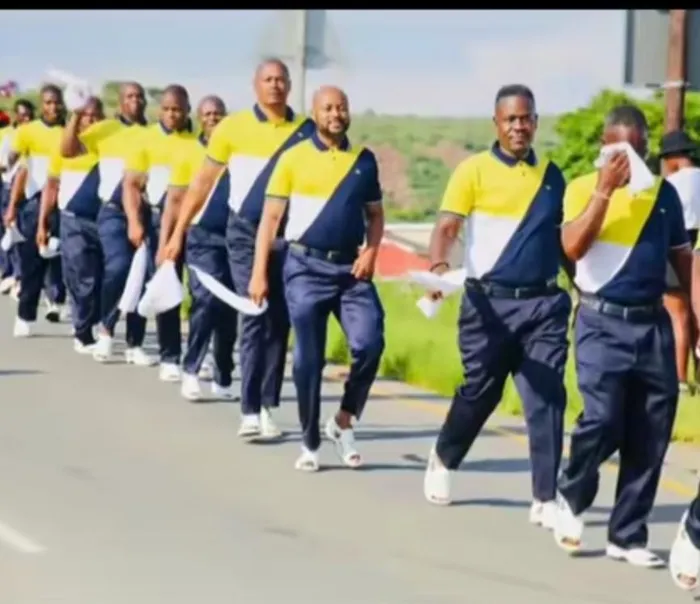
URBAN workers descend to their rural background in uMsinga and the surrounding areas to observe a unique tradition of uHlamvu on Christmas Eve to mark their safe return in spectacular fashion.
Image: Mkhanyisi/TikTok
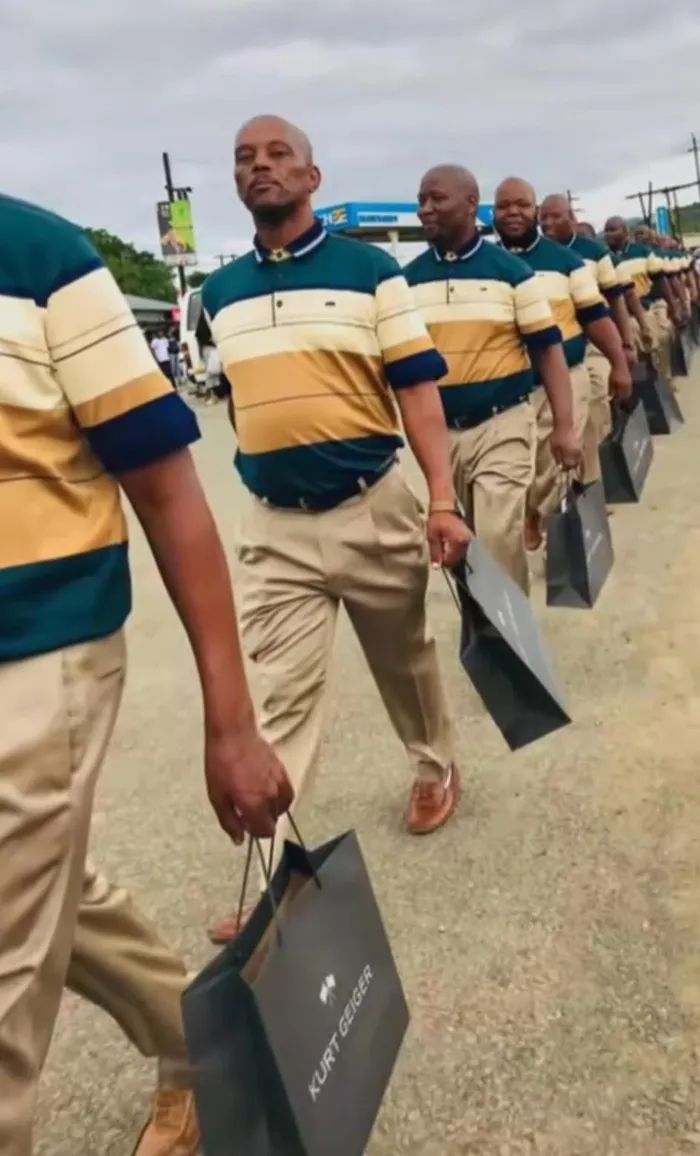
EVERY Christmas Eve, the men of uMsinga transform from migrant workers into cultural icons, parading in matching outfits through streets once known for political violence, factional wars and stock theft rivalry. This powerful tradition, known as iHlamvu, shows how communities can choose celebration over conflict, offering hope to other traumatised areas like Shobashobane, in the South Coast of KwaZulu-Natal.
Image: Mkhanyisi/TikTok
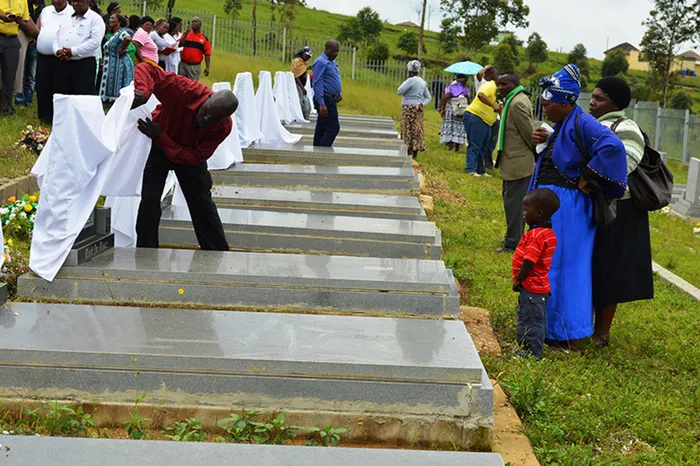
EVERY Christmas is a trigger for the community of Shobashobane, in KwaZulu-Natal's South Coast where about 500 attackers descended on the hilly village injuring hundreds and killing 19 people including a 19-month-old baby that died on his mother's back as she tried to flee. Thursday marked 30 years since the Christmas Day morning attack.
Image: Independent Newspapers Archives
Every year in December something extraordinary unfolds in the heart of uMsinga, deep in rural KwaZulu-Natal. On Christmas Eve, when the sun is at its highest point in the sky, breadwinners who have returned home from Johannesburg, Durban, Richards Bay and other cities of labour converge in places such as Keate’s Drift, Tugela Ferry and Pomeroy.
What follows is not merely a homecoming but a cultural ritual steeped in memory, pride and survival.
The event is known as iHlamvu, a tradition dating back decades to the era of migrant labour, when men would leave their homesteads for months, sometimes years, to earn a living far from home. Christmas Eve became a ritual where the celebration of safe return, of life preserved against the odds of dangerous work, violence in the hostels, and the loneliness of separation are observed.
On this day, uMsinga comes to a standstill.
Dressed head to toe in matching, brand-new outfits, crisp mercerised shirts, Brentwood trousers, and polished shoes or, lately, soft leather Carvela loafers, the men parade through the streets in choreographed unity. Handkerchiefs and towels sway rhythmically in the air as they walk, one shoulder dropped as they embark on their choreographed gait. Some carry matching umbrellas. Women line the dusty streets, ululating, clapping and calling out praises.
Most of the women and young girls complement the scene fully kitted out in their traditional attire.
The air vibrates with maskandi music and laughter. Today, smartphones are held aloft, capturing every moment for posterity, for family WhatsApp groups, and for social media timelines that now carry this rural spectacle far beyond the valley.
But iHlamvu is more than fashion, music and performance. It is a powerful act of remembrance and of defiance.
UMsinga was once synonymous with bloodshed. For decades, the area was torn apart by violent factional wars, wars started by stock theft and toxic masculinity, where grudges were settled during every December and Easter holiday.
"Iyobonana ngoGudi (see you on Good Friday)" was once a threat to settle December scores in Easter. Families lived with the constant expectation of retaliation against them. The region earned a grim reputation as one of the country’s most heavily armed rural areas, awash with illegal firearms, including the notorious AK-47.
Legend, told in jest and in awe, has it that some elderly women in uMsinga could dismantle an AK-47 and bury it in a vegetable garden, ready to be reassembled in case of danger and a need to launch an attack. The area also fed into darker economies, producing hired guns for the taxi industry and political conflicts far beyond its municipal demarcation.
Yet today, from those same streets today comes a different sound; a celebration instead of gunfire, pride instead of fear.
The uniformed aesthetic of the parade dovetails seamlessly with the Bhinca lifestyle subculture, an expression of rural pride rooted in maskandi music, sharp dress and a deep nostalgia for rural upbringing, of herding cattle, stick fights, game hunting and swimming in rivers where the danger of unknown water species lurks. It is an assertion that rural life is not backward or broken but vibrant and worthy of honour.
Through iHlamvu, uMsinga is not only celebrating its heritage. It is celebrating survival. It is choosing peace over vengeance.
Further down in the province, more than 360 kilometres away, on the South Coast, another community continues its long and painful journey towards healing.
Shobashobane is etched into South Africa’s memory as the site of one of the most brutal politically motivated massacres after the dawn of democracy. On Christmas Day in 1995, with South Africans still immersed in the novelty of the first democratic dispensation, about 500 gunmen descended on the hilly village, killing 19 people in cold blood. The attack took place at around 8am as families prepared for Christmas, targeting homes linked to the ANC, and lasted for hours, with those who tried to flee being hunted down.
The frontrunners of the attack carried automatic rifles and pistols. The second group was behind them, carrying traditional weapons, pangas and machetes, and mutilated the bodies. There was speculation that some of the body parts were harvested for muti. At least 90 huts and homes were burned down, and hundreds of people were injured. Most of the victims were women and children. Among the youngest victims was Khiphokwakhe Mthethwa, a 14-month-old baby. He died with his fleeing mother, who had him strapped on her back. Her feet were not quick enough for the bullets.
After years of investigation by the police from outside the area, 96 warrants of arrest were issued. When the police were on their way to effect the arrests, they were ambushed. Only 18 people were eventually tried, with 13 of them found guilty, of whom five had their sentences overturned on appeal. Judge Hilary Squires found that the attack was linked to historical hostilities between the ANC and the IFP, a claim disputed by both parties. There were accusations of a "third force" at work.
For three decades, Christmas has been a season of trauma for the survivors, a time when grief resurfaces with crushing weight. The attack remains partially resolved, its wounds unhealed, its masterminds unpunished. Political denials have come and gone, even as former enemies now sit together in governments of unity, rewriting the present without fully reckoning with the past.
And yet, even in Shobashobane, something remarkable is happening.
Amid the pain and absence of justice, families are beginning to speak openly about healing. Not because the past no longer hurts, but because living permanently in its shadow has become unbearable. They want to remember their loved ones without being consumed by anger.
In this, the quiet lessons of uMsinga resonate deeply.
South Africa’s story is one of communities repeatedly asked to rebuild after devastation, after apartheid, political violence, poverty and neglect. The instinct to rise again, to dance where blood once flowed, is stitched into the country’s DNA.
If a place like uMsinga, once defined by bullets and burial rituals, can transform a history so painful into a parade of unity and pride, then perhaps healing is not naive optimism but a courageous choice.
If families in Shobashobane can still imagine peace after 30 years of unanswered questions, then perhaps the rest of us, too, can confront our pasts without being imprisoned by them.
As the year draws to a close, iHlamvu offers a profound message for the country itself.
And maybe that is the quiet miracle South Africa needs to carry into the new year.