
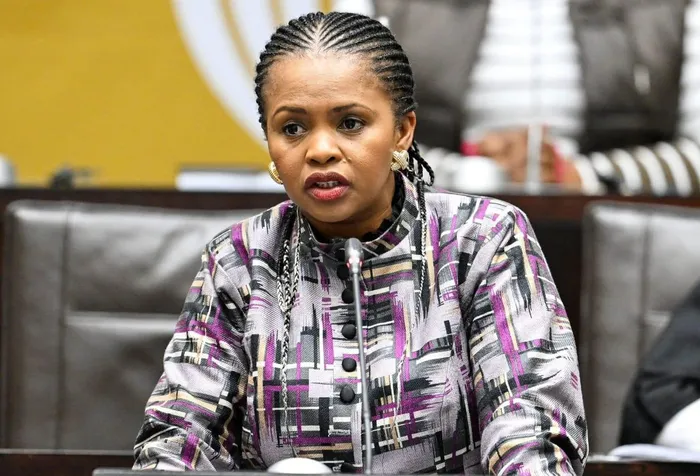
ANC national executive committee member and MP Khusela Diko's social media exchange with users on X is a poor display of political arrogance that exposed how out of touch her party is with the sentiment on the ground and its continued refusal to acknowledge its credibility crisis.
Image: PARLIAMENT OF SOUTH AFRICA | Facebook
ANC National Executive Committee member and Member of Parliament Khusela Diko’s recent exchange with users on X (formerly Twitter) was not just a social‑media spat. It was a revealing moment. A window into the ANC’s deepening crisis of legitimacy and its refusal to accept that it has long lost the moral authority it once wielded.
Diko, who chairs Parliament’s Portfolio Committee on Communications and sits on the Ad‑Hoc Committee probing allegations involving KwaZulu-Natal Police Commissioner General Nhlanhla Mkhwanazi, took to X to express her views on matters before that committee. She dismissed concerns about ministerial overreach, defended Senzo Mchunu against corruption allegations, and lamented what she called “governance by populism” and “trial by social media.” She went further, suggesting that the public has “favourites” who must not be questioned.
But it was her tone. Mocking, condescending, dripping with entitlement that struck a nerve. She asked to be “schooled,” referred to one user as a “maker of furniture,” and told another to “spare me the sanctimonious preaching” when they raised her own link to the Covid‑19 personal protection equipment (PPE) procurement scandal.
This is not simply bad behaviour online. It is symptomatic of a governing party that has not yet grasped the extent of its credibility crisis.
The ANC’s Moral Ground Has Collapsed
For years, the ANC has behaved as though it still enjoys the moral standing it held during the liberation struggle or in the early days of democracy. It continues to invoke due process, legal prescripts and constitutional protections as though the public still instinctively trusts its intentions.
But the public no longer does.
Decades of corruption, factional warfare, state capture, and the weaponisation of state institutions have eroded trust in the ANC and the state it leads. The criminal justice system, in particular, has been compromised by political interference and selective accountability. The public perception, and perception is political reality, is that the ANC has been central to this decay.
In such a context, the ANC cannot expect the public to accept its protestations of innocence at face value. It cannot hide behind legal technicalities. It cannot demand deference. It cannot behave as though it still possesses the moral privilege of being believed.
Yet Diko’s online behaviour reflects precisely that assumption.
The Arrogance of Impunity
Diko’s dismissive tone is not an isolated incident. It is part of a broader pattern in which ANC leaders respond to criticism with defensiveness, contempt or hostility. It is the arrogance of a political class accustomed to impunity.
What makes Diko’s case particularly striking is her own history. Her name is tied to the PPE procurement scandal. A scandal that, for many South Africans, symbolised the ANC’s moral collapse during the pandemic. Even if she has not been convicted of wrongdoing, the public memory of that scandal remains vivid.
For her to lecture the public about governance and accountability. To do so with condescension, is not merely tone‑deaf. It is provocative. It is offensive. It is a reminder of how deeply disconnected the ANC’s leadership has become from the moral expectations of the society it governs.
The Public No Longer Accepts “Due Process” as a Shield
The ANC often retreats behind the language of due process when confronted with allegations of wrongdoing. Legally, this is correct. Constitutionally, it is protected. But politically, it is meaningless.
The public no longer trusts the processes. They no longer trust the institutions. They no longer trust the ANC to police itself. They have seen too many commissions, too many reports, too many investigations that lead nowhere. They have seen too many comrades protected until the scandal becomes too big to contain.
This is why the ANC cannot rely on legalistic arguments to restore its legitimacy. The public expects a higher standard. Not because they are unreasonable, but because the ANC has given them every reason to doubt its sincerity.
The Offence of Presence
Diko’s presence on the Ad‑Hoc Committee itself is a problem for many South Africans. It is not about legal guilt or innocence. It is about credibility. It is about optics. It is about the basic principle that those overseeing accountability processes must themselves be above reproach.
The ANC seems unable to grasp this. It continues to deploy individuals with compromised public reputations into positions that require moral authority. It continues to behave as though the public must simply accept this.
This is why Diko’s online behaviour struck such a nerve. It was arrogance layered on top of a credibility deficit that the ANC refuses to acknowledge.
Renewal Requires More Than Slogans
The ANC speaks often of renewal. But renewal is not a speech or a conference resolution. Renewal is action and action must begin at the top.
If the ANC wants to be taken seriously, it must demonstrate a willingness to act decisively at the first sign of scandal. It must remove individuals from positions of authority pending investigation. It must prioritise public trust over factional loyalty. It must show that it understands the difference between legal innocence and political accountability.
Think of Nkandla. Think of Phala Phala. Think of the PPE scandals. Think of the endless list of names associated with wrongdoing who remain in positions of influence.
Renewal cannot coexist with impunity. Renewal cannot coexist with arrogance. Renewal cannot coexist with leaders who mock the public for demanding accountability.
The Public Is Not the Problem
Diko’s complaints about “trial by social media” reveal a deeper frustration within the ANC: the frustration of a party that no longer controls the narrative. Social media has democratised political discourse. It has exposed scandals that would once have been buried. It has forced transparency on a political class that prefers opacity.
The ANC interprets this as hostility. But the truth is simpler: the public is tired. Tired of corruption. Tired of excuses. Tired of leaders who behave as though accountability is optional.
The ANC’s problem is not the public. The ANC’s problem is its own entitlement.
(Dube is a noted political economist, businessperson, and social commentator on Ukhozi FM and in various newspapers. His views don't necessarily reflect those of the Sunday Tribune or IOL. For further reading and perspectives, visit: http://www.ncodube.blog)
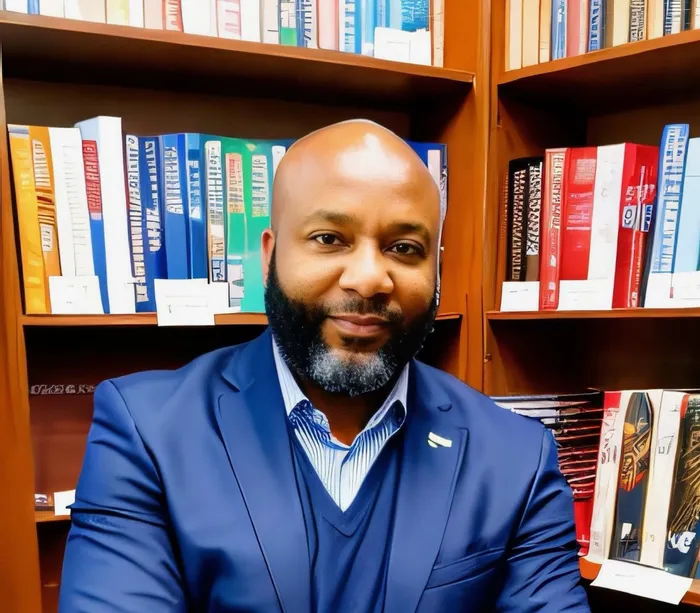
Nco Dube, a political economist, businessman and social commentator
Image: Supplied