Confronting the hard truths of post-Madiba South Africa
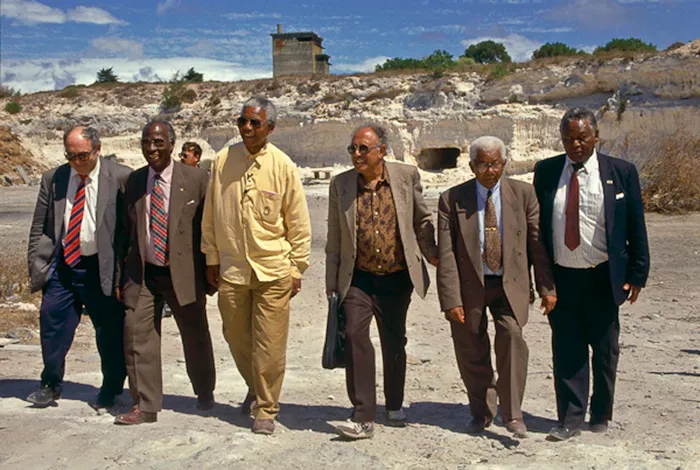
Wednesday, February 11, 2026, marks 36 years since the late former president Nelson Rolihlahla Mandela was released from Robben Island, after 27 years in jail. Mandela and his fellow convicted Rivonia treason trialists, all former political prisoners on Robben Island, return on the fourth anniversary of Mandela's release from jail in 1994. Here they are pictured in the quarry in which the prisoners were made to dig out lime daily. While Mandela chose reconciliation over retribution, the country now grapples with deepening inequality, corruption within the ANC, and resurfacing white supremacist ideologies.
Image: ©Louise Gubb
As Wednesday marks 36 years since the release of South Africa's first democratically elected president, Nelson Rolihlahla Mandela, the moment demands more than ritual praise. It calls for a collective navel-gazing about the ideals he espoused, the sacrifices he made, and the paths the country has chosen since.
The late statesman could have lived a comfortable life as a lawyer. Instead, he chose resistance, risking his life and surrendering his freedom for nearly three decades. He was not alone; thousands endured similar pain, but his story became the most visible symbol of apartheid's cruelty. The ANC used it, rightly, to expose a system that separated a man from his wife and children, allowed no visits, and censored even private letters.
By the time Mandela walked free in 1990, South Africa stood on the brink. Racial tensions had intensified, and the right-wing organisations and supporters became more paranoid about the inevitable majority rule ahead. Political violence between the ANC and the IFP threatened to tear the country apart. Faced with this reality, Mandela chose reconciliation over retribution. That decision still divides opinion: some see it as a masterstroke that averted civil war; others believe it came at the cost of justice, dignity and meaningful redress for apartheid's victims.
Today, that unresolved tension haunts us. Within Mandela's own organisation, comrades have become rivals in a scramble for wealth and influence. Political connectivity has bred a class of tender-driven elites while inequality deepens. It raises uncomfortable questions about whether the sacrifices of the past were honoured and how the liberation movement came to attract those driven by self-enrichment.
Reconciliation, too, remains fragile. White supremacist ideas have resurfaced, more emboldened than many expected. Without dignity, social cohesion is elusive. Without equality, reconciliation rings hollow.
Yet, even amid these harsh truths, Mandela's dream of a free and just South Africa still offers a moral compass. Honouring Madiba requires more than celebration. It demands honesty about what has failed, courage to confront entrenched systems that deepen South Africa's scandalous inequality, and a renewed commitment to making freedom real for all.