World Radio Day 2026: How AI can enhance, not replace, South Africa's radio voices
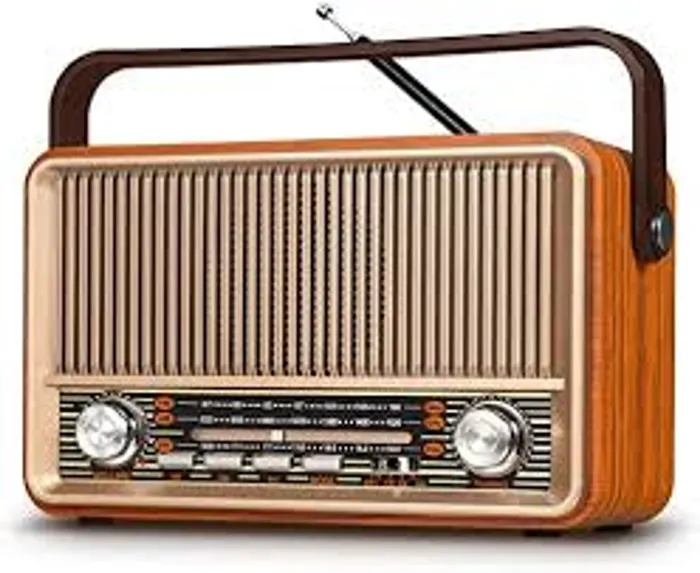
South Africa, like many countries in the world is celebrating World Radio Day today. The day comes at a time when broadcasting is embracing AI. Nco Dube explores how artificial intelligence can enhance radio in South Africa without compromising its human connection which is the soul of radio.
Image: File
Last year, I wrote about radio’s enduring power. Its intimacy, resilience, and role as a beacon of connection in South Africa’s turbulent media landscape. This year, World Radio Day invites us to reflect on a new frontier: artificial intelligence. The theme is clear and cautionary, “AI is a tool, not a voice.” It’s a reminder that while technology can enhance radio, it must never replace its soul.
Radio is not just a medium. It is a relationship. A voice in the dark. A companion on the road. A bridge between communities. And now, it stands at a crossroads: how to embrace AI without losing its human heartbeat.
AI as Amplifier, Not Impersonator
Let’s be clear: AI is not the enemy. When used correctly, it can propel radio into the future. It can automate scheduling, transcribe interviews, translate content across languages, and analyse listener data to tailor programming. It can help community stations with limited staff punch above their weight. It can even assist in curating music, managing archives, and flagging breaking news faster than any producer.
But AI is not a voice. It is not a storyteller. It cannot feel the pulse of a township, the rhythm of a protest, or the silence after a tragedy. It cannot improvise, empathise, or laugh with the audience. It cannot carry the weight of history in its tone or the warmth of recognition in its greeting.
Radio’s power lies in its humanity. AI must serve that humanity, not mimic it.
The South African Context: Opportunity and Risk
In South Africa, the stakes are high. Radio remains the most accessible medium across rural and urban divides. It speaks in isiZulu, isiXhosa, Sesotho, Setswana, Afrikaans, and English. It reaches the grandmother in KwaNongoma and the student in Braamfontein. It is where politics, poetry, and pop culture collide.
AI can help us do more, especially in community radio. Imagine automated translation tools that allow a single broadcast to reach multiple language groups. Imagine AI-assisted editing that frees up producers to focus on storytelling. Imagine smart analytics that help stations understand what their audiences need, not just what they click.
But there is danger too. If AI is used to cut costs by replacing presenters with synthetic voices, we lose the very thing that makes radio matter. If algorithms begin to dictate content without cultural context, we risk erasing nuance. If data becomes the driver, we may forget that radio is not just about reach. It’s about resonance.
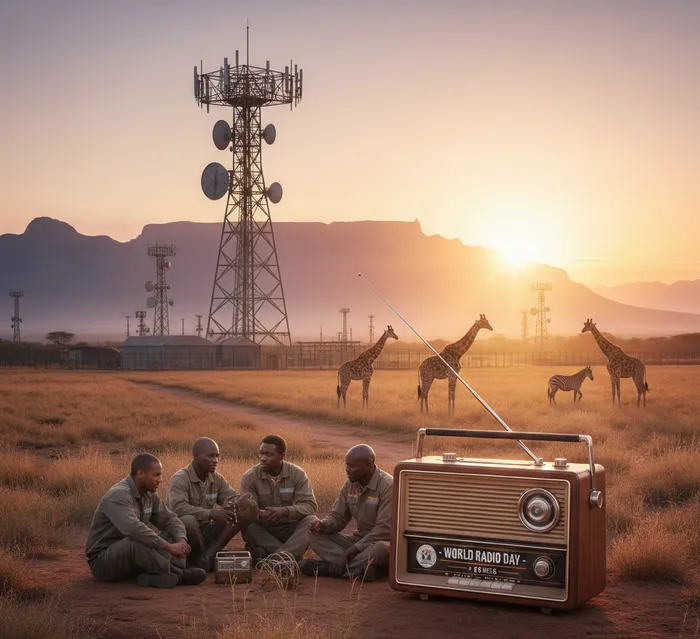
In the reflection on World Radio Day, Nco Dube emphasises the enduring intimacy and connection of radio amidst the rise of artificial intelligence (AI) in South Africa.
Image: Gemini
Guarding the Soul of Radio
The theme “AI is a tool, not a voice” is not just a slogan. It is a warning. In a world obsessed with efficiency, we must defend authenticity. In a media landscape flooded with noise, we must protect meaning.
Radio must remain a space where real voices speak to real people. Where presenters stumble, laugh, cry, and connect. Where communities hear themselves reflected, not simulated.
This is especially true in South Africa, where radio has been a site of resistance, reconciliation, and renewal. From Radio Freedom’s underground broadcasts to Ukhozi FM’s strong cultural identity, our airwaves carry history. They deserve more than automation. They deserve care.
The Road Ahead: Collaboration, Not Replacement
So what does a responsible future look like?
It looks like AI supporting producers and presenters, not replacing them. It looks like smart tools helping stations reach more people, in more languages, with more relevance. It looks like training journalists to use AI ethically to enhance storytelling, not erase it.
It looks like regulators like ICASA setting clear boundaries: synthetic voices must be disclosed, data use must be transparent, and human oversight must remain central. It looks like universities and media houses collaborating to build AI tools rooted in South African realities, not imported algorithms with foreign biases.
It looks like listeners demanding authenticity and stations delivering it.
The Voice Must Remain Human
Radio has survived war, apartheid, television, and the internet. It will survive AI too if we remember what makes it powerful.
AI is a tool. It can help us reach further, faster, and smarter. But it must never become the voice. Because the voice of radio is not synthetic. It is human. It is lived. It is local. It is real.
As we celebrate World Radio Day, let us embrace innovation but never at the cost of connection. Let us use AI to strengthen radio’s reach, not dilute its soul. Let us remember that in a world of artificial voices, the real ones matter more than ever.
Happy World Radio Day. May the signal stay strong and the voice stay human.
(Dube is a noted political economist, businessperson, and social commentator on Ukhozi FM. His views do not necessarily reflect those of the Sunday Tribune or IOL. For further reading and perspectives, visit: http://www.ncodube.blog)
For more thought-provoking opinions click the link below:
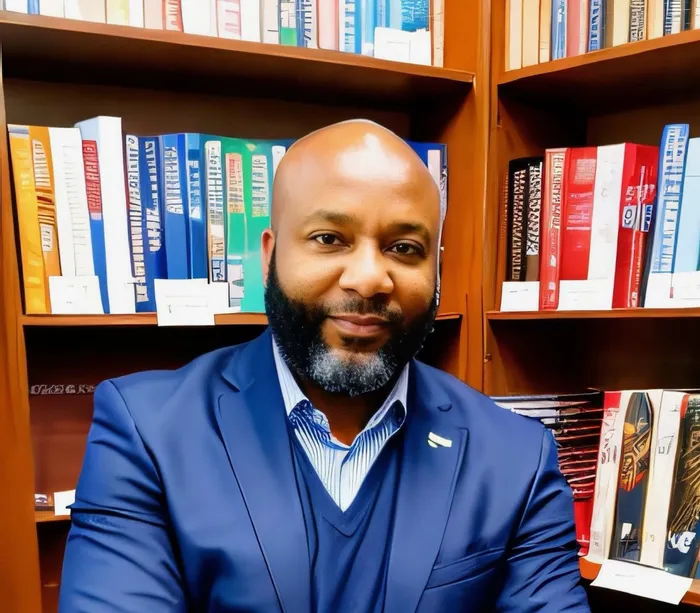
Nco Dube, a political economist, businessman and social commentator
Image: Supplied