

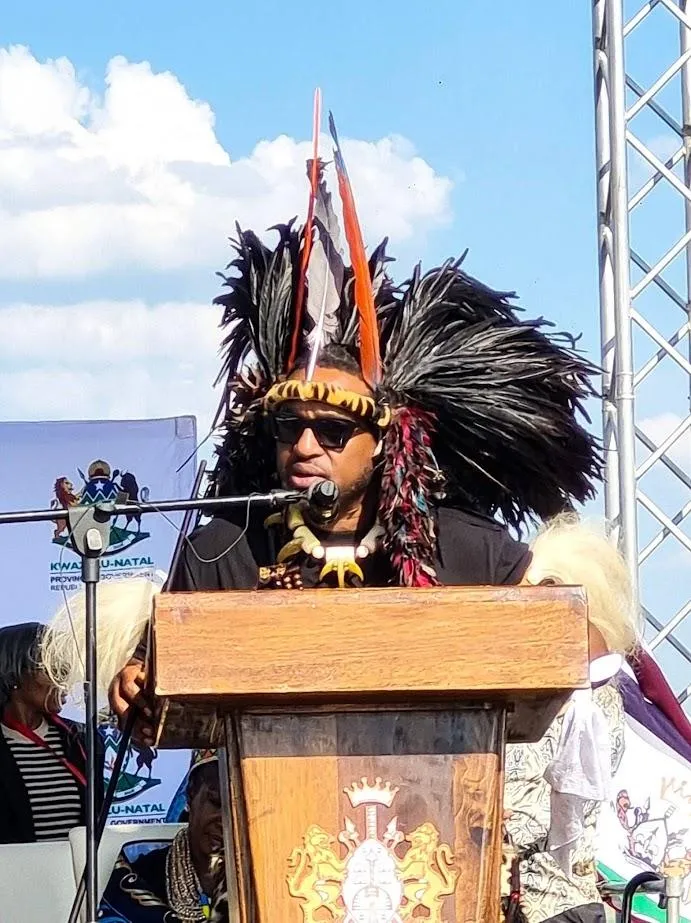
The debate is intensifying on the proposed name change for KwaZulu-Natal by King Misuzulu kaZwelithini at the 147th commemoration of the Battle of Isandlwana last month. The province's current name reflects unresolved historical tensions and silences diverse ethnocultural communities and the new proposed name is actually an apartheid construct, argues the writer.
Image: Supplied
KwaZulu-Natal is often spoken of as if it were a timeless province, but in reality it is the product of two very different histories that were fused together at the dawn of democracy.
Understanding how we arrived at this amalgamation requires revisiting both the colonial trajectory of Natal and the apartheid invention of KwaZulu and then examining how the post-1994 settlement carried forward unresolved tensions.
Natal began as a British colony in the nineteenth century. It was administered through colonial law and institutions, and its population was diverse.
African communities with their own systems of authority lived alongside European settlers and Indian indentured labourers. The colonial state imposed boundaries and hierarchies that disrupted indigenous governance, but Natal retained its identity as a distinct territorial unit until the democratic transition.
Its legacy was one of dispossession and control, yet it was not defined by a single ethnic narrative. Instead, it reflected a layered social reality that was fractured by colonial administration.
KwaZulu, by contrast, was not an ancient kingdom reborn. It was an apartheid creation, a Bantustan designed to fragment Black political unity and administer people through ethnicity rather than citizenship. The homeland system merged multiple communities into a homogenised Zulu identity, stripping away recognition of smaller nations and enforcing belonging through administrative structures.
KwaZulu was a tool of control, not cultural affirmation. It was built to serve the apartheid state’s divide-and-rule strategy, reducing diverse communities into a single ethnic frame that could be more easily managed.
When South Africa entered democracy in 1994, the new provincial map combined KwaZulu and Natal into KwaZulu-Natal.
This merger was intended to stabilise a region marked by violent contestation in the mid-80s and early 1990s. The name itself symbolised compromise, acknowledging the Zulu monarchy while retaining the colonial marker of Natal. Yet this amalgamation carried forward unresolved frictions. Instead of dismantling the scaffolding of apartheid’s ethnic administration, the new order often ratified it, turning temporary political compromises into permanent legal realities.
The legal frameworks that emerged from this settlement reinforced the fiction that KwaZulu was ever a natural territorial entity. Courts repeatedly upheld decisions that denied recognition to smaller communities, effectively re-inscribing Bantustan boundaries into constitutional form.
What was once an apartheid homeland became a post-apartheid legal fact. This was not reconciliation. It was the quiet normalisation of exclusion. The province’s name reflects this uneasy fusion, and debates about whether to retain “Natal” or rename the province “KwaZulu” reopen questions about how history has been remembered and whose identities have been submerged.
The cultural dimension of this debate is equally important. KwaZulu-Natal is home to a wide range of ethnocultural communities, including the AmaBhaca, AmaHlubi, AmaMpondo, Ntlangwini, AbeSotho, Batlôkwa, BaPhuthi, AmaThonga, AmaNgwane, and many others.
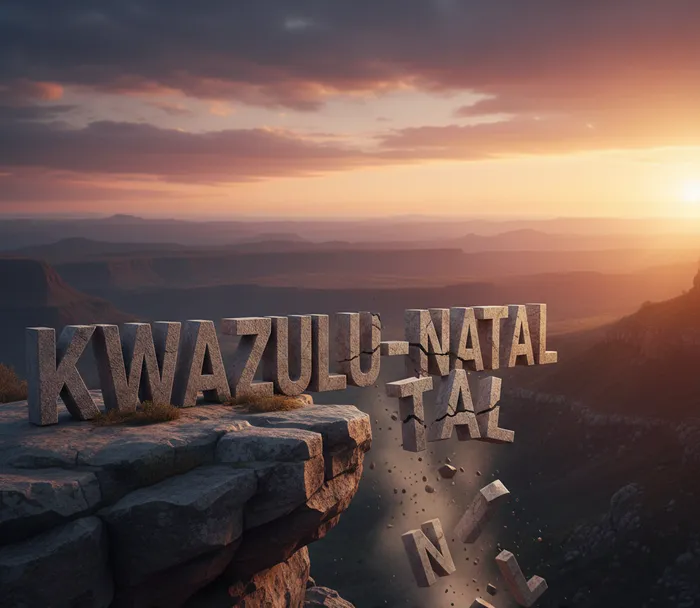
The debate around the renaming of KwaZulu-Natal fails to take into consideration the historical significance of the area's pre-colonial and apartheid boundaries. The writer argues for true restoration that will address historical tensions that the democratic dispensation failed to address.
Image: Gemini
These groups have deep histories and traditions that predate both colonial Natal and the KwaZulu homeland. Yet their presence has been consistently overshadowed by the dominance of a singular Zulu narrative. The current debate about renaming the province exacerbates this disenfranchisement.
It risks further silencing communities whose identities have already been compressed into a homogenised frame, denying them recognition in both law and culture. The province’s ethnocultural diversity is not a footnote to history; it is central to its identity, and any renaming exercise that ignores this reality perpetuates exclusion rather than reconciliation.
The designation of a province is never a neutral act. It frames how history is remembered, whose authority is acknowledged, and which communities are rendered visible or invisible. The label “KwaZulu Natal” is not simply geographic shorthand. It is a settlement that reflects the compromises of transition and the silences of law.
Rather than standing as a marker of shared belonging, it carries the imprint of past dispossession and the persistence of unequal recognition. If the law is to serve justice, it must confront the inherited hierarchies embedded in our geography. That means acknowledging that the province was never simply Zulu land, and that the communities submerged under that narrative deserve dignity in both law and memory.
Renaming is not a diversion. It is a step in transitional justice. Until the province reckons with the legacies of both Natal and KwaZulu and embraces its full ethnocultural diversity, citizenship will remain unequal and reconciliation incomplete.
Policymakers must therefore resist the temptation to treat this as a symbolic exercise.
The question of KwaZulu-Natal’s name is a test of whether democracy can move beyond expediency and confront the deeper structures of exclusion. To ignore the province’s cultural plurality is to entrench injustice. To acknowledge it is to take a step toward genuine reconciliation. The choice is stark: either perpetuate the fiction of a singular identity or embrace the reality of a diverse province whose future depends on recognition, inclusion, and equality.
(Nomvalo is an admitted attorney of the High Court of South Africa and an advocate for women and children's rights. Her views do not necessarily reflect those of the Sunday Tribune, IOL or Independent Media)
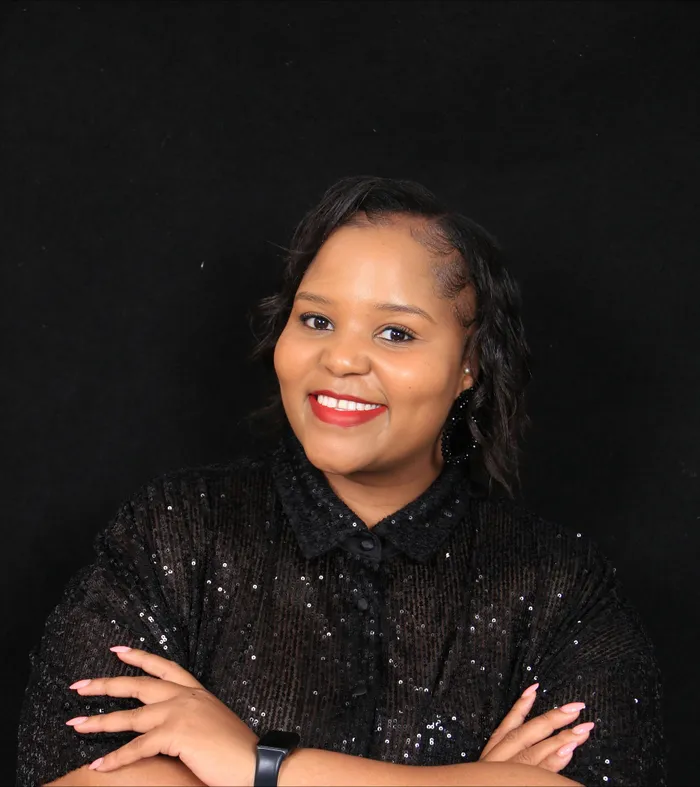
Nqolokazi Nomvalo is an admitted attorney of the High Court of South Africa who advocates for women and children's rights
Image: Supplied