

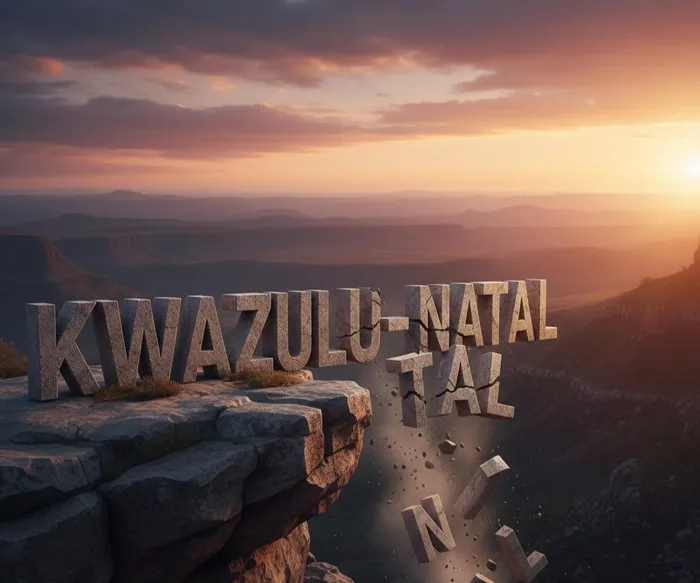
The writer delves into the raging debate about the proposed name change of KwaZulu-Natal, and identifies four main groups in the continuing public discourse.
Image: Gemini
The raging debate over the proposed renaming of KwaZulu-Natal to KwaZulu has ignited intense public discourse. That the idea reportedly originated from King Misuzulu kaZwelithini has added both weight and sensitivity to the conversation.
From my observation, at least four broad groups have emerged in response to the King’s proposal.
1. The first comprises ardent amaZulu traditionalists and some pan-Africanists who view the proposal as a matter of cultural pride and historical restoration. Interestingly, their support is not confined to one racial group. Many white, Indian and coloured South Africans who possess a strong political consciousness and appreciation for the global historical significance of the Zulu nation have also expressed sympathy for the idea. For them, the debate is about honouring a proud legacy.
2. The second group opposes the proposal and is comfortable with the status quo. Their concerns range from preserving continuity to safeguarding social cohesion. This group is a diverse mix across racial and political lines, including many aligned with the ANC who fear that such a change could inadvertently revive the logic of the apartheid-era Bantustan system, where governance and belonging were defined along rigid ethnic lines. Their caution is not without merit. Some in society still cling to the misguided notion that ethnic groups should occupy neatly demarcated provinces: Zulus in KwaZulu-Natal, Xhosas in the Eastern and Western Cape, Basotho in the Free State, baTswana in North West, and so forth. Bigotry, however, is rarely logical. Would Gauteng then be for “everyone,” or the Northern Cape reserved for specific groups? And where, in such a fragmented vision, would white, Indian and coloured citizens fit? The danger lies in setting a precedent that could embolden similar calls elsewhere.
3.The third group remains largely ambivalent. For them, a name change, or the lack of one, will neither improve nor diminish their daily realities. Life, they believe, will simply continue. They are mostly apolotical but do consider the implications of the name change on business cards, Google Maps and institutions like UKZN, etc.
4. The last group moves beyond the binary choice of KwaZulu-Natal or KwaZulu. They argue that the province’s rich history offers more imaginative, unifying possibilities. The Drakensberg, known in isiZulu as uKhahlamba, or the mighty uThukela River, have been suggested as alternative names that celebrate shared geography rather than ethnicity. Admittedly, uKhahlamba may challenge some non-Zulu speakers, but if we can master “Graaff-Reinet,” we can learn this too.
Ultimately, the debate reveals more than a question of nomenclature. It forces South Africa to confront how it balances cultural pride with national unity. There is nothing wrong with celebrating one’s heritage. But we must be cautious of drifting toward a monocultural vision of society. Our strength has always been in our diversity, and that diversity must remain our unifying thread. Let's also remember that there are some among us, who want the country's name to change from South Africa to Azania. | ZAMANTUNGWA KHUMALO KwaDukuza