
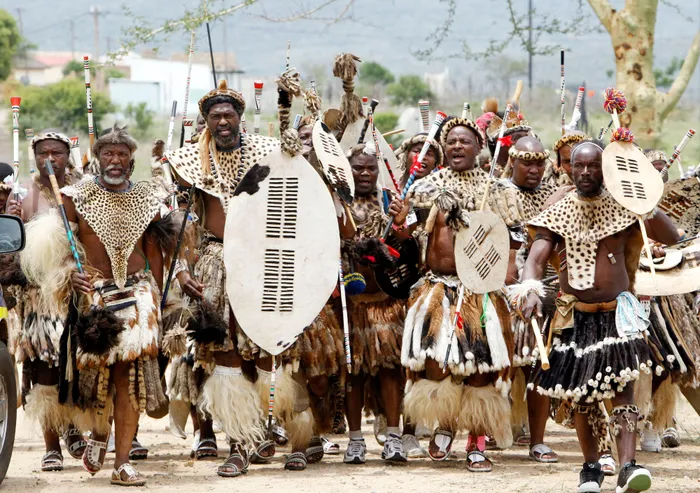
The Zulu are an ethnic group bound by language, history and descent. But ethnicity is not nationalism. Nationalism requires a shared belief in the right to political autonomy. That belief has never cohered among Zulu people in the way nationalist mythology suggests, argues political economist and social commentator, following calls to drop rename KwaZulu-Natal to KwaZulu.
Image: Independent Media Archives
Zulu nationalism is once again stalking South Africa’s political imagination. Louder, brasher, and more emotionally charged than it has been in decades. It is being summoned in rallies, invoked in royal pronouncements, and weaponised in electoral contests. Yet for all its noise, it remains what it has always been: a politics of elite anxiety masquerading as popular will.
To understand its resurgence particularly in KwaZulu‑Natal in the run-up to and after the 2024 elections, we must confront an uncomfortable truth. Zulu nationalism, as it has appeared in modern South African politics, is not the organic expression of a people seeking sovereignty. It is a strategic invention, mobilised from above, activated in moments of political threat, and abandoned the moment power is secured.
Political scientist Laurence Piper captured this with surgical clarity when he observed that “most Zulus are not Zulu nationalists” and that the nationalism that surged during the democratic transition was driven not by popular demand but by political party strategy. He went further, arguing that had a genuinely popular Zulu nationalism existed, “it is inconceivable that it would have dissipated so quickly without realising its objectives.” It did dissipate, because it was never rooted in the people.
From Ethnicity to Instrument
The Zulu are an ethnic group bound by language, history and descent. But ethnicity is not nationalism. Nationalism requires a shared belief in the right to political autonomy. That belief has never cohered among Zulu people in the way nationalist mythology suggests. Instead, Zuluness has historically coexisted with broader identities: African, Black, worker, Christian, urban and rural.
The transformation of Zuluness into a nationalist instrument begins not with the people, but with the apartheid state. Through indirect rule and the homeland system, Black South Africans were divided along ethnic lines and governed as subjects rather than citizens. KwaZulu was not a nation reborn; it was a bureaucratic invention designed to fragment Black political unity.
Into this terrain stepped Prince Mangosuthu Buthelezi. Not as an ethnic group romantic, but as a political tactician.
Buthelezi and the Architecture of Ambiguity
Buthelezi’s genius lay in ambiguity. Inkatha, launched in 1975, was simultaneously a cultural movement, a political organisation, a Zulu revival and a surrogate liberation platform. It borrowed ANC colours, welcomed former ANC leaders, and spoke the language of Black liberation. All the while remaining embedded in apartheid’s homeland architecture.
Zulu nationalism was never Inkatha’s first choice. It was the fallback.
When Inkatha’s national ambitions flourished in the late 1970s, Zuluness receded. When it was out‑organised by the ANC‑aligned UDF and COSATU in the 1980s, Zuluness surged forth, sharpened into a weapon. As Piper notes, when Inkatha fared poorly, it “defended its provincial orientation and its Zulu credentials.” Nationalism was not the goal; leverage was.
The Zulu monarchy was drawn into this strategy. His Majesty, King Goodwill Zwelithini kaBhekuzulu, once marginalised by Buthelezi, became a political amplifier during the violent contestation of the 1980s and early 1990s. Cultural authority was fused with party mobilisation, blurring the line between heritage and power.
Violence, Transition and the Collapse of the Myth
The most dangerous phase of Zulu nationalism came during South Africa’s transition to democracy. As the IFP found itself marginalised in negotiations, Zuluness was radicalised into a threat of secession and civil war. On the eve of the 1994 election, the country stood on the brink not because a Zulu nation demanded independence, but because an excluded elite demanded inclusion.
Once inclusion was secured, the nationalism evaporated.
That pattern matters today. The ANC is not innocent in this history. Having denounced ethnic politics during the 1980s, it pivoted in the 1990s toward a multicultural “rainbow nationalism.” In KZN, this included a selective embrace of Zuluness. Not as separatism, but as cultural reassurance.
The former President Jacob Zuma embodied this turn. Fluent in Zulu idiom and symbolism, Zuma neutralised Inkatha’s ethnic monopoly while rejecting secessionist politics. Zuluness became a cultural accent within national power. It worked. But it also normalised the idea that ethnic performance could substitute for ideological clarity.
That legacy now haunts us.
MKP and the Return of Ethnic Mobilisation
The emergence of the uMkhonto weSizwe Party (MKP) after 2023 marks a new phase in the manipulation of Zuluness. Unlike the ANC’s integrative strategy or the IFP’s defensive nationalism, MKP leans openly into grievance, memory and ethnic symbolism to capture the imagination of a disillusioned KZN electorate.
Zuma’s leadership of MKP is not incidental. It is central. Zuma is not merely a former president; he is a living archive of struggle memory, Zulu masculinity, and defiance against perceived elite betrayal. MKP’s appeal in KZN is less about policy than about recognition. A promise that Zuluness, wounded and marginalised, will once again sit at the centre of power.
This is not nationalism as self‑determination. It is nationalism as emotional mobilisation.
The Naming of Power: KwaZulu or KwaZulu‑Natal?
Into this volatile terrain steps His Majesty King Misuzulu kaZwelithini, suggesting that “Natal” be dropped and the province be known simply as KwaZulu. On the surface, this appears as cultural reclamation. In reality, it is deeply political.
KwaZulu is not the name of an ancient Zulu polity. It is the name of an apartheid homeland. A territorial fiction designed to contain and control. To resurrect it as a provincial identity is to collapse history into symbolism, and symbolism into power.
Names matter. They shape memory. They signal ownership. And in a moment of political flux, they can be mobilised to redraw the boundaries of belonging.
Who Benefits And At What Cost?
The beneficiaries of Zulu nationalism are clear: political elites seeking leverage, relevance or insulation from accountability. The costs are borne by ordinary people through division, violence and the narrowing of political imagination.
Zulu nationalism fractures Black solidarity, legitimises exclusion, and distracts from material struggle. It replaces questions of land, labour, inequality and governance with spectacle and symbolism.
It is not empowerment. It is containment.
Beyond the Myth
There is nothing wrong with being Zulu. Language, history and culture matter. But when identity is weaponised, it becomes a cage.
The future of Zuluness lies not in nationalist fantasy. It lies in democratic belonging in recognising that identities are layered, hybrid and evolving. As Piper reminds us, the lived reality of KwaZulu‑Natal has always produced “hybrid identities of ‘black’ and/or ‘African’ and/or ‘Zulu’, rather than simply ‘Zulu’.”
Zulu nationalism will return whenever power is threatened. The question is whether we will continue mistaking it for the voice of the people or finally recognise it for what it is: a myth deployed in moments of elite anxiety.
(Dube is a noted political economist, businessperson, and social commentator on Ukhozi FM. His views do not necessarily reflect those of the Sunday Tribune or IOL.)
For more thought-provoking opinions click on the link below:
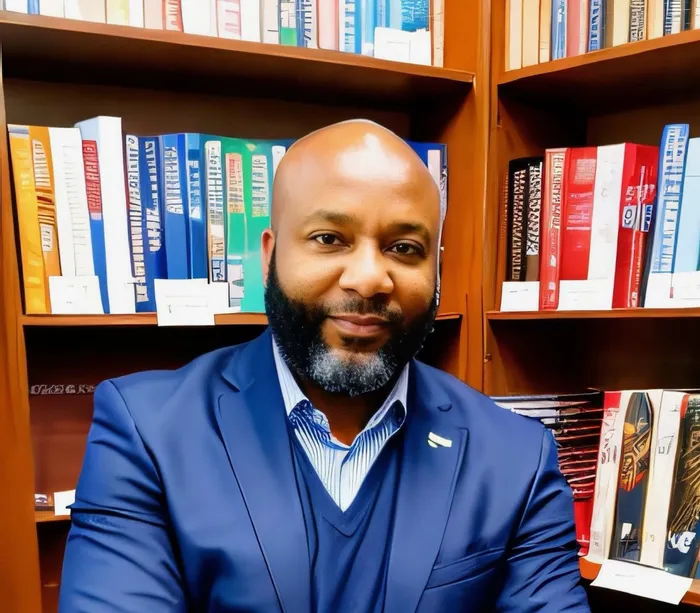
Nco Dube, a political economist, businessman and social commentator
Image: Supplied