
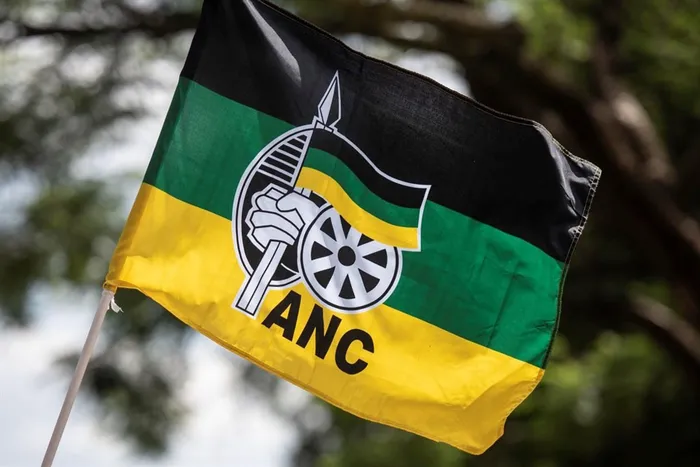
Amid growing public frustration over corruption in South Africa, the writer argues that equating corruption with the African National Congress itself oversimplifies complex governance realities. While acknowledging corruption as a serious national challenge, the article contends that wrongdoing is committed by individuals, not embedded in ANC policy or ideology, and calls for evidence-based debate, institutional accountability and a more nuanced national conversation about democracy and governance.
Image: Independent Newspapers Archives
It is neither controversial nor unreasonable to acknowledge the deep concern many South Africans express regarding corruption in government. Indeed, corruption is a scourge. It corrodes public confidence, weakens institutions, distorts developmental priorities, and diverts resources away from the most vulnerable. No serious political organisation and certainly no liberation movement forged in sacrifice can afford to trivialise its destructive impact.
However, what must be robustly challenged is the intellectually shallow narrative that collapses the existence of corruption into an accusation that the African National Congress (ANC) itself is inherently corrupt. That assertion is not analysis but it is agitation dressed up as commentary. It substitutes political frustration for institutional reasoning and reduces complex governance realities into aconvenient slogan.
Institutional Policy vs Individual Criminality
The ANC has never adopted corruption as policy, doctrine, programme/ideological position. There is no conference resolution that mandates theft. There exists no constitutional clause within the organisation that sanctions maladministration.
There is no policy framework that encourages the betrayal of public trust. To suggest that corruption is intrinsic to the ANC is to advance a claim unsupported by documentary evidence, historical fact/organisational record.
Corruption is committed by individuals who violate both the law of the Republic and the ethical commitments of the movement. Criminal conduct is personal, it is not ideological. To attribute the criminal acts of individuals to the collective conscience of a 114-year-old liberation movement is a profound category error.
One may justifiably condemn wrongdoing, one may not, without intellectual dishonesty, redefine an entire organisation by the misconduct of some presume themselves to be members or those who are its members. It’s both dubious and naive to claim that all government employees are ANC members. The reality is far more fluid-they often align themselves with whoever is in power. Look at the current arrangements of Government of National Unity and Government of Provincial Unity, officials frequently switch allegiances, prioritising their own survival over loyalty to any organisation.
Many simply serve the politician currently in office to protect their positions. To then blame all corruption solely on the ANC is, frankly, laughable.
How Democratic Accountability Actually Works
In a constitutional democracy, the governing party formulates policy within the framework of the Constitution, while the administration, comprising elected officials and public servants executes those policies subject to statutory oversight, independent auditing, judicial scrutiny, and parliamentary accountability. When individuals transgress that framework, they are investigated by law enforcement agencies, charged before independent courts, and adjudicated according to due process.
That sequence is not evidence of systemic endorsement, it is evidence that accountability mechanisms exist and function. When a person has been investigated and processed by law enforcement agencies, I find it unfair to blame the ANC if the courts could not find sufficient evidence to issue a guilty verdict.
It is puzzling how easily some claim that a person escapes prosecution or is found not guilty simply because he or she is a member of the ANC. This distortion of facts corrodes the very fabric of our society, as people deliberately spread falsehoods to create distrust between the ANC and the public. The danger is that repeated lies start to be accepted as reality.
When one tries to present a different perspective, they are often insulted and labeled with all sorts of names, as if questioning the narrative is a crime. Yet, people forget a fundamental truth:- the truth itself is paramount, regardless of how much one dislikes a person.
Scrutiny, Reform and the Step-Aside Policy
It is particularly instructive that under ANC governance, commissions of inquiry were established to interrogate allegations of state capture and maladministration. Investigative bodies are not dismantled, they are active. We have seen a number of reports made in public. Matters were referred for prosecution. Officials were removed. In any credible analysis, a political organisation that permits scrutiny including scrutiny of its own members cannot logically be accused of institutional complicity.
Moreover, the ANC is the only political organisation in South Africa that formalised and implemented a Step-Aside Policy. This policy requires that members formally charged with serious criminal offences must relinquish their organisational responsibilities and withdraw from public deployment pending the outcome of legal processes. This was not an externally imposed mechanism, it was internally adopted as a matter of organisational renewal and ethical recalibration. One cannot simultaneously claim that the ANC protects corruption while ignoring the fact that it introduced a rule obliging accused members to step aside from power.
The Rule of Law and Presumption of Innocence
Critics frequently weaponise the constitutional principle of “innocent until proven guilty” as though it were an invented shield for wrongdoing. That assertion betrays either ignorance or bad faith. The presumption of innocence is not an ANC invention, it is a foundational principle of democratic jurisprudence embedded in the Constitution of the Republic. To respect due process is not to condone corruption, it is to defend the rule of law. A movement that fought for constitutional supremacy cannot selectively abandon it for political expediency.
There is also a deeper political context that must be confronted honestly. The ANC is not a narrow electoral machine, it is a mass democratic movement rooted in the people of South Africa. Its internal debates, its policy tensions, its leadership contests, and its disciplinary processes are visible precisely because it does not operate as a private corporation/personality cult. Transparency is often mistaken for dysfunction. Visibility is misrepresented as guilt. Yet openness to scrutiny is, in itself, a democratic virtue.
Historical Context and Democratic Gains
It is equally important to situate this discussion within the historical and socio-economic terrain inherited in 1994. The ANC assumed governance of a state designed to exclude the majority, characterised by structural inequality, spatial injustice, and institutional fragmentation. It embarked on an unprecedented programme of social transformation: expanding social grants to millions, electrifying vast rural areas, extending access to potable water, delivering housing at scale, building clinics and schools, and entrenching constitutional rights for all. These achievements are neither rhetorical nor imaginary, they are measurable transformations in the lived conditions of millions.
To collapse this complex record into a singular narrative of corruption is not merely unfair, but it is analytically unserious. It ignores both the material gains of democracy and the institutional safeguards constructed under ANC leadership including Chapter Nine institutions, strengthened auditing frameworks, and judicial independence. It disregards the reality that corruption is a global phenomenon, present in states across ideological and political spectrums. It pretends that malfeasance is unique to one organisation rather than a constant risk within any system managing vast public resources. None of this constitutes a denial that corruption must be confronted decisively. On the contrary, the moral authority of the ANC depends upon relentless self-correction. Renewal is not a slogan, it is an imperative. Ethical leadership is not optional, it is foundational. But critique must be proportionate, evidence-based, and institutionally literate.
Toward Honest and Mature Political Debate
Opposition to the ANC is a legitimate democratic choice. The South African Constitution guarantees pluralism. What is not legitimate is the abandonment of nuance in favour of populist accusation. To declare that “the ANC is corruption or ANC is corrupt” is to replace reasoned debate with caricature. It is to engage in political theatre rather than political education.
The ANC has never encouraged corruption. It has never instructed its deployees to steal. It has never legislated theft into policy. When it deploys individuals into government, it does so to implement transformative programmes consistent with constitutional mandates. If those individuals betray that mandate, they betray both the state and the movement.
Conclusion: Elevating the National Conversation
Political maturity demands that we distinguish between institutional intent and individual misconduct. Blanket condemnation is not analysis, it is rhetoric masquerading as thought. If South Africa is to strengthen its democracy, the discourse must rise above slogans and engage the realities of governance, accountability, and historical transformation.
Let us confront corruption without distortion. Let us demand accountability without abandoning intellectual integrity. And let us elevate the national conversation above the politics of convenience into the realm of principled, informed debate.
(Memela is an award-winning journalist who has worked for various national and regional newspapers. He has also worked in the communications field in the private and public sector. His views do not necessarily reflect those of the Sunday Tribune or IOL)
For more thought-provoking opinion pieces visit this link:
SUNDAY TRIBUNE

MHLABUNZIMA MEMELA
Image: SUPPLIED