

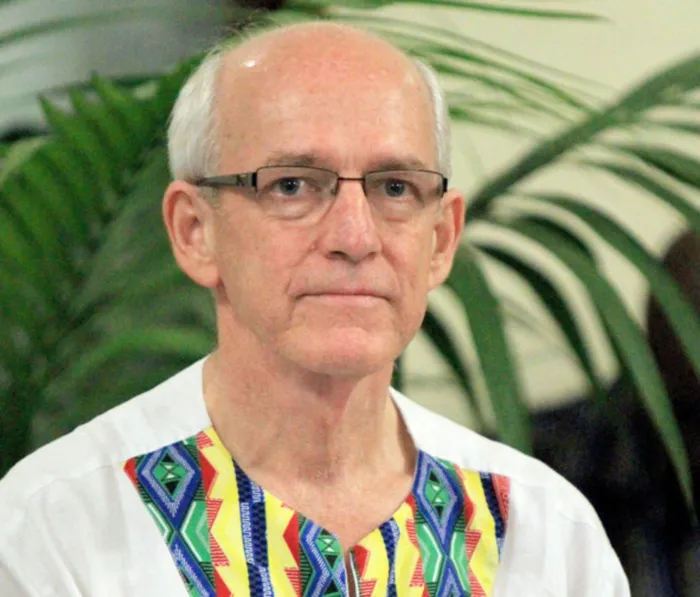
Dr Michael Sutcliffe is the Director of City Insight (Pty) Ltd and former eThekwini City Manager.
Image: Terry Haywood / File
The 2026 February speeches - President Ramaphosa’s State of the Nation address and Minister of Finance’s Budget Speech - are refreshing for their honesty and macro analysis. We hope that continues to be our turnaround.
There can be no doubt that our international standing has increased dramatically as President Ramaphosa speaks truth to power demanding a future based on our principles of democratic values, social justice and fundamental human rights as we help to recast a family of nations.
The budget programme to stabilise debt, invest in infrastructure and spend better are now bearing fruit as we work to rebuild our fiscal state. As the courts and Commissions by Zondo and Madlanga are showing, though, that path is not going to be easy as the public now bears witness to some leaders who only display signs of corruption, arrogance and incompetence.
At a macro level, we must congratulate the President and Government of National Unity for showing us and the world that in spite of our differences we can work together for the macro good.
But it is at the micro level that we must remain worried. We should be concerned that our President feels the need to take such drastic steps as directly needing to oversee metros like eThekwini and Johannesburg, create a national focus group like Operation Vulindlela, and now dingirectly oversee the water and sanitation challenges across our country. Surely, we should recognise that steps like that are an indictment on the existing political and administrative leadership who are unable to do their jobs and be accountable.
After all, diagnostics of the challenges we face all show that at the heart of our developmental problems are usually one or more of three things: a lack of responsiveness/poor communication, incompetent or unskilled officials, and/or corruption. The Minister of Finance, too, correctly argues that we must strengthen financial sustainability, accountability and transparency.
Responsiveness is simply about being honest with, and communicating directly to, people who are sick and tired of poor delivery. And such responsiveness must be ongoing. How many times do we see motorcades kicking up dust as politicians, officials and media get their pictures taken, promises are made, but then communities are left with only the dust to remember this by, sometimes for years on end.
Incompetent officials are seen at the most local level, from contractors who cannot fix simple things to technical leaders who are not professionals. Of course this is in part because we focussed far more on building a compliant state, valuing audit results over developmental delivery, when both should get equal attention. The tragedy now is that the courts are defining accountability instead of that being done by municipal councils and other legislatures.
And the scourge of corruption still dominates. Try and find out why you lost a tender bid, and to whom you can appeal. There is simply no transparency.
And so firstly, we must demand of every public servant accountability and transparency and that is what must be shown by every leader. The President cannot be the one who is now going to be all seeing because all that results in is hundreds of meetings with power points galore, with not much really changing. We cannot centralise everything under the presidency: we must address the underlying causes of failure.
Secondly, the budgetary shifts to address the persistent logistics bottlenecks and weak public infrastructure are to be welcomed. But these should be coupled with clear time frames on turnaround times for deciding on delivery programmes and their implementation. Too many business people have excellent solutions not requiring money from the state, but they are often not heard because there are no tenders from which money can be made. Our partnerships must be pragmatic and delivery driven.
Third, we must be cautious in blindly accepting reforms in local government that are centrally driven without the flexibility to be modified given local circumstances. We have had too many impositions from national government onto local government without them understanding local circumstances. Whether it was the RED (Regional Electricity Distribution) model of the 1990s or the endless local government turnaround strategies, all of these have failed because they have not accepted that we are a constitutional state, requiring intergovernmental cooperation. The World Bank inspired belief that creating utilities will solve the challenges of water, sanitation, electricity and waste, ignores the reality that municipalities are more than just these elements.
The focus should be on how we manage municipalities, not on imposing ever more rules and structural models on them. When I worked in eThekwini, we ring-fenced finances and maintained infrastructure proactively without a utility model — and the Mayor and council never once pushed back on what was technically and financially required to run basic network services.
As for transparency – anyone who bids for work in municipalities and government as a whole will tell you about the fact that the appeal processes are either non-existent or take too long and achieve nothing.
Fourth, we all agree we must place a higher priority on spatial and housing reforms, and we should add, public transport reforms. But whilst we must welcome the beginnings of a renewal of PRASA, we worry about the scaling down of the Public Transport Network Grant and the Urban Settlements Development Grants.
Finally, whilst the Finance Minister states that local government is the sphere where communities experience the state most directly, that is not realised if one examines the fiscal split, where local government gets only 9.4%. We must be talking about a minimum of 12-15% of the fiscal split going to local government otherwise the delivery needs will simply not be met.
We have many challenges to overcome, all of which are compounded by historical inequalities, the legacy of apartheid-era planning, and complex intergovernmental dynamics.
The trajectory of these speeches are positive and reinforce once again that there is no better place on earth to be. However, I still feel the President and our leadership as a whole need to be far more proactive in speaking truth from power through demanding every local, provincial and leader accounts for what they have done and if they have not done they must be replaced. But to do this too, we require a multi-faceted, community-centred approach to strengthen his hand.
Dr. Michael Sutcliffe is the Director of City Insight (Pty) Ltd and former eThekwini City Manager.
The views expressed do not necessarily represent those of the Sunday Tribune.