

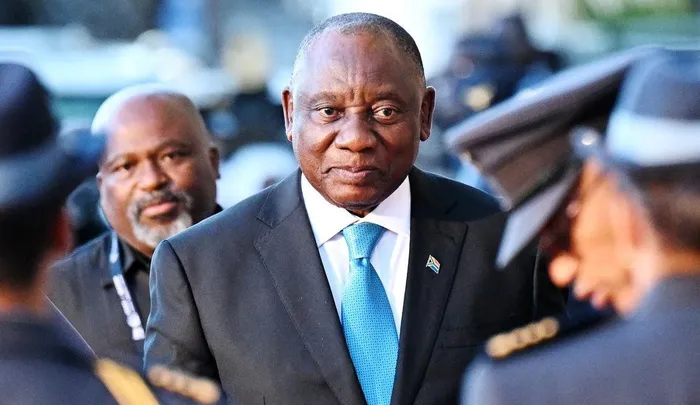
Former ANC KwaZulu-Natal spokesperson Mafika Mndebele introspectively posits that the chronicle portraying President Cyril Ramaphosa as weak and a Western puppet does not hold in light of the party's stand on its foreign policy. The writer calls on critics within the movement to acknowledge that their earlier assumptions of the incumbent were flawed.
Image: PHANDO JIKELO Parliament of SA
There are moments in the life of a revolutionary movement when it must summon the courage to interrogate not only the actions of its leaders, but also the judgments it has made about them. For the African National Congress, such a moment has arrived.
A Personal Admission
For years a political narrative circulated with remarkable force. We were told that President Cyril Ramaphosa was weak. We were told that he was the instrument of Western capital and that his presidency would represent the final surrender of the ANC to imperial interests. We were warned that under his leadership the movement would be destroyed.
Those who advanced this thesis spoke with certainty. They clothed themselves in the language of radicalism and presented themselves as the true custodians of revolutionary purity.
Yet history has quietly begun to expose how flawed that political thesis was.
And I must begin with a personal admission: I am not innocent in this matter. Like many others within the movement, I too allowed myself to accept aspects of that narrative. I too misjudged the President. The discipline of a revolutionary movement demands that when we are wrong, we must possess the courage to say so openly.
The Inheritance of a Divided Movement
When Cyril Ramaphosa assumed the presidency of the ANC and the Republic, he did not inherit an organisation at its peak. He inherited a movement already on a downward trajectory. The ANC was deeply divided, its moral authority weakened by the actions of some leaders whose conduct had compromised the trust of the people.
The state itself had suffered institutional devastation through the era of state capture. Public institutions had been hollowed out, investor confidence had collapsed and the economy was trapped in stagnation, struggling to grow beyond one percent.
Leadership in such circumstances cannot rely on slogans. It demands the slow, often unglamorous work of rebuilding institutions and restoring credibility.
Signs of Economic Stabilisation
Despite these conditions, the South African economy has begun to show modest but real signs of stabilisation. While structural challenges of unemployment, poverty and inequality remain severe, the economic trajectory has begun to shift. The currency has shown resilience, investor sentiment has gradually improved and employment creation has begun to register measurable gains.
These developments do not represent the completion of the national democratic revolution’s economic objectives. But they demonstrate something important: the catastrophic collapse predicted by Ramaphosa’s loudest critics has not materialised.
Indeed, the ANC remains standing and the South African state continues to function.
But perhaps the most striking collapse of the “Western puppet” narrative has occurred in the realm of international politics.
The Western Puppet Myth
South Africa’s foreign policy tradition has always been rooted in solidarity with the oppressed. From the era of Oliver Tambo’s international diplomacy to the post-1994 commitment to multilateralism, the ANC has consistently understood that South Africa’s moral voice in the world carries a historic responsibility.
Under President Cyril Ramaphosa, that tradition has not been abandoned. On the contrary, it has been reaffirmed.
At a time when many smaller nations prefer silence in order to avoid offending powerful states, South Africa has spoken with clarity against injustice and war. The country has taken principled positions in international forums and has defended international law even when doing so risks displeasing powerful global actors.
This is not the behaviour of a puppet. It is the behaviour of a nation conscious of its historical obligations.
Contradictions Among Ramaphosa’s Critics
The irony becomes even more striking when one observes the conduct of some of Ramaphosa’s fiercest critics. Many who once proclaimed themselves the champions of anti-imperialism have quietly entered into questionable relationships with foreign benefactors whose own geopolitical agendas bear little resemblance to the principles of liberation.
In some cases, these self-proclaimed revolutionaries have aligned themselves with the interests of the Kingdom of Morocco, a state whose continued occupation of Western Sahara remains one of the longest-running unresolved colonial questions in Africa.
It is a profound irony of our time that those who accuse others of being puppets of Western power appear willing to compromise their own political independence when financial patronage is offered.
The ANC’s historic position has always been clear: the people of Western Sahara have the right to self-determination.
Those who abandon that principle for financial convenience cannot credibly lecture others about revolutionary integrity.
The Institutional Approach to Fighting Corruption
Equally misunderstood has been President Ramaphosa’s approach to corruption.
Many critics mistook his methodical reliance on institutions as weakness. Yet what appeared to some as hesitation was in fact a deliberate strategy to rebuild constitutional governance after the damage inflicted during the period of state capture.
Instead of conducting factional purges disguised as anti-corruption campaigns, Ramaphosa insisted on independent commissions, transparent investigations and judicial processes conducted in the full view of the South African public.
This approach reflects a sober political calculation. The trust deficit between the state and society had become dangerously deep. Rebuilding that trust required openness, legality and institutional credibility rather than theatrical displays of political vengeance.
The result has been one of the most extensive public examinations of corruption in the history of democratic South Africa.
Governing Through a Crisis
Ramaphosa’s presidency has also been shaped by an extraordinary sequence of crises. He confronted the aftermath of state capture while simultaneously guiding the country through the devastating COVID-19 pandemic. His administration had to manage economic recession, respond to the violent July 2021 unrest and navigate an increasingly unstable global geopolitical environment.
Few leaders in democratic South Africa have governed under such relentless pressure.
Yet even amid these crises, the President has continued to project South Africa’s tradition of international solidarity.
International Solidarity and Historical Memory
A powerful symbol of this occurred when he travelled to the United States to stand with the family of the late civil rights leader Jesse Jackson. In doing so he reaffirmed the historic bond between the struggle against apartheid and the African-American struggle for civil rights.
His tribute was not merely ceremonial. It reminded the world that the moral connections between oppressed peoples transcend national borders.
Ironically, many of those who loudly proclaim revolutionary credentials were absent from that moment of solidarity. They prefer the theatre of political rhetoric to the quiet discipline of internationalism.
The Fate of Ramaphosa’s Detractors
Perhaps the greatest irony of the Ramaphosa era lies in the fate of those who once predicted that he would destroy the ANC. Many of them have since left the movement, attempting to construct alternative political formations by appropriating fragments of ANC history
Instead of destroying the ANC, they now appear trapped in their own contradictions, turning against one another while invoking a liberation legacy they no longer embody.
The ANC remains challenged. It remains imperfect. But it endures.
And the President who was once dismissed as weak has helped stabilise both the organisation and the state during one of the most turbulent periods in democratic South Africa.
Confronting an Uncomfortable Conclusion
Honesty demands that we confront a difficult conclusion.
We were misled about Cyril Ramaphosa.
And I say this not from a position of moral superiority, but from one of political humility — because I too was among those who misjudged him.
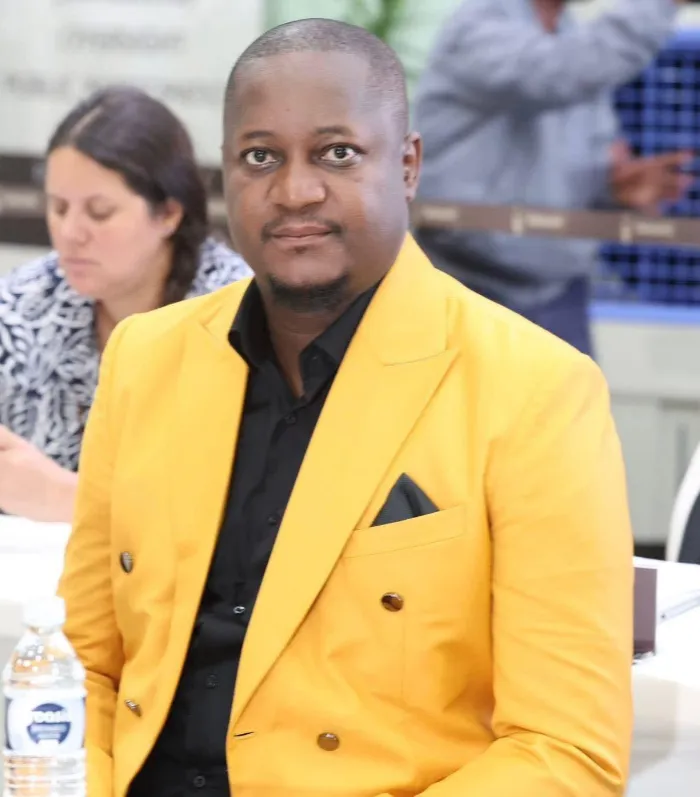
Mafika Mndebele is a member of ANC KZN Provincial Task Team and Chaiperson of the Economic Development and Tourism Committee in the KZN Legislature
Image: Supplied
The caricature that was presented to the movement has not survived the test of history.
Those who propagated that narrative owe both the ANC and the President an apology.
For the measure of leadership is not determined by slogans shouted at conferences or by the noise of factional politics. It is determined by the quiet resilience required to carry a nation through its most difficult moments.
And history may yet record that during one of the most difficult periods in the life of the African National Congress, Cyril Ramaphosa did precisely that.
(Mndebele is a member of ANC KZN Provincial Task Team and a member of the KZN Legislature and the Transport, Agriculture and Rural Development committees, and is the Chairperson of the Economic Development Tourisim committee. He writes in his personal capacity. His views do not necessarily reflect those of the Sunday Tribune and IOL.)
For more thought-provoking opinions click the link below: