
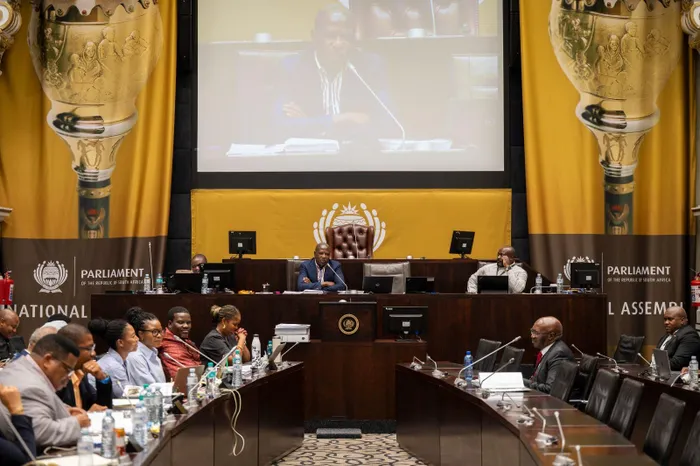
The writer says parliamentary proceedings are governed by constitutional and statutory prescripts designed to ensure accountability, order, and fairness. Oversight is not a voluntary exercise dependent on personal preference; it is a constitutional obligation undertaken in the public interest.
Image: Armand Hough / Independent Newspapers
Recent commentary suggesting that Parliament “embarrassed itself” during proceedings of the Ad Hoc Committee investigating allegations made by Lieutenant-General Nhlanhla Mkhwanazi advances a narrative that does not fully reflect the constitutional and procedural realities within which Parliament operates.
Parliament recognises the strong public interest in these proceedings. South Africans expect oversight processes to be firm, credible, and capable of holding all parties accountable. This expectation is legitimate and essential in a constitutional democracy.
However, it is equally important that oversight is conducted within the bounds of the law, guided by due process, and exercised in a manner that preserves institutional integrity. Parliament’s authority does not depend on spectacle or displays of force. It flows directly from the Constitution of the Republic of South Africa, which entrusts Parliament with the responsibility to exercise oversight over Executive action.
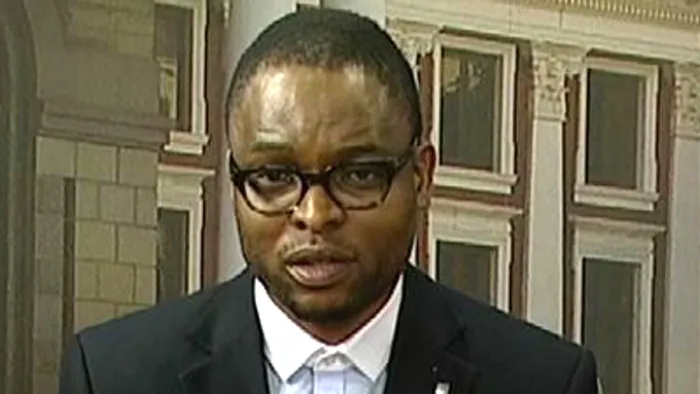
Parliament’s spokesperson Moloto Mothapo
Image: File
This authority is reinforced by the Rules of Parliament and legislation, including the Powers, Privileges and Immunities of Parliament and Provincial Legislatures Act, which provides mechanisms to ensure cooperation with parliamentary processes and prohibits conduct that obstructs the work of Parliament and its committees.
The suggestion that parliamentary authority only exists where a formal summons has been issued is therefore misplaced. Parliamentary proceedings are governed by constitutional and statutory prescripts designed to ensure accountability, order, and fairness. Oversight is not a voluntary exercise dependent on personal preference; it is a constitutional obligation undertaken in the public interest.
The incident involving Mr Paul O’Sullivan was regrettable and fell short of the conduct expected of witnesses at such proceedings. However, an isolated moment of disruption should not be misconstrued as evidence of institutional weakness or systemic failure. Parliamentary processes are robust precisely because they are transparent, accountable, and conducted in the public eye.
Mr O’Sullivan subsequently returned to the Committee, formally apologised for his conduct, and proceeded to conclude his testimony. The completion of testimony and the apology do not, however, preclude accountability. The Speaker will consider all relevant facts and determine whether any further steps are warranted, in accordance with a committee report and established parliamentary procedures.
Parliament cannot afford to act theatrically or ride roughshod over constitutional and legal processes in response to a recalcitrant witness. There are established rules and laws governing such conduct, and Parliament will apply them where necessary. Those who test the inherent authority and constitutional power of parliamentary processes ultimately find submission to the discipline of the law inevitable.
Democratic oversight is rigorous and, at times, contested. This does not diminish Parliament’s authority; rather, it reflects the often complex nature parliamentary oversight in an open constitutional system. It is important that oversight proceeds lawfully, thoroughly, and without fear or favour, while safeguarding the integrity of Parliament and ensuring that isolated misconduct does not distract from the important issues under consideration.
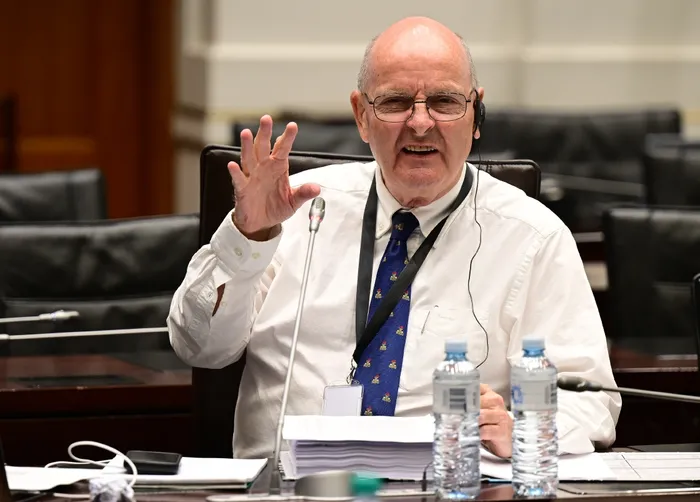
The writer says that the incident involving forensic investigator Paul O’Sullivan was regrettable and fell short of the conduct expected of witnesses at such proceedings.
Image: Henk Kruger / Independent Newspapers
The work of the Ad Hoc Committee has continued without interruption. The Committee remains focused on its mandate: to assess the allegations before it, evaluate the evidence presented, and make recommendations guided by law and the national interest. Its proceedings are conducted within established parliamentary rules designed to ensure fairness to all participants while safeguarding the integrity of the oversight process.
Some have questioned the decision not to issue summonses at the initial stages of the Committee’s work. It is important to clarify that the use of a summons is a significant legal step, not an administrative formality. A summons carries legal consequences and must be applied in a procedurally sound manner capable of withstanding judicial scrutiny. Acting precipitously, without meeting required thresholds, risks compromising the legitimacy of proceedings and exposing Parliament to avoidable legal challenges.
The guidance provided by the Speaker of the National Assembly, Thoko Didiza, reflected this legal reality. The Speaker advised that substantive engagement be prioritised and that due process be followed before resorting to coercive mechanisms. This was not hesitation or indecision; it was a measured and responsible application of parliamentary law. It ensured that the Committee’s work proceeds on firm legal ground, preserving both fairness and enforceability.
Parliament’s commitment to due process should not be mistaken for reluctance to exercise authority. On the contrary, the credibility of Parliament depends on its consistent adherence to constitutional principles, particularly in matters of significant public interest. Authority exercised outside the law risks undermining the very democratic order Parliament is sworn to protect. Parliament is mindful that its proceedings take place in a public environment where perceptions matter.
For this reason, continuous efforts are made to strengthen internal procedures, promote orderly conduct, and ensure that committee processes reflect the dignity expected of the nation’s highest legislative institution. Oversight is neither theatre nor a contest of personalities. It is a structured constitutional function aimed at safeguarding accountability, strengthening governance, and protecting the public interest.
Committee work involves complex legal and procedural considerations that may not always be visible to observers but are essential to ensuring credible and defensible outcomes. The matters before the Ad Hoc Committee are serious and have far-reaching implications for public confidence in state institutions.
Parliament therefore remains committed to ensuring that its processes are thorough, impartial, and evidence-based. The Committee’s work will culminate in findings and recommendations that are constitutionally grounded and institutionally sound.
Due process will not be compromised for the sake of expediency, nor will complex constitutional responsibilities be reduced to moments of drama. Democratic institutions are strengthened not by spectacle, but by discipline, legality, and fidelity to principle.Far from being an embarrassment, Parliament’s adherence to due process reflects institutional maturity and respect for the rule of law. Its focus remains on fulfilling its constitutional mandate with diligence, integrity, and accountability to the people of South Africa.
Mothapo is the Spokesperson to Parliament. The views expressed do not necessarily reflect those of the Sunday Tribune or IOL.