


South Africa’s drinking culture is strongly embedded in social and cultural practices, where alcohol is seen as a normal feature of gatherings, celebrations, and even day-to-day routines. The result is a widespread tolerance for binge drinking and heavy consumption.
Image: Cottonbro Studio / Pexels
In the 2026 Budget Speech, Finance Minister Enoch Godongwana announced a 3.4% increase in excise duties on alcohol, including beer, cider, wine, and spirits. The increase, effective from April 1, aligns with inflation as part of government’s fiscal strategy while moderating prices to balance revenue and consumption concerns.
Yet, despite years of tax hikes, South Africa ranks among the top five countries globally in alcohol consumption per drinker, at around 30 litres annually. This persistent overconsumption reflects a national challenge that extends far beyond economics. The widespread misuse of alcohol has severe consequences for road safety, crime rates, domestic stability, and workplace productivity.
South Africa’s drinking culture is strongly embedded in social and cultural practices, where alcohol is seen as a normal feature of gatherings, celebrations, and even day-to-day routines. The result is a widespread tolerance for binge drinking and heavy consumption.
The impact of this extends across society. Alcohol remains a leading factor in road fatalities, while its links to crime, domestic violence, and reduced workplace performance place additional strain on families, employers, and the state. A common issue is that many individuals underestimate their level of intoxication, making decisions - such as choosing to drive - that put themselves and others at risk.
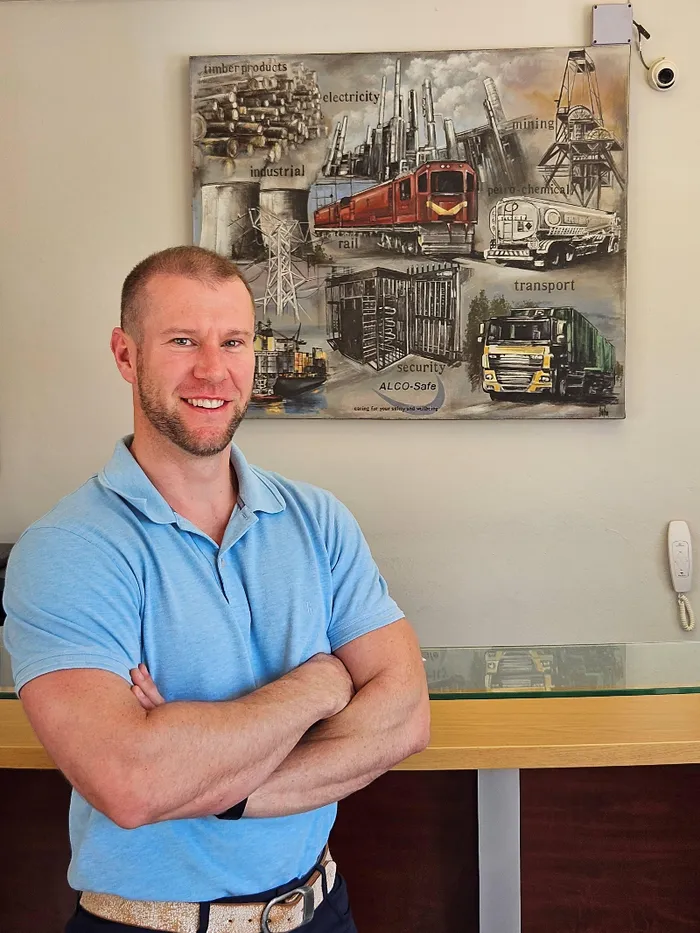
Rhys Evans in the Managing Director of ALCO-Safe.
Image: Supplied
South Africa’s drinking patterns have evolved over the decades. In the 1990s, alcohol was more openly accepted in professional environments, with daytime drinking during business meetings not uncommon. At the same time, public awareness of alcohol’s dangers, particularly its effects on driving, was limited.
The legal drink-driving limit then stood at 0.35mg per litre of breath, which was later lowered to 0.24mg for ordinary drivers and 0.10mg for professional drivers such as bus, taxi, and truck drivers. The intention was to improve safety by reducing the amount of alcohol drivers could legally consume.
However, this shift was not supported by consistent enforcement or broad education campaigns. As a result, drinking and driving remained widespread, and alcohol-related accidents have actually increased despite stricter legal limits. This highlights that legislation alone cannot change entrenched behaviours without proper enforcement and public buy-in.
Reducing harmful alcohol consumption requires both immediate enforcement and long-term cultural change. Short-term interventions include stronger law enforcement at roadblocks, consistent application of drink-driving laws, and widespread use of breathalyser testing in public and workplace contexts.
In the longer term, meaningful change depends on reshaping social norms. This can only be achieved through sustained investment in youth education and awareness programmes, teaching children from a young age about alcohol’s health risks and its dangers on the road and in the workplace. Over time, this kind of education can shift public perception, making drink-driving socially unacceptable, but such cultural change is a generational process that takes decades to achieve.
Breathalysers are a critical tool in reducing alcohol-related harm, particularly in road safety and workplace environments. For law enforcement, roadside testing provides objective results that deter drink driving and hold drivers accountable. In workplaces, especially in high-risk industries such as mining, construction, and manufacturing, regular testing helps protect both safety and productivity by ensuring employees are not impaired on the job.
Equally important is making breath testing a standard procedure following accidents, whether on the road or in the workplace. Immediate testing provides clarity about whether alcohol played a role, supports fair investigations, and reinforces accountability. When this practice is routinely implemented, organisations and authorities send a clear message that alcohol-related negligence will not be tolerated.
Breathalysers, when used consistently in these contexts, not only enforce the law but also encourage responsible behaviour and create safer environments for everyone.
South Africa’s high alcohol consumption is more than a lifestyle issue, it is a national concern with serious implications for public safety, health, and the economy. Tax hikes alone cannot undo decades of entrenched drinking habits. What is needed is a balanced approach: firm enforcement through roadside and workplace breath testing, consistent accountability after accidents, and long-term investment in education that reshapes social norms.
The human cost of inaction is already visible in the country’s high rate of road deaths, alcohol-fuelled crime, and reduced workplace productivity. These are preventable losses, yet they persist because enforcement is inconsistent, and responsibility is too often ignored. Breathalysers are not a silver bullet, but they represent a simple, effective step that can save lives immediately while broader cultural change takes root. If South Africa is serious about curbing its drinking problem, making alcohol accountability part of everyday life is non-negotiable.
The challenge is daunting, but the opportunity is greater: a safer road network, stronger workplaces, healthier families, and a society that values responsibility over recklessness. South Africa cannot afford to wait another generation - change must start now.
Rhys Evans is the Managing Director of ALCO-Safe. The views expressed do not reflect those of the Sunday Tribune or IOL.