

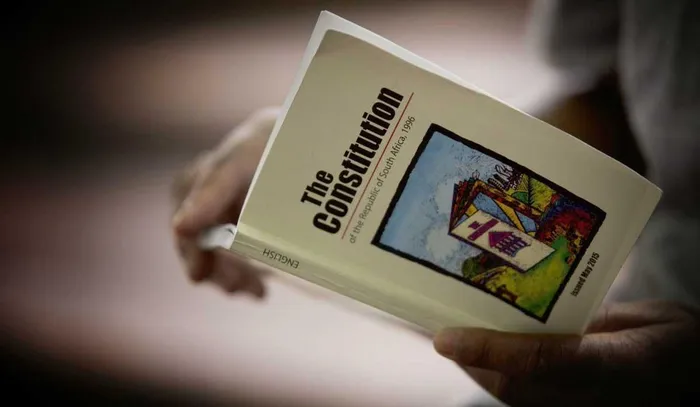
Dumisani Tshabalala, the head of academics at Oprah Winfrey Leadership Academy for Girls, argues that while young people are taught the language of rights and democracy, they are often not sufficiently equipped to exercise them in conditions shaped by inequality, unemployment, and economic exclusion.
Image: File
On March 21 1960, police opened fire on unarmed protesters in the Sharpeville Massacre, killing 69 people who had gathered to resist pass laws. Many were shot in the back as they fled.
It is a stark reminder that rights are not lost only through law, but through the suppression of people’s ability to act. As South Africa marks 66 years since Sharpeville and reflects on its 32nd year of democracy, the question is not simply whether we have rights, but whether we understand what it means to live them.
This year also marks 50 years since the Soweto Uprising, when young people asserted their agency and paid for it with their lives. Today, the context has changed, but the challenge remains.
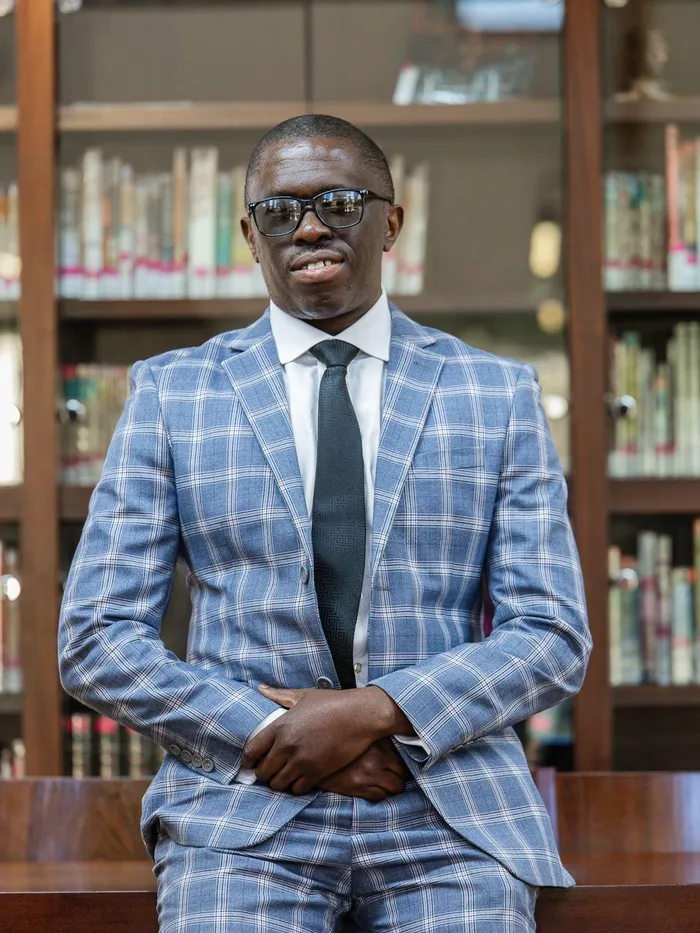
Dumisani Tshabalala is the head of academics at the Oprah Winfrey Leadership Academy for Girls.
Image: Supplied
Statistics South Africa reports that youth aged 15 to 24 and 25 to 34 face unemployment rates of 57,0% and 39,2% respectively. Exclusion begins at entry into the labour market and persists into adulthood.
This is not only an economic concern, but a civic one, as prolonged exclusion erodes young people’s sense of agency and belonging. Added to this are rising levels of psychological strain. The inability to find work, combined with life in under-resourced communities, breeds hopelessness.
Even those who enter the workforce often remain in precarious roles in an economy rapidly reshaped by technology. But beyond poverty, it is inequality that cuts deepest. Poverty deprives, but inequality compares. It places young people in constant view of a world they cannot access, shaping not only what they have, but what they believe is possible. In this way, inequality erodes confidence, voice, and the willingness to act.
In such conditions, the exercise of rights becomes difficult. It is not easy to be bold or to stand for one’s rights when survival is uncertain. While rights were once denied through overt violence, today they are constrained by economic realities.
Poverty, unemployment, and inequality can compel conformity, silence dissent, and weaken the impulse to claim one’s rights.
What does it mean to have rights in a society where many lack the agency to act on them?Education sits at the centre of this question. Schools do teach human rights. Through Life Orientation, learners are introduced to the Constitution, rights, and democratic values. But too often this remains at the level of knowledge.
We provide lists of rights, but limited opportunities to practise them. The result is a quiet but important gap. Learners leave school knowing the language of democracy, but not how to live it. Democracy becomes reduced to a moment, a cross on a ballot paper, rather than an ongoing practice of participation and accountability.
If this is the case, we should not be surprised by declining accountability in society. Education must therefore do more than prepare young people for the economy. It must cultivate civic agency and active citizenship.
This begins with how we teach.When learning is reduced to memorisation, it limits both intellectual and civic development. But when learners are encouraged to think critically, solve problems, and apply knowledge in real contexts, they begin to develop the confidence to participate meaningfully in society.
Technical competence, in this sense, is not only about employability, but it is also a foundation for civic agency. Equally important is the recognition that every classroom carries the weight of lived experience. Many learners navigate trauma, instability, and uncertainty. These realities shape how they learn, how they see themselves, and whether they believe their voices matter.
Creating environments that are both academically rigorous and emotionally safe allows learners not only to succeed but to find their voice. Through dialogue, debate, and shared responsibility, learners begin to practice democracy. They learn to question, to justify, and to engage with difference. These are not only academic skills, but they are civic ones.
Human rights, in this sense, are not abstract principles. They are lived practices. The lessons of the Sharpeville Massacre and the Soweto Uprising remind us that rights only become real when they are exercised and defended.
So, while 1960 was a fight for physical freedom, and 1976 a fight for intellectual and cultural liberation, 2026 must become something equally urgent: a commitment to cultivating citizens with the agency, responsibility, and courage to sustain the rights so hard won before them.
Dumisani Tshabalala, Head of Academics at the Oprah Winfrey Leadership Academy for Girls. The views expressed do not represent the Sunday Tribune or IOL.