

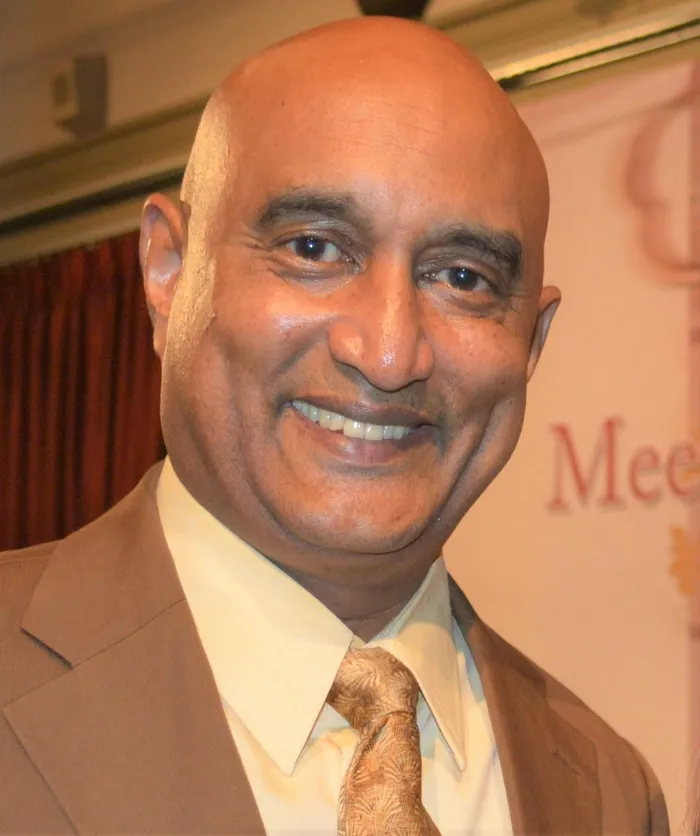
Dr Rajendran Govender
Image: Supplied
In a world already burdened by division, any attempt to restrict access to places of worship based on religious identity is not only regressive, but fundamentally contrary to the spirit of humanity itself.
The recent controversy, as outlined in the Sunday Tribune on March 22 under the heading “Political leaders react to actress’s temple visit,” highlights a deeply troubling development where a temple committee reportedly required non-Hindus to submit affidavits before being allowed to enter sacred spaces. Such a requirement raises profound ethical, constitutional, and practical concerns that cannot be ignored.
At the core of all major religions lies a shared truth — that humanity is one. Temples, mosques, churches, synagogues, and all sacred spaces are not merely places of ritual, but sanctuaries of reflection, compassion, and spiritual seeking.
To impose barriers based on religious identity undermines this shared human experience and reduces faith to a guarded domain rather than a universal invitation.
From the perspective of India’s Constitution, which guarantees freedom of religion, equality, and dignity for all, such exclusionary practices are deeply problematic. The right to freedom of religion is not only about practising one’s own faith, but also about the freedom to engage with, observe, and understand other belief systems.
While religious institutions may exercise a degree of autonomy in their internal affairs, this autonomy cannot be interpreted as a licence to discriminate in ways that erode the foundational principles of equality and human dignity.
When access to a place of worship becomes conditional upon proving one’s religious identity, it raises serious questions about the balance between religious autonomy and constitutional values.
Equally concerning is the practical absurdity of such a requirement. How does one determine the religious affiliation of an individual? In the case of a well-known public figure, assumptions may be made based on public knowledge. But what of the countless ordinary individuals who visit places of worship quietly and respectfully? Will they be required to produce documentation to prove their beliefs? Will spirituality now be subjected to bureaucratic verification?
Religion is deeply personal and cannot be measured, certified, or authenticated through affidavits. To attempt to do so is to fundamentally misunderstand the nature of faith itself.
Historically, places of worship across the world have often served as spaces of openness and encounter. Individuals visit sacred sites not only out of devotion, but also out of curiosity, respect, and a desire for understanding.
A person may enter a temple to appreciate its spiritual atmosphere, a mosque to observe its discipline, a church to reflect in silence, or a synagogue to learn about tradition. These experiences build bridges between communities and foster a culture of mutual respect. When such access is restricted, those bridges are replaced with walls.
As the Bhagavad Gita reminds us, “A true yogi observes Me in all beings, and also sees every being in Me.” If the divine is present in all, then no place of worship should close its doors on a fellow human being. This profound teaching calls for inclusivity, humility, and the recognition of a shared spiritual essence that transcends labels and boundaries.
This is not a matter confined to one religion or one country. It is a principle that must apply consistently across all faiths and all places of worship. Whether Hindu, Muslim, Christian, Jewish, or adherents of African traditional beliefs, no religious space should adopt practices that exclude individuals solely on the basis of identity. If we are to genuinely promote social cohesion in an increasingly interconnected world, then inclusivity must be the guiding principle.
The Tirukkural expresses a timeless moral truth: “All are equal by birth.” Sacred spaces should therefore reflect that equality, not undermine it through exclusionary practices. When we deny entry to another human being on the basis of perceived identity, we move away from the very ethical foundations that many of our religious traditions seek to uphold.
We must remind ourselves that before any religious identity, we are members of the human race. Our shared humanity must always take precedence over constructed divisions. Places of worship should reflect this truth by being spaces that welcome, rather than question; that unite, rather than divide; that inspire, rather than exclude.
At a time when the world faces deepening polarisation, decisions of this nature risk entrenching separation rather than encouraging dialogue. Faith, in its truest sense, is not meant to be a gatekeeper. It is meant to be a bridge—one that connects people across cultures, beliefs, and identities. To close that bridge is to lose an opportunity for understanding, harmony, and peace.
Dr Rajendran Govender is a Social Anthropologist and Researcher; Commissioner in the Cultural, Religious and Linguistic Rights Commission South Africa; Board Member of the Pan South African Language Board; Global Coordinator of the Global Repository for Ancient Cultural Endeavours; Chairperson of the Africa Kingdom Diaspora Alliance.
He writes in his personal capacity.