

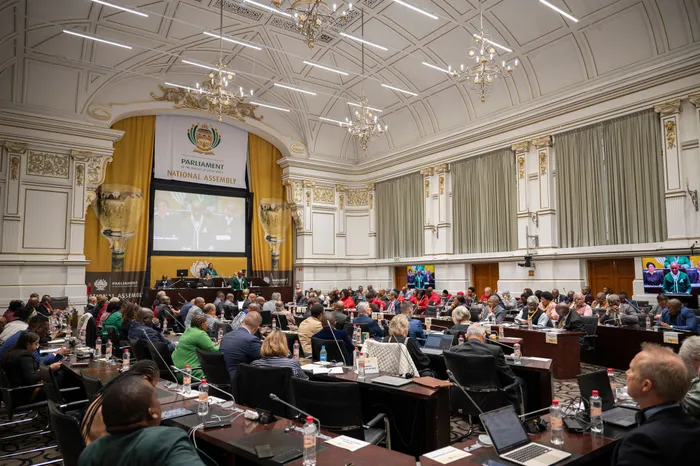
Moral posturing, party lines and victories in National Assembly of South Africa debates over tensions between the United States, Israel and Iran mean little to ordinary South Africans, who must contend with the rising cost of essentials like bread and milk as fuel prices climb, argues social justice activist Christ Maxon. He contends that such performative displays are superficial, noting that MPs remain insulated from escalating fuel costs through travel perks and fuel cards.
Image: ARMAND HOUGH Independent Newspapers
You watch those parliamentary debates on TV or scroll through the clips on social media, and honestly, it feels like they're speaking a different language. The US-Israel vs Iran situation escalates, and suddenly our Members of Parliament (MPs) are on their high horses, throwing big words at each other, competing to see who can sound the most morally outraged. Moral ground this. Ideological standing that. Historical solidarity, whatever.
Meanwhile, I'm standing at the petrol station watching the numbers on the pump spin faster than my salary can keep up.
Nobody in that fancy chamber is thinking about me. They're thinking about their party line. They're thinking about the retweets and the news clips. They're thinking about scoring points against the other side so they can look tough for the base.
But me? I'm thinking about how I'm going to stretch my paycheck this month now that everything—bread, milk, transport, electricity—is about to jump again because of a war happening thousands of kilometres away that I have absolutely nothing to do with.
The Real Cost of Their Posturing
Here's the thing they don't tell you during those passionate speeches: when oil prices go up because of an unjust war, it's not the politicians who feel it. They've got government cars with fuel cards. They've got salaries that adjust with inflation. They've got medical aids, security, and comfort.
It's the gogo (old woman) selling amagwinya (vetkoek) on the corner whose supplier just raised prices. It's the guy in the taxi heading to work in the pouring rain because the fare just went up again. It's the mother choosing between paying the electricity bill and putting enough food on the table.
It's the small business owner watching their delivery costs eat into what little profit they had left. It's all of us at the bottom, carrying the weight of a conflict we never voted for, fought by people who don't know we exist.
And what are our leaders doing about it? They're busy arguing over who is more morally correct regarding the Middle East. They're crafting statements and trading accusations while the price of maize meal creeps up. Again.
The Danger of Being Too Certain
There's an old thinker, Isaiah Berlin, who said something that makes a lot of sense right now. He grew up fleeing revolutions, watching dictators rise, and seeing ordinary people crushed by big ideas. And he noticed something. The biggest problem in politics isn't left versus right. It's the people who are dead set on being right versus those who understand that life is complicated.
Berlin said the world doesn't need more people with absolute answers. It needs more people willing to say, "Hey, maybe let's figure this out as we go. Let's be open to being wrong. Let's make space for ordinary people to just live their lives without getting caught up in grand schemes."
Watch parliament this week and tell me which side you see. Certainty everywhere. Certainty that this boycott is the only morally defensible position. Certainty that that alliance is an unforgivable betrayal. Certainty that their historical analysis is the one true lens.
But where's the person asking the simple questions? Where's the MP standing up and saying: "Before we take our final positions, can someone tell me what this is going to cost the woman in Soweto? The factory worker in Durban? The farmworker in Stellenbosch? Because if your morally correct position means she can't afford to feed her kids, I need you to explain that to her face."
They've Got Time to Be Right. We've Got Bills to Pay
The cruel irony is that while they're busy being ideologically pure, the rest of us are just trying to survive. They can afford to take a moral stand because their lives don't change whether the oil price goes up or down. Ours do. Every single rand counts when you're living month to month.
A war is an ugly thing. An unjust war is even worse. Nobody is asking our politicians to stay silent about injustice.
But the ugliness doesn't stop at the battlefield. It travels. It lands in your bank account. It shows up at the till. It sits next to you in the taxi when the driver has to hike the fare again, and everyone sighs because they know it's not his fault, but it's still another hit.
And our job as citizens? Our job is to watch our leaders argue over whose outrage is more authentic while the cost of living climbs and nobody in that room seems to notice.
What We Actually Need From Them
We don't need more speeches about who is right and who is wrong. We don't need more moral grandstanding. We need people in parliament who understand that politics isn't a game of being correct—it's about keeping the country running for ordinary people.
We need leaders who will say: "This war is wrong, full stop. But my people still have to eat. So, while we condemn what's happening, let's also figure out how to protect the poor from the fallout. Let's talk about fuel subsidies. Let's talk about protecting food prices. Let's talk about what ordinary South Africans need to get through this without being crushed."
That's not a weakness. That's not selling out. That's not abandoning principles. That's called doing the job. That's called remembering who sent you to that building in the first place.
Because at the end of the day, the lesson is simple, and it cuts through all the fancy theories and academic references: in a world where crises keep coming. Everyone is certain they've got the answers; the rest of us will survive not because somebody was right, but because somebody was humble enough to admit that being right doesn't put food on the table. Being right doesn't stop the taxi fare from going up. Being right doesn't help the gogo keep her business going.
So next time you watch parliament and see them going at each other about some distant conflict, ask yourself: are they fighting for me, or are they fighting to be right? And if they're fighting to be right, maybe it's time to remind them who pays their salaries.
(Maxon is a dedicated social justice activist and academic enthusiast, passionately committed to dricing positive change and fostering equitable communities. His views do not necessarily reflect those of the Sunday Tribune or IOL.)
For more thought-provoking opinions click this link below:
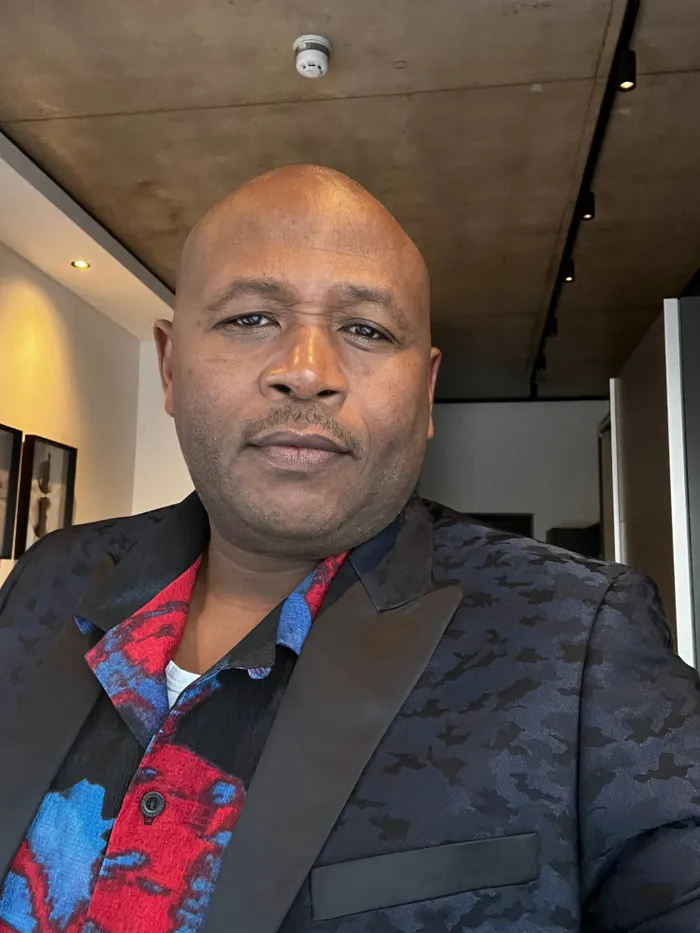
Chris Maxon, is a dedicated social justice activist and academic enthusiast.
Image: File