

Dr Chris Crozier, Executive Committee Member, Recycling and Economic Development Initiative of South Africa (REDISA)
Image: Suppllied
South Africa collects billions of rands in environmental levies through its Extended Producer Responsibility (EPR) policy.
These funds are collected from regulated producers across key waste streams, including tyre manufacturers and importers, packaging producers, and companies placing electrical and electronic equipment on the market. Yet environmental and recycling performance remains uneven and, in some areas, is rapidly deteriorating.
EPR alone cannot solve the waste problem, but it is a critical component of a broader solution — and understanding why requires clarity about what it entails and what follows from it.
At its core, EPR is based on a simple principle: producers cannot place goods on the market without taking responsibility for the negative consequences of their production, use, and end-of-life burdens. When these costs are externalised (i.e. borne by society through taxes, degraded environments, and health risks) waste becomes a public burden.
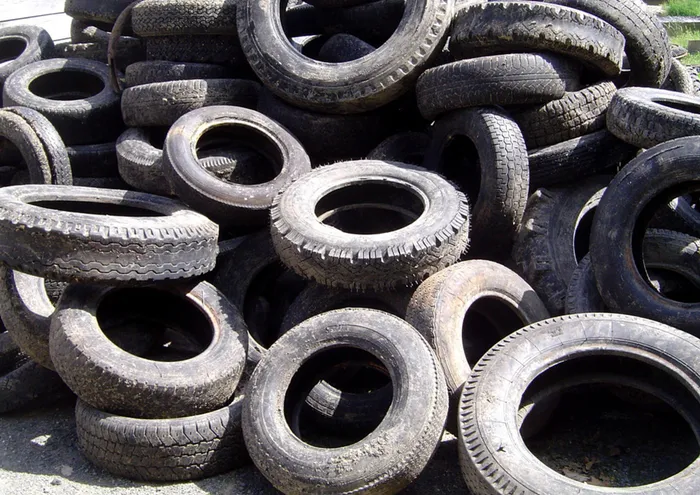
Illegal used-tyre storage sites span several very large tracts of land in South Africa.
Image: File
EPR is often paired with the “Polluter Pays” principle, but identifying “the polluter” is not always straightforward. If a car emits harmful gases, who is the polluter — the manufacturer, the oil company, or the driver? The same dilemma applies to plastic packaging: the feedstock producer, the packaging manufacturer, the company selling packaged goods, or the consumer who discards the packaging?
Consumers have the most immediate control over disposal, but they have little influence over materials, design choices, or waste-management systems. Expecting individuals to choose more expensive or less convenient options, even in service of a “greater good”, is unrealistic. Yet this debate, while interesting, does little to solve the waste problem. Ultimately, society pays regardless: whether through taxpayer-funded remediation, or increased product prices, or by living with the dangerous consequences of unmanaged waste.
Arguing about who the polluter is distracts from the real task: identifying the most efficient mechanisms to prevent, reduce, and manage waste — and determining how to finance these mechanisms.
Producers are the most logical leverage point because they can influence product design, material selection, recyclability, and returnable vs. single-use systems. They are also far easier to regulate than millions of retailers or consumers, while raw material suppliers sit too far upstream to meaningfully affect end-of-life outcomes.
However, fees alone will not drive change unless producers have incentives tied directly to the quantity and quality of waste generated. Different materials carry different end-of-life burdens: metals and lead-acid batteries are often self-funding, while plastics with their myriad compositions and additives present a far more complex and costly challenge.
This leads to the natural question: who should collect and manage EPR fees? Most EPR organisations (EPROs) are created and managed by industry. This gives rise to the classic problem: the players are also the referees. Companies facing shareholder pressure and competitive threats cannot reasonably be expected to implement costly changes that benefit society while potentially harming their own bottom line. Any EPRO that places public interest above producer interest will quickly lose industry support.
Producers should absolutely advise on technical matters, but they cannot govern the system.
The solution is to establish organisations that are independent of the industries they serve. Producers would collect and remit fees, but the EPRO would be legally mandated to minimise the environmental and societal impacts of the relevant products, and drive innovation that eventually makes waste processing commercially viable.
This structure ensures that EPR fulfils its true purpose: internalising externalities and building systems where recycling and recovery become not only environmentally necessary but economically rational.
A major misconception in circular-economy discourse is that “waste is a resource.” Aside from limited cases like metals and lead-acid batteries, most waste streams cost more to process than the value they recover. Recognising this truth allows policymakers to acknowledge that society must pay to manage waste properly. The cost, in context, is small compared to the benefits of clean environments, public health, and reduced ecological degradation.
When the system is properly designed, it can also improve efficiency and reduce that cost over time, eventually turning waste management and recycling into significant economic contributors. This is no fantasy. It has been done in other countries. Research conducted by the University of Cape Town indicates that effective management of just 13 of South Africa's waste streams could grow GDP by up to 1.5 percentage points.
Between 2013 and 2017 South Africa was on course to realise progress in this direction, through the EPRO the Recycling and Economic Development Initiative of South Africa (REDISA) and its management of waste tyres. REDISA created more than 3,000 jobs, supported 226 small businesses, built 22 waste tyre storage depots, and diverted 306,000 tonnes of waste from landfills.
Unfortunately, the Zuma government recklessly destroyed the REDISA model, placed the management of waste tyres under full government control, and thereby, tragically, removed a proof-of-concept that could have revolutionised South African waste management and recycling. This course has not been corrected since.
In the end, policy debates like those around EPR and EPROs may seem dry, technical, and far removed from the everyday, but these supposedly abstract levers shape the world we all inhabit — from the cost of essentials to the health of our landscapes and the resilience of our communities. When designed with ambition and fairness, they can cut waste, spur innovation, and deliver genuine economic gains. If we are serious about building a cleaner, more equitable future, we cannot afford to ignore the power hidden in these policy nuts and bolts.
Dr Chris Crozier, executive committee member of the Recycling and Economic Development Initiative of South Africa (REDISA). The views expressed do not necessarily represent the Sunday Tribune or IOL.