

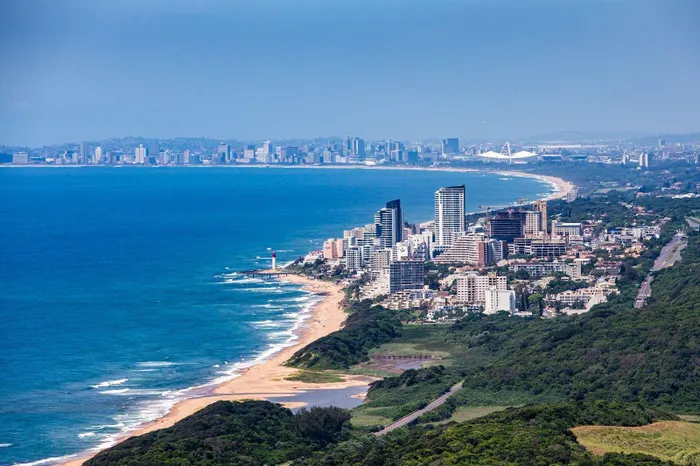
The West Asian conflict has disrupted a key part of the global travel system. For KwaZulu-Natal, the effects are direct because of how the province is connected to that system.
Image: File
On February 28, 2026, a conflict ignited in West Asia that few in KwaZulu-Natal’s tourism sector had planned for, but which now has direct implications for how the province connects to the global travel market.
The timing is significant. KwaZulu-Natal’s tourism sector had been regaining momentum. The 2025 to 2026 festive season delivered strong domestic travel, a 14 percent increase in international arrivals, and sustained demand across multiple districts. Nationally, South Africa recorded 864,534 international tourists in February 2026, up 13.1 percent year on year, reinforcing a broader recovery trend.
This growth was not concentrated in one area. It was spread across the province, with coastal destinations, inland attractions and smaller towns all benefiting from increased visitor activity. Accommodation performance remained stable, and the wider tourism value chain, from transport operators to small tourism businesses, saw the benefit of sustained demand. The recovery was translating into real economic activity, supporting jobs and reinforcing tourism’s role as a key contributor to the provincial economy.
This is not a sector under pressure from weak demand. It is one that had returned to growth. The disruption comes from elsewhere. The conflict has affected aviation networks, energy markets, and the cost of long haul travel. For KwaZulu-Natal, the issue is not only that these systems are under strain, but that the province’s international access depends heavily on a single routing model that runs through the affected region.

Dr Sibusiso Ndebele is the Chairperson of KwaZulu-Natal Tourism & Film Authority
Image: File
West Asia has become a central transit point in long haul aviation. In 2025, an estimated 466 million passengers moved through the region, with close to 100 million passing through Dubai alone. This is the backbone of long haul connectivity between continents. When it is disrupted, the effects are not isolated to one region; they cascade across the global travel system.
For Durban, the exposure is direct. Approximately 90.7 percent of international arrivals into King Shaka International Airport travel via Emirates and Qatar Airways, both operating through West Asian hubs. This has provided efficient connectivity under normal conditions, but it also creates concentration. When that system is constrained, access tightens quickly.
The implication is immediate. Based on recent arrival patterns, an estimated 36,700 international visitors are at risk if those services are reduced or suspended. By comparison, Johannesburg and Cape Town are less exposed. Their international access is supported by a broader mix of carriers and routing options, particularly through Europe, which provides an alternative when one corridor is disrupted.
The aviation disruption is compounded by rising energy costs. West Asia accounts for more than 30 percent of global oil supply and over 20 percent of natural gas. Conflict in the region has already introduced price volatility, and for airlines this translates directly into higher operating costs. This links directly back to the same system under strain, where disrupted routes and rising fuel costs reinforce each other and push up the total cost of travel.
Jet fuel remains the largest variable expense in aviation. As costs increase, airlines respond in predictable ways. They reduce frequencies, consolidate routes, and adjust pricing. At the same time, rerouted flights are longer and require more fuel, further tightening available capacity. The combined effect is straightforward: fewer available seats, higher ticket prices, and longer travel times.
For travellers, this changes decision making. Trips are delayed, shortened, or redirected. Destinations that are harder or more expensive to reach become less competitive, even where demand exists. Experience from the post COVID recovery shows that once airfares increase, they rarely return to previous levels. The market adjusts to a higher baseline, and that shift tends to hold. For KwaZulu-Natal, this creates sustained pressure on international access rather than a short-term disruption.
It would be a mistake to read this moment only through the lens of loss. Disruption redistributes flows; it does not simply eliminate them. Travellers who can no longer reach their intended destinations will look for alternatives. The question for KwaZulu-Natal is whether it can position itself to capture some of that redirected demand.
Several opportunities deserve serious attention.
Regional tourism surge: As long haul travel becomes more expensive and less certain, regional travel within Africa and across the southern hemisphere is likely to strengthen. KwaZulu-Natal’s natural assets, including its coastline, wildlife and heritage offering, position it well for the regional leisure traveller.
Domestic reorientation: South African travellers who might have chosen to travel abroad may redirect discretionary spending towards domestic destinations. The province’s recent festive season performance already points to the strength of that market. A focused domestic marketing effort could turn caution about international travel into bookings within KwaZulu-Natal.
Kenya as competitor and bellwether: Nairobi has long positioned itself as one of Africa’s leading aviation hubs. As West Asia loses some of its transit role, Nairobi is likely to attract greater attention. KwaZulu-Natal should watch that shift closely, both for what it signals about changing travel patterns and for what it means in terms of competition on the continent.
The conferencing pivot: As instability affects parts of West Asia, international professional conference organisers and associations will look for alternative destinations. Cape Town and Johannesburg, with stronger and more diversified air access, are better placed to attract the largest events. KwaZulu-Natal’s opportunity lies in regional conferences and mid sized meetings, where air access is less decisive and the overall destination offering matters more.
The West Asian conflict has disrupted a key part of the global travel system. For KwaZulu-Natal, the effects are direct because of how the province is connected to that system. The issue is not a lack of demand. Recent performance shows that demand is present and growing. The constraint is access. KwaZulu-Natal’s reliance on a single aviation corridor has provided efficiency, but it has also created exposure. When that corridor is disrupted, the impact is immediate and measurable.
At the same time, the fundamentals remain intact. The province has a competitive tourism offering, a resilient domestic market, and continued strength in regional travel. What has changed is the environment in which it competes. Global travel patterns are shifting. Routes are becoming less predictable, costs are rising, and destinations with more flexible access will be better positioned to retain and grow their share. KwaZulu-Natal will need to respond within that reality.
Dr Sibusiso Ndebele is the Chairperson of KwaZulu-Natal Tourism & Film Authority. The views expressed do not necessarily represent the Sunday Tribune or IOL.