

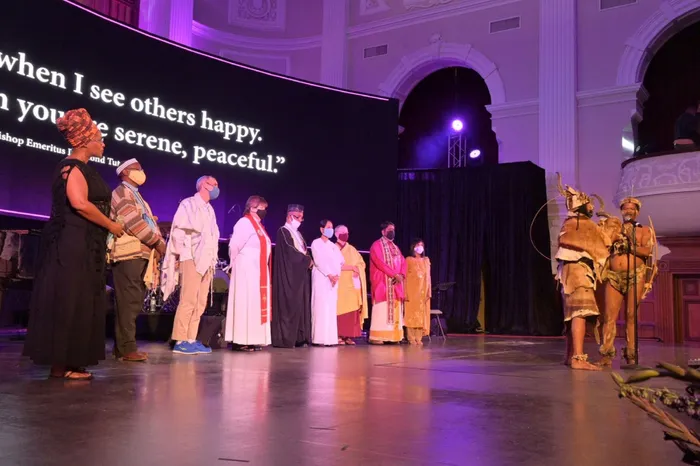
Leaders of different faiths and cultures lead an interfaith service. Deputy President of South Africa Paul Mashatile argues that the churches helped win freedom, and now they must help sustain democracy—but with greater accountability.
Image: Independent Newspapers Archives
As South Africans gathered to commemorate Freedom Day on 27 April, we are called upon, not only to remember a historic victory but also to renew the spirit that made it possible.
Freedom Day and Freedom Month is a celebration of courage, demonstrated by ordinary people who stood against injustice. It is about communities that refused to be silenced and a nation that chose hope over fear. It marks the birth of a democratic South Africa grounded in dignity, equality, and human rights. These are values that form the bedrock of our democratic nation.
That foundation has made our democracy one of the most progressive in the world, despite its challenges. The right to vote, freedom of expression, constitutional protections, and the recognition of diversity are not abstract ideals, but they are lived realities for millions of our people. These gains remind us that transformation is possible when people unite behind a shared vision. Freedom Month also reminds us that democracy in South Africa was not handed down, but it was earned through sacrifice, resistance, and unwavering courage. During the long night of apartheid, the Church stood as a lantern of hope. Its pulpits rang with calls for justice, its spaces sheltered the persecuted, and its leaders became prophetic voices against injustice.
Across denominations from African Initiated Churches to Pentecostal, Charismatic, and mainline Protestant traditions, the Church became a site of moral resistance. In sanctuaries and under open skies, hymns became battle cries and prayer became defiance.
During pivotal moments such as the 1991 National Peace Accord, faith leaders, including the late Desmond Tutu, Frank Chikane, and others, played a critical role in guiding the nation toward peace. By 1994, the Church stood at the crossroads of history, helping shepherd a fragile but hopeful transition into democracy. The 1996 Constitution, one of the most progressive in the world, reflects this legacy. Its Bill of Rights affirms equality, dignity, and freedom, including freedom of religion, belief, and opinion. It protects diversity while ensuring that all expressions of faith exist within the framework of constitutional order.
But freedom is never without responsibility. In a democratic South Africa, the role of the Church has not diminished, but it has just expanded. Faith communities are called not only to spiritual leadership but also to active participation in shaping ethical public discourse, especially in confronting the enduring legacies of apartheid and inequality.
Today, the Church remains a moral compass, challenging injustice, supporting the vulnerable, and fostering social cohesion. It must continue to confront pressing societal challenges, including gender-based violence, corruption, unemployment, and deepening social fragmentation. At the same time, honest reflection is essential.
Religious freedom must never be misused. Instances of exploitation, abuse, and unethical leadership undermine the moral authority of the Church and erode public trust. When faith institutions fail internally, their ability to speak credibly on justice and accountability is weakened.
This is why strengthening self-regulation and internal accountability within faith-based organisations is not optional but extremely necessary. Self-regulation is not an attack on faith; it is its defence. It protects congregants, preserves institutional integrity, and ensures that faith remains a force for good in society. Government, for its part, must respect doctrine and belief. But true partnership between the state and faith communities requires mutual accountability, transparency, and shared commitment to constitutional values. Government respects doctrine and belief, advocating for true partnership that requires mutual responsibility.
Additionally, dialogue and cooperation is necessary to address the upholding of constitutional rights, including accountability in public administration. Public trust in the state and civil society must be strengthened, particularly as it relates to ensuring transparency in the management of finances in Faith-Based Organisations (FBOs).
Establishing democratic internal structures within FBOs is therefore essential to enhancing accountability and preventing public exploitation, especially considering the use of volunteers who may not be formally trained in accountability practices, which can lead to mismanagement and a lack of oversight in their operations.
As we mark Freedom Month, we must remember that the struggle did not end in 1994. It continues in classrooms where young people seek opportunity, in homes where women demand safety, and in communities grappling with poverty and inequality. The Church, alongside government and civil society, must remain an active partner in building a just, compassionate, and united South Africa.
Freedom persists solely when upheld by principled guidance, collective accountability, and unwavering integrity. United, with the guidance of our Constitution and the support of principled faith leadership, we can triumph over the challenges we face today.
In the same way that hymns like ‘Lizali’idinga lakho’, once carried our nation through its darkest days, so too must our collective voice rise again, firm in justice, grounded in dignity, and unwavering in hope.
(Mashatile is the Deputy President of South Africa. His views do not necessarily reflect those of the Sunday Tribune or IOL)
Looking for more thought-provoking perspectives? Click the link below:
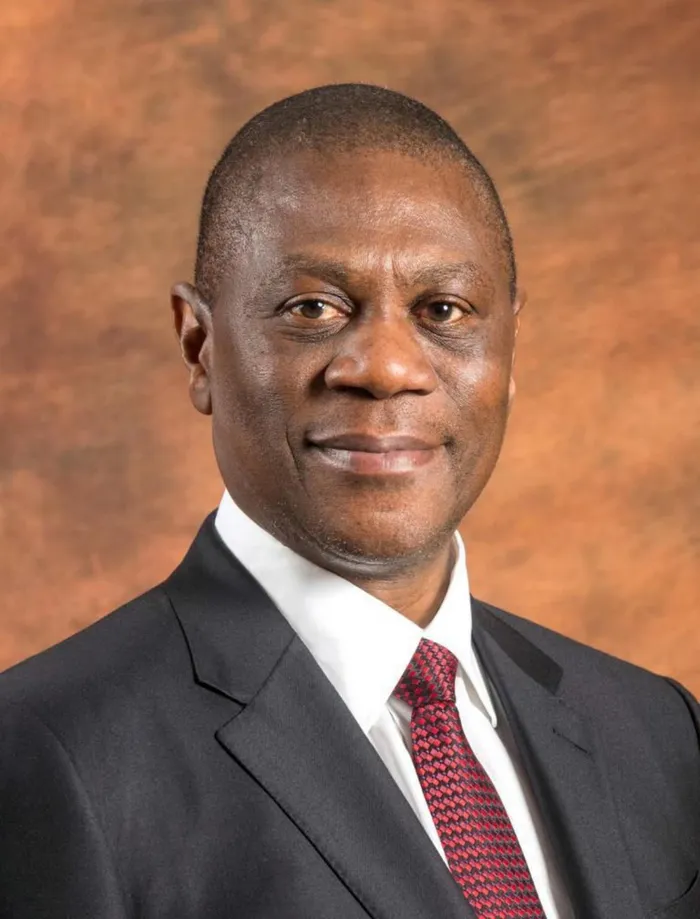
Deputy President of South Africa Paul Mashatile
Image: Supplied