

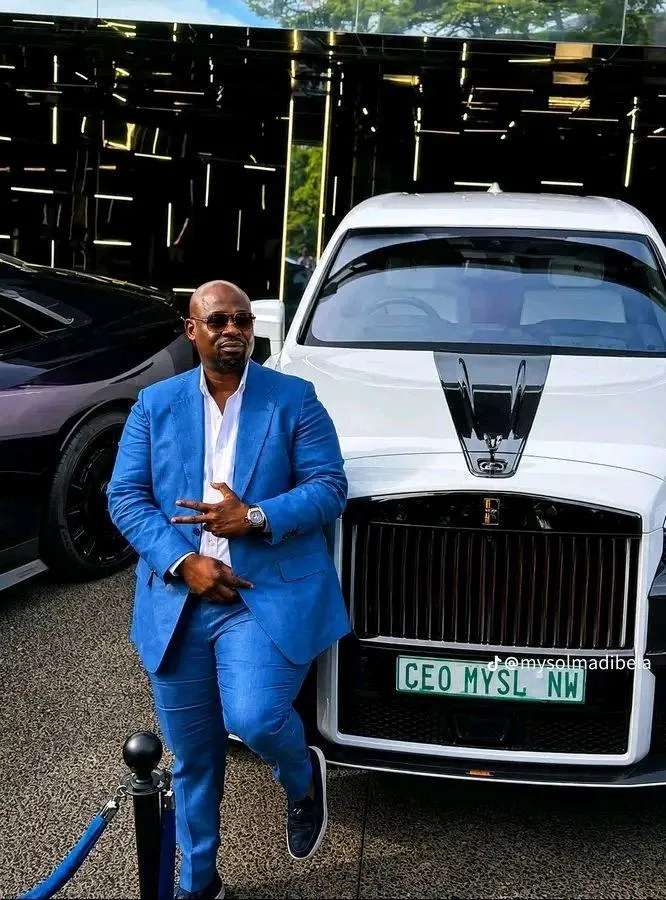
Solly Soka Madibela popularly known as MySol with his Rolls Royce at his R220 million mansion in Cape Town. The writer argues that South Africa has developed a harmful tendency to treat black success with suspicion instead of pride. While corruption must be confronted, the article warns against automatically associating black wealth and achievement with criminality, saying such attitudes reflect lingering colonial thinking that undermines true economic transformation and black excellence.
Image: TikTok
One of the most dangerous psychological wounds in South Africa today is the quiet habit of treating black success like a crime scene, admired in public, but immediately investigated in private. It is as if achievement must first prove its innocence before it is allowed to be celebrated, and excellence must carry a receipt before it is believed.
Yet a nation cannot claim transformation while suspicion still follows success like a shadow. Somewhere within our society, a poisonous mentality has taken root, the belief that when a black person rises economically, there must be corruption, theft, political connections or dishonesty behind it.
This mindset is not only ignorant but it is deeply insulting to the sacrifices made by generations who fought for freedom and economic justice in this country. The struggle led by the African National Congress was never simply about replacing political power.
It was about restoring the dignity of black people and changing the material conditions deliberately designed by apartheid to keep Africans poor, dependent and excluded from meaningful economic participation.
The democratic government introduced policies aimed at opening doors that had been violently shut for centuries, policies of empowerment, education, transformation and economic inclusion. That was not corruption. That was justice correcting a historical crime.
For decades, black people were deliberately positioned as labourers in the economy, never owners. The apartheid system conditioned society to associate wealth, sophistication, authority and success with whiteness, while blackness was associated with cheap labour, poverty and survival.
Black people were expected to build wealth for others, not for themselves. What is painful today is that many black people themselves still carry this colonial conditioning. Instead of celebrating black excellence, discipline, entrepreneurship and innovation, there are those who immediately become suspicious the moment a black person succeeds.
A black entrepreneur buys property, builds a company, drives an expensive car or travels internationally, and suddenly society becomes an investigating committee. “Who does he know?” “Which tender did he get?” “Whose money is that?” “What corruption is involved?”
Meanwhile, many wealthy white business people continue to enjoy admiration without being subjected to the same level of public suspicion. Their success is often called “business intelligence” or “investment strategy”, while black success is forced into the dock of public opinion before any evidence exists.
That contradiction exposes something deeply troubling about the state of our thinking as a society. Nobody defends corruption. Corruption destroys institutions, weakens democracy and steals from the poor. Those found guilty of criminal conduct must face the full force of the law without fear or favour.
Accountability remains necessary in any constitutional democracy. But accountability and bitterness are not the same thing. What has become fashionable in South Africa is not genuine concern for justice, but the casual criminalisation of black progress. Allegations have become enough to destroy reputations.
Social media gossip is now treated as evidence. Rumours, screenshots, anonymous voice notes and street-level assumptions are accepted as truth long before any investigation takes place. This culture is reckless, unfair and intellectually lazy. When responding to questions in Parliament last week, Deputy President Paul Mashatile was correct when he said that those who suspect wrongdoing must report such matters to law enforcement agencies.
In a constitutional state, investigations are conducted by competent authorities, not by gossip groups on social media or people driven by jealousy and resentment. If there is evidence, let the law act. But suspicion alone cannot become a national principle. The reality many refuse to accept is that black people are now entering spaces from which they were historically excluded.
Black industrialists, investors, property owners and entrepreneurs are emerging in sectors once monopolised by a privileged minority. That reality makes some people uncomfortable, including sections of black society itself. There is an uncomfortable truth black communities must confront honestly: sometimes we become our own worst enemies.
We are often quicker to pull one another down than to build one another up. We spread rumours faster than encouragement. We become deeply uncomfortable when one of our own rises beyond the suffering we have normalised. Success among black people is too often treated as betrayal rather than inspiration.
That mentality is destructive. It discourages young black people from dreaming boldly. It teaches them that success will attract hatred instead of respect. It conditions them to believe that poverty is authenticity and that wealth must always be explained when it belongs to a black person.
That is psychological oppression operating long after political apartheid ended. One would not be surprised to see this same toxic mentality directed at figures such as Solly Soka Madibela, widely known as My Sol.
Instead of recognising the discipline, sacrifice and strategic thinking required to build a mining and logistics empire, many are quick to manufacture stories of corruption without evidence. What critics deliberately ignore is that business success requires vision, resilience, risk-taking and relentless commitment.
Through ventures such as MySol Holdings & Logistics, Madibela Holdings, SolSafari and SolVision Studios, there has been a visible attempt to build long-term industrial and economic influence. Such achievements should inspire young black people to pursue ownership and enterprise, not fear success because society may criminalise it.
The same can be said about Calvin Mathibeli, who established Calvin & Family Group in 2005. What began as a small enterprise grew into a multi-sector business operating across various African countries. Stories such as these should remind young Africans that black excellence is possible, legitimate and necessary for economic transformation on the continent.
South Africa cannot claim to support empowerment while humiliating every black person who becomes financially successful. A country serious about transformation must produce black industrialists, black investors, black innovators and globally competitive black-owned companies. Economic freedom cannot remain a slogan repeated during elections while society simultaneously attacks every visible example of black prosperity.
Black people must stop apologising for success achieved through honest means. There is nothing criminal about a black person building generational wealth. There is nothing shameful about black excellence. There is nothing suspicious about black ambition.
The real danger is allowing society to normalise the belief that black people belong permanently in poverty while wealth remains acceptable only when controlled by others. Transformation is not only about changing laws.
It is about changing the mindset of a country still trapped in colonial attitudes about who deserves success and who does not. Corruption must always be exposed wherever it exists. But black success must never automatically be treated as a crime. Black excellence is not a scandal. Black wealth is not an offence.
And black success, earned through legitimate means, should never require permission, explanation or apology.
(Memela is former journalist and government spokesperson. His views do not necessarily reflect those of the Sunday Tribune or IOL)
For more thought provoking perspectives from the Sunday Tribune, follow us on Facebook, Instagram and X
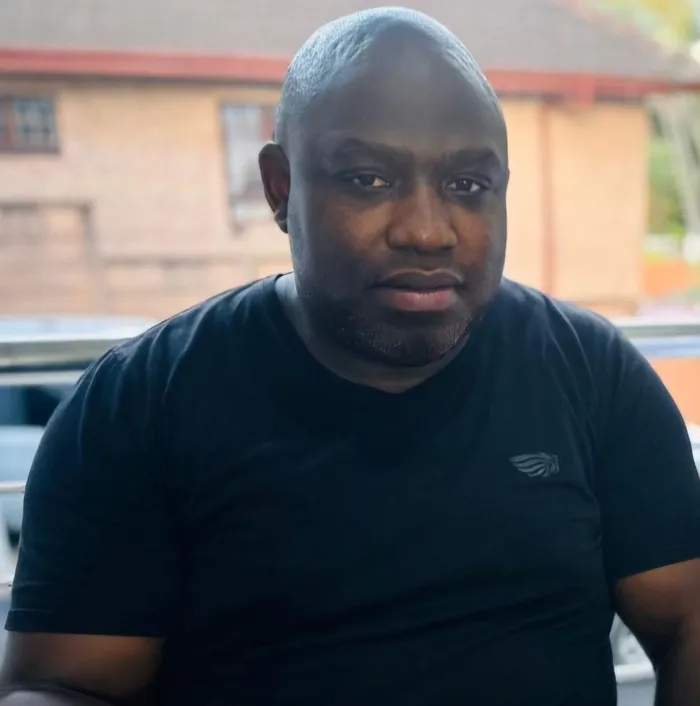
MHLABUNZIMA MEMELA
Image: SUPPLIED