

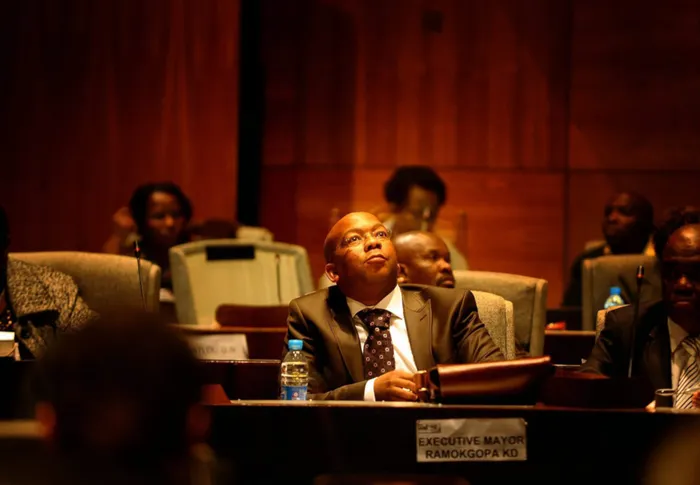
Tshwane executive mayor Kgosientso Ramokgopa in the council chamber. Picture: Sizwe Ndingane Tshwane executive mayor Kgosientso Ramokgopa in the council chamber. Picture: Sizwe Ndingane
DEBATES in the Tshwane Metro Council chamber can get really hot. So hot that one cringes, listening to some of the statements made by councillors.
Some of the statements earned councillors a dressing down from the speaker, Morakane Mosupye, who has shown that she is not someone to test.
Several councillors have been ordered to sit down, while DA leader in council Brandon Topham was ordered to leave the council chambers after he challenged Mosupye’s authority.
Things got hot at last Thursday’s monthly meeting when the DA and the Freedom Front Plus (FF+) went for each other’s throats.
The DA claimed that it represented more Afrikaners than the FF+ and that the latter’s three councillors – Piet Uys, Dr Conrad Beyers and Philip van Staden – represented them.
The FF+ responded, stating that DA regional leader (North Gauteng), Tshepiso Msimanga, was “a token black”.
Msimanga took offence and posted comments on his Facebook page stating that he had been called a “token black”, and what “is sad is that this group and its leaders fail to comprehend that a black man can be a leader or even a decision-maker”.
He further stated that he hoped President Jacob Zuma would kick FF+ leader Dr Pieter Mulder out of his cabinet and that the DA would “make sure that these people (FF+ councillors) don’t return to this council”.
Executive mayor Kgosientso Ramokgopa had a go at DA councillor Daryl Moss, accusing him of undermining his authority.
This happened after Moss had called for the withdrawal of an item on the council agenda which dealt with the sale of a piece of land in Pretorius Park (east of Pretoria) which forms part of the Woodhill security and golf estate.
Moss said residents were not happy with the council’s decision and that it should be withdrawn.
Ramokgopa also had a go at Van Staden, stating that he (Van Staden) could not be trusted after he expressed the FF+’s opposition to the new street names.
It is always encouraging to hear constructive criticism or debate from councillors on issues which are tabled for consideration by council, but there are boundaries on how far these criticisms or debates should go.
Then there are some councillors who don’t take part in debates or discussions, but are only seen or heard when issues are put to a vote.
This creates the impression that they are only there to add to the numbers in council.
Some do not participate even when issues that affect their wards are discussed.
This should not be the case as some of the issues discussed affect – positively or negatively – their respective communities.