

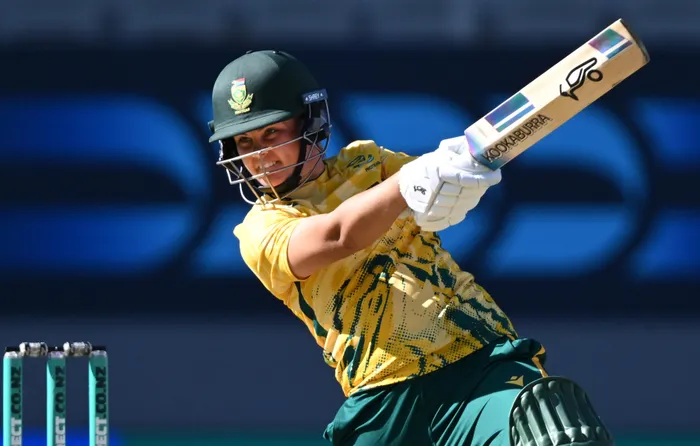
Young Kayla Reyneke was one of the few standout performers during a disappointing series for the Proteas Women in New Zealand.
Image: BackpagePix
The Proteas Women’s team slumped to a disappointing 4-1 series defeat to the T20 world champions New Zealand.
Independent Media’s Zaahier Adams highlights five factors that emerged during the series.
The Proteas captain is undeniably one of the premier batters in the world, and when she goes well, the team usually does well. But the Proteas will never truly be considered a great outfit if they continue to rely solely on Wolvaardt as a source of runs.
The skipper endured a relatively rare poor series with the bat - 97 runs at an average of 25, which included a 41 not out - and it filtered through to the rest of the batting unit. A team that has reached three consecutive World Cup finals - admittedly on the back of Wolvaardt’s form - cannot be solely dependent on one player.
2. Batting line-up confusion
For some reason, coach Mandla Mashimbyi opted to trial a rotational batting lineup against the current T20 world champions. The Proteas’ strength has traditionally been their powerful opening pair consisting of Wolvaardt and Tazmin Brits. Mashimbyi has broken up the pair and promoted Sune Luus up the order with Wolvaardt dropping down to No 3.
When the Brits-Luus combination proved unsuccessful, Mashimbyi opted to push allrounder Chloe Tryon up to open with Luus. This too did not reap the desired results.
The best plan of action is to get Wolvaardt back up to open the batting where she’s scored the majority of her runs.
3. Back Annerie Dercksen
For too long the Proteas have stuffed around where Dercksen fits into the line-up. Does she only play when Marizanne Kapp is not available? Does she bat lower down the order or does she walk in at No 4?
These questions have to be resolved sooner rather than later for the allrounder is one of the brightest prospects in women’s cricket globally - not just South Africa.
She was the Proteas’ leading run-scorer in the series with 114 runs at an average of 28.50 at a strike-rate of 129.85. But there is so much more that can be extracted from Dercksen if she’s just given the full backing she deserves. Could potentially be the player of the T20 World Cup if managed properly.
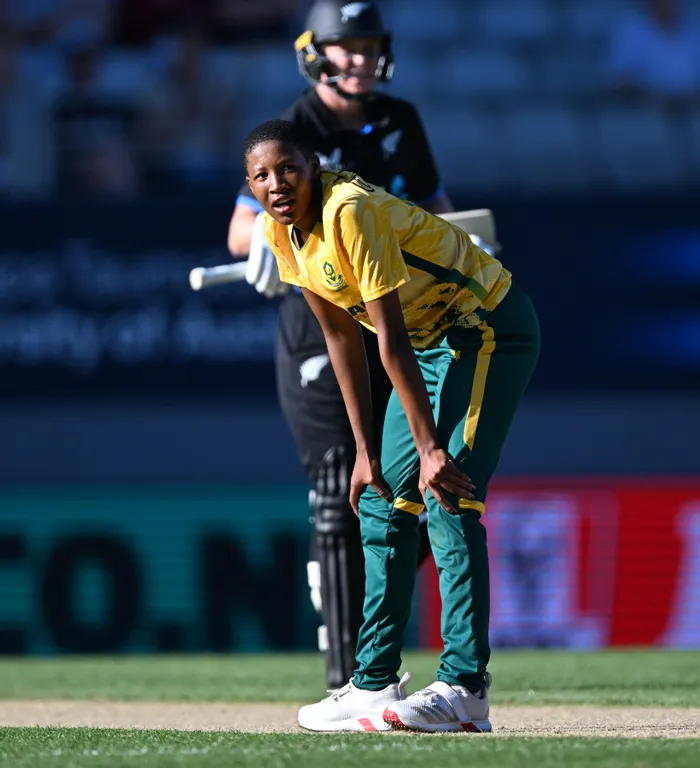
The Proteas Women need young fast bowler Ayanda Hlubi to assume the strike bowler role.
Image: BackpagePix
4. Bowling is the Achilles heel
The lack of a premier strike bowler has long been a problem since Shabnim Ismail’s retirement after the T20 World Cup in South Africa in 2023. There is talk about Ismail returning for the upcoming T20 World Cup in England, but even she is now three years older.
The lack of wicket-taking options is glaring, and it's being rudely exposed in the powerplay when the opposition are lining up to take full advantage when the fielding restrictions are in place.
The Proteas conceded 61 and 63 in the first two powerplays, although there were signs of improvement in the latter three matches with the White Ferns managing 42, 47 and 35 in the final three.
5. Kayla Reyneke’s promise
Amidst the doom and gloom, there is always some shining light fighting to break through, and it is in the form of young allrounder Reyneke.
The former SA U19 captain has taken to international cricket like a duck to water. It was crucial that she continued the promise shown against Pakistan in the home series against high-quality opposition like the White Ferns.
Reyneke’s return of 109 runs at an average of 54.50 and strike-rate of 165.15 was immense for the youngster on her first tour. Her ability to take on big-name players such as Sophie Devine, and not be overawed by the occasion, is also hugely promising heading into a T20 World Cup.