

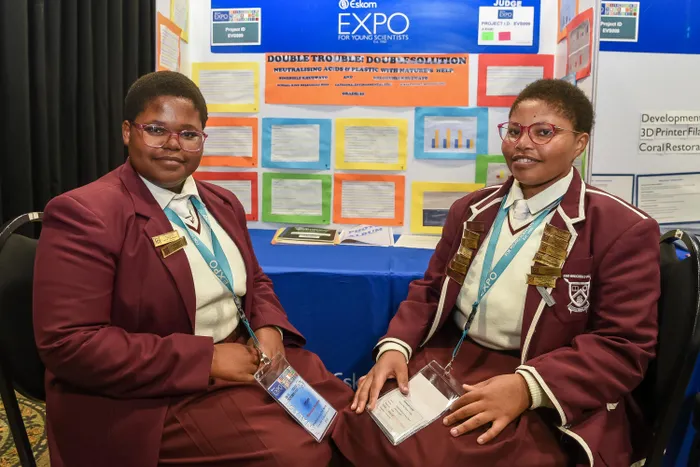
Melokuhle Khuzwayo and Simesihle Khuzwayo from King Bhekuzulu High School in Nongoma, KwaZulu-Natal.
Image: Supplied
Four exceptional young scientists from South Africa have earned the prestigious opportunity to represent their nation at the upcoming Initiative for Research and Innovation in STEM (IRIS) Global Symposium, scheduled to take place in India from 27 to 31 January 2026. These brilliant learners, who distinguished themselves at last October’s Eskom Expo for Young Scientists International Science Fair (ISF), are poised to unveil research that could make a significant impact on environmental sustainability and inclusivity.
The selected learners will present groundbreaking projects covering a range of pressing social and environmental issues. Each of the projects showcases innovative solutions, from harnessing natural materials to address contamination to creating affordable technology for the visually impaired. They are set to compete under the expert guidance of delegation leader Dr Krishnie Naidoo, Eskom Expo Academic Director, who emphasised the importance of nurturing such talent.
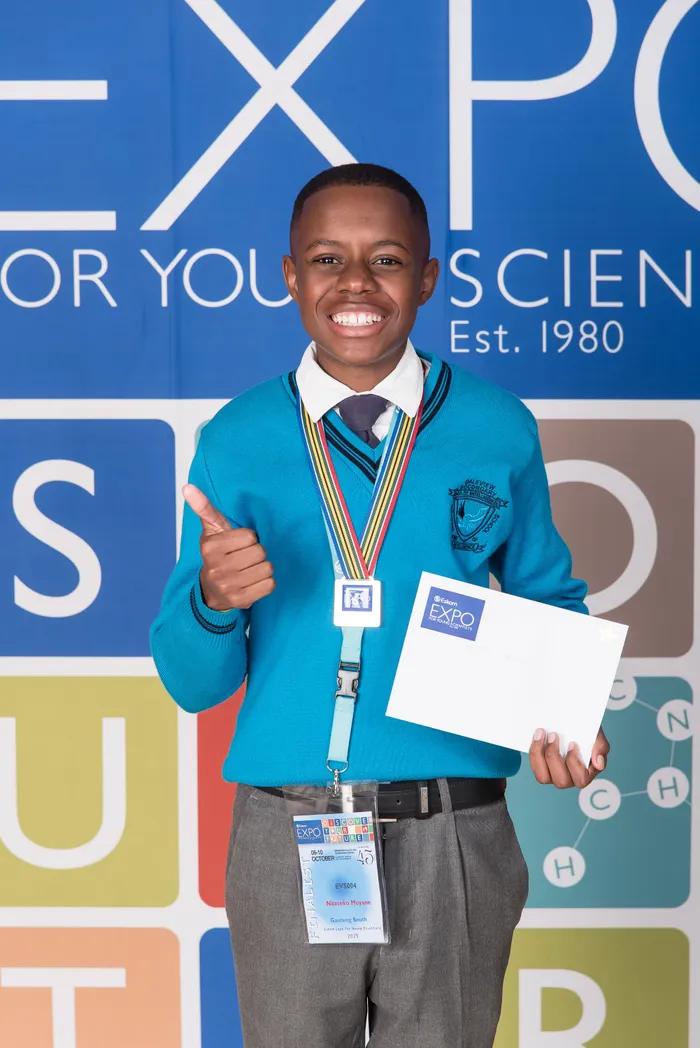
Nkanteko Moyane from Daleview Secondary School, Gauteng.
Image: Supplied
Melokuhle Khuzwayo and Simesihle Khuzwayo from King Bhekuzulu High School in Nongoma, KwaZulu-Natal.
Project name: “Double Trouble, Double Solution: Neutralising acids and plastics with nature’s help”.
Summary: This research explores how banana peel and yeast extracts can effectively neutralise water acidity and remove microplastics, demonstrating a practical and inexpensive solution for communities facing environmental challenges.
Jivesh Ramnath from Hoërskool Richardsbaai in Richards Bay, KwaZulu-Natal.
Project name: “JØ7 Vireo: Development of a low-cost AI-powered navigation device for the blind and visually impaired”.
Summary: This innovative device employs real-time object identification and distance awareness to enhance mobility for visually impaired individuals, showcasing the promise of affordable AI technology.
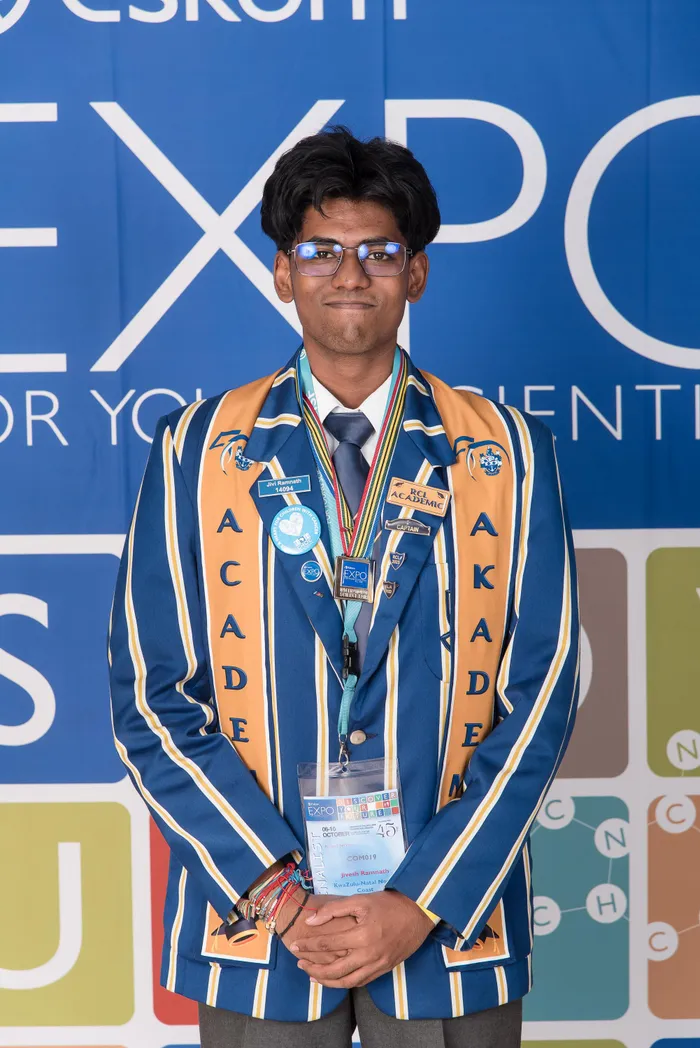
Jivesh Ramnath from Hoërskool Richardsbaai in Richards Bay, KwaZulu-Natal
Image: Supplied
Nkanteko Moyane from Daleview Secondary School, Gauteng.
Project name: “ECOHARVEST: Integrated Phytoremediation for contaminated soil and mining wastewater”.
Summary: Highlighting the success of using hyper-accumulator plants alongside cow dung to significantly lower heavy metal contamination, this research presents a natural approach to restoring polluted land and water resources.
The Chief Executive Officer of the Eskom Development Foundation (Acting), Mologadi Motshele, expressed her pride in these promising young innovators.
“Eskom is proud to support the next generation of innovators and problem-solvers. Investing in young scientists strengthens South Africa’s future, developing leaders who will drive technological advancement, sustainability, and social impact on both a national and global scale. We wish our learners all the best as they take South Africa’s scientific talent to the world stage.”
As the nation prepares to celebrate these remarkable achievements, registration for the next Eskom Expo remains open. School learners from Grades 4–12 and Technical and Vocational Education and Training (TVET) colleges can register their research projects by visiting www.exposcience.co.za. This continuing effort to foster scientific inquiry and innovation underscores the importance of encouraging young minds to explore and address the challenges of our time.