

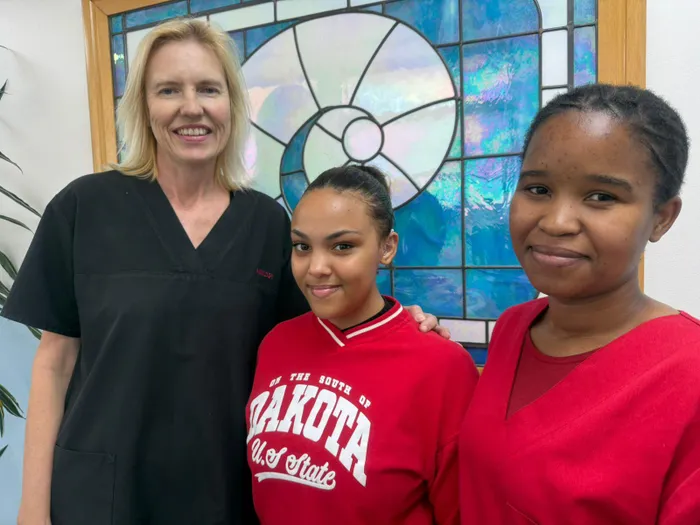
From left to right – Jeannette Birkenstock, Assistant Director, Department of Speech Therapy and Audiology at Tygerberg hospital; Micah Classen; Nokwanda Ndlovu, Audiologist at Tygerberg Hospital.
Image: Supplied
With World Hearing Day observed recently, the Western Cape Department of Health and Wellness (WCDHW) emphasised the importance of early hearing screening and timely access to care for every child. The theme this year, “From communities to classrooms: hearing care for all children,” underlines a commitment to fostering an educated, healthy, and caring society.
A child’s auditory capacity significantly influences their developmental pathway. Chéri van Zyl, Chief Audiologist at Red Cross War Memorial Children’s Hospital, said, “When hearing difficulties are identified early, we can intervene before they affect communication, learning, or confidence. Early action truly changes outcomes.” This proactive approach is imperative as early hearing screening—ideally performed within the first month of life—represents the most effective method of detecting hearing loss before it disrupts a child's potential.
Parents and caregivers should be alert to several indicators that may suggest hearing issues, including:
“If something feels off, it is always worth checking,” said Van Zyl. “Babies often respond to facial expressions rather than sound. Objective screening is the only reliable way to detect hearing loss early.”
This essential newborn screening process is quick, gentle, and painless, and is readily available at public health facilities across the province.
Thirteen-year-old Micah Classen from Blackheath exemplifies the positive outcomes made possible through the Western Cape’s public health system. Diagnosed with moderate-to-severe hearing loss at the age of four at Tygerberg Hospital, Micah was fitted with hearing aids and received therapy support at the Carel du Toit CHAT Centre. Today, she is not only a confident Grade 8 learner but also aspires to be an audiologist, crediting her journey to the collaborative efforts of her family, school, and healthcare professionals.
“Be patient and confident and do not feel insecure, because God made you in his own special way,” Micah shared, sending a powerful message to those with hearing challenges. “And to the people who can hear, try to understand more, because we are just like you.”
Megan Davis-Ferguson, Assistant Director of Audiology at Groote Schuur Hospital, said, “At Groote Schuur, we support hearing health across the lifespan, from newborn screening to comprehensive assessments for both children and adults, as well as fitting and management of hearing devices.”
This integrated model of care ensures that residents receive services close to home and are only referred to specialists when clinically necessary. This approach not only optimises resource allocation but also ensures that individuals receive the care they require in a timely manner.
For concerned parents or individuals about hearing issues, the first step is to visit the nearest clinic or community health centre. Primary healthcare staff will assess the concern and, if necessary, refer patients to appropriate hospitals for further testing or specialised care. Access to audiology and ENT services at regional and tertiary hospitals occurs through referrals based on clinical needs.
It is vital not to delay; early assessments lead to better outcomes for individuals affected by hearing issues.
Supporting children with hearing challenges requires a collaborative approach. Families and communities can:
Teachers can assist by:
Hearing health is both a health and education priority. By safeguarding hearing, we protect essential skills such as learning and social participation—thereby enhancing long-term opportunities for children.
Untreated hearing loss can have far-reaching consequences on speech, literacy, confidence, and social development. Ensuring early hearing care bolsters not only individual children but strengthens the entire province. The Western Cape Department of Health and Wellness remains resolute in its mission to foster a responsive health system that supports children from birth through adulthood, making healthcare access an achievable reality for all.
“Every child deserves the chance to grow in a world full of sound,” emphasises van Zyl. “Together, families, teachers, communities, and healthcare teams can ensure no child is left behind.”