

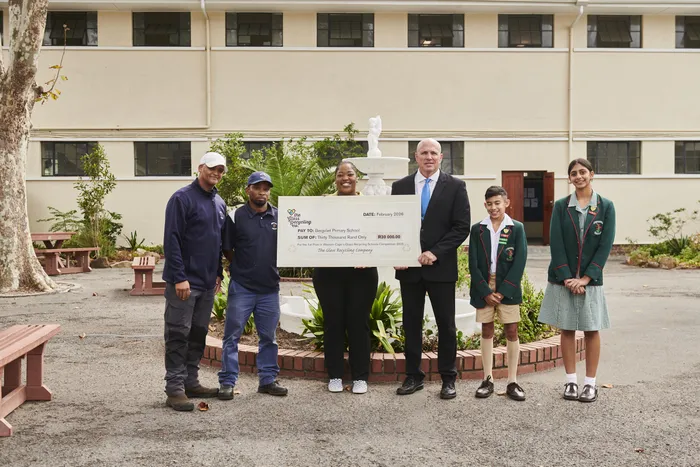
This year, schools in the Western Cape are proving that by harnessing the enthusiasm of youth, meaningful change in recycling habits can happen, creating a ripple effect that encourages families to adopt sustainable practices at home.
Image: Supplied
In the Western Cape, a transformative movement towards everyday recycling is taking shape, predominantly spearheaded by schools eager to turn awareness into actionable habits. This year, it’s strikingly evident that learners are not just passive participants, but active agents of change, extending the message of recycling well beyond the classroom and into their homes.
The impact of the Glass Recycling Schools Competition has been nothing short of remarkable. Leading the pack with an impressive collection of 20,436 kg of glass, Bergvliet Primary School secured first place, earning itself a reward of R30,000. Following closely behind, Kenridge Primary School and SACS Junior School contributed significantly with collections of 15,702 kg and 14,455 kg respectively, walking away with R20,000 and R10,000 awards.
Collectively, these schools amassed over 50 tonnes of glass, which is the staggering equivalent of approximately 200,000 bottles.This impressive feat represents not only the dedication of the students but also the collective efforts of their families and the broader school community, reinforcing a culture of sustainability and responsibility.
Shabeer Jhetam, CEO of The Glass Recycling Company, highlights the importance of this initiative: “Recycling becomes far more effective when it is embedded in daily routines. Children are helping to normalise that behaviour. They bring the message home and make sure it is followed through.” This crucial point illustrates how engaging learners directly influences household practices, encouraging parents to rethink their disposal habits and to avidly separate glass from general waste.
The unique properties of glass make it exceptionally suitable for a circular economy. It can be recycled indefinitely without any loss of quality, underscoring its value within the recycling ecosystem while bolstering environmental benefits and economic growth across its value chain.
The results from the Western Cape stand as a testament to how consistent participation in recycling initiatives can yield significant positive outcomes over time. Families are urged to take an active part in this movement by diligently separating glass bottles and jars from their general waste and utilising existing glass recycling banks. Many of the participating and winning schools have set up these banks, providing community members a convenient drop-off location. A comprehensive list of available locations can be found at theglassrecyclingcompany.co.za.
Schools keen on participating in the ongoing competition are encouraged to reach out via email at palesa@tgrc.co.za, joining the ranks of those committed to fostering an environmentally conscious future.