

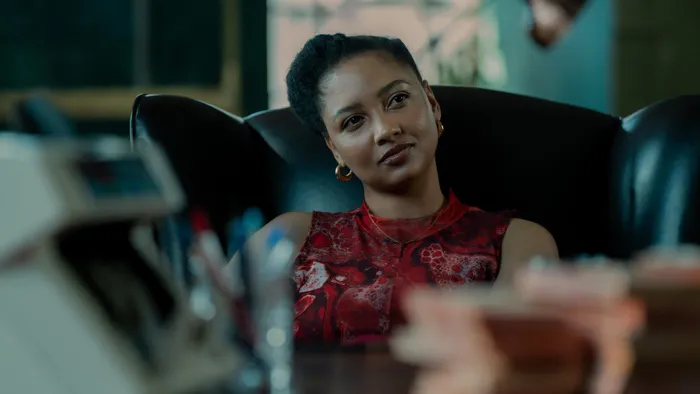
Jo‑Anne Reyneke as BK in 'Bad Influencer'.
Image: Picture: X/@NetflixSA
It is one thing to survive trauma. It is another to retell your story years later with humour and grace, transforming pain into strength.
That is Jo-Anne Reyneke’s gift and her core power.
In a candid interview with South African podcaster Penuel “The Black Pen” Mlotshwa on "The Konvo Show", Reyneke stepped into the spotlight not to shock or seek a trending status but to share an unfiltered truth that transcends her fame.
Before she became one of Mzansi’s most beloved actresses, Reyneke lived through an experience no young woman should ever confront.
“I was quite protected by my mom, empilweni yam,” she reflected softly but firmly. “Akukho okubi okuningi okwenzeke… (there's nothing bad that happened in my life) other than my kidnapping. Which is not my mom’s fault; that was a crazy man’s fault.”
With this straightforward statement, she revisits a night that irrevocably changed her life.
Before the red carpets, before she blossomed into the powerhouse she is, there was a young girl in Vereeniging being stalked by a man she barely knew.
“He stalked me so much that my friends would notice,” she recounted, sharing how the assailant drove a distinctive car that marked their fearful reality.
What is often a nightmare in every woman’s life became Reyneke’s reality one fateful evening when she was out with friends. “One night, while out with her friends, he rocks up with a gun and tells me to get in his car,” she said with an intense calm that could not mask the gravity of her experience.
Just like that. No warning. No escape.
What she describes next is something most people only ever see in movies, which is exactly why she plans to make one.
For nineteen hours, she was beaten, insulted, humiliated, and forced to play along with a delusion she had no part in creating.
“He kept saying ngimenza islima ngoba ngiyisfebe. ( I am making him a fool because I’m a slut) And every time I asked Uwubani? (Who are you?) That question would set him off. So I started calling him ‘baby’. ‘I’m sorry, baby.’ Just to survive.”
Eventually, her family found her, yet justice was meagre; her kidnapper received only 12 months for assault, not kidnapping. “I couldn’t prove kidnapping,” she explained, underscoring the tragic inadequacies of the legal system. “But for assault.”
She was not saved by luck or by weakness, but by her determination to survive and reclaim her story.
Her kidnapper truly believed she was his girlfriend. Years after the incident, he asked an acquaintance of hers, “How do you kidnap your own girlfriend?”
“Is it kidnapping if she’s mine?”
If it sounds delusional, that’s because it is. According to research published in the Journal of Threat Assessment and Management (2019), cases like these often fall under erotomanic stalking, where the perpetrator believes in a relationship that never existed.
But the South African actress refuses to let his delusion become her identity.
“It’s going to be my second movie, that thing,” she says. “He kidnapped the wrong girl.”
And you feel it, she means it.
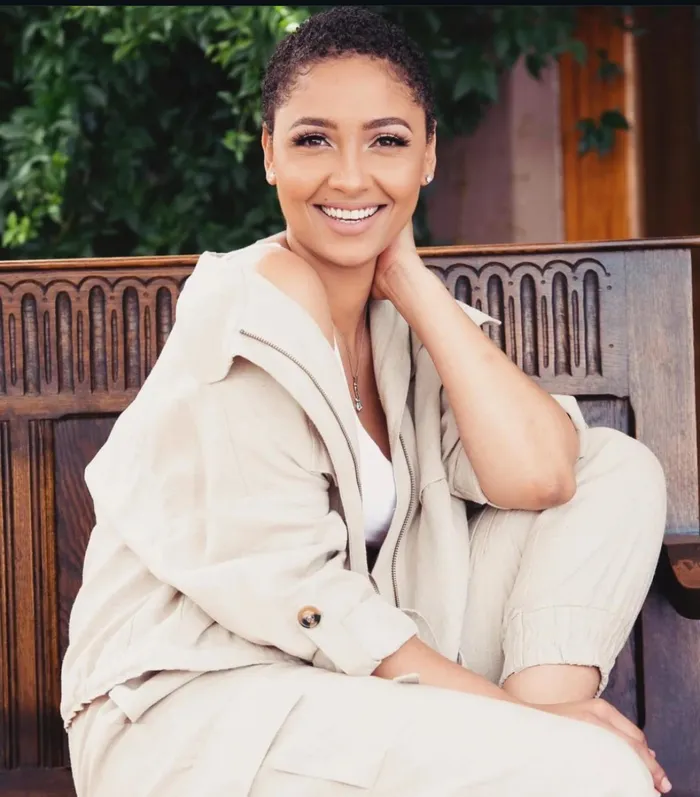
Jo-Anne Reyneke shares her harrowing kidnapping experience with grace on The Konvo Show
Image: Instagram
During the conversation, Mlotshwa asks an important question: Does sharing your trauma on social media help others? Many women feel empowered by posting their stories, especially in a country where GBV remains a crisis.
Reyneke responded: “I think that’s healing. If someone feels the need to share her story, by all means. I’m just not that way. I’d rather make a movie and make money out of it. I don’t want to be associated with victimhood stuff.”
Something is refreshing about a woman who has survived hell, risen from it, and still refuses to let the world attach “victim” to her name.
She chooses to be a powerhouse: a creator, storyteller, businesswoman, actress, mother and boss.
Reyneke’s life has never been ordinary. Raised by a single mother in Vereeniging, she never met her father. She became a mother herself at 25, a rising star in her 20s, and a multi-award-winning actress by her early 30s.
From Muvhango to Netflix hits that had South Africans glued to their screens, she has built a career defined by range, depth, vulnerability, and courage.
And yet, it is this moment in the story that reminds you why she connects so deeply with her audience. She is real. She is layered. She is relatable. She has walked through darkness and come out with humour, calm, and a voice that never shakes.
South Africa has one of the highest rates of gender-based violence in the world. Studies by the South African Medical Research Council (2022) show that women who report being stalked are significantly more likely to experience physical harm.
But above all, it is a portrait of strength. Trauma did not shape her career; fear did not steal her voice. Her past never stood a chance against who she decided to become.