

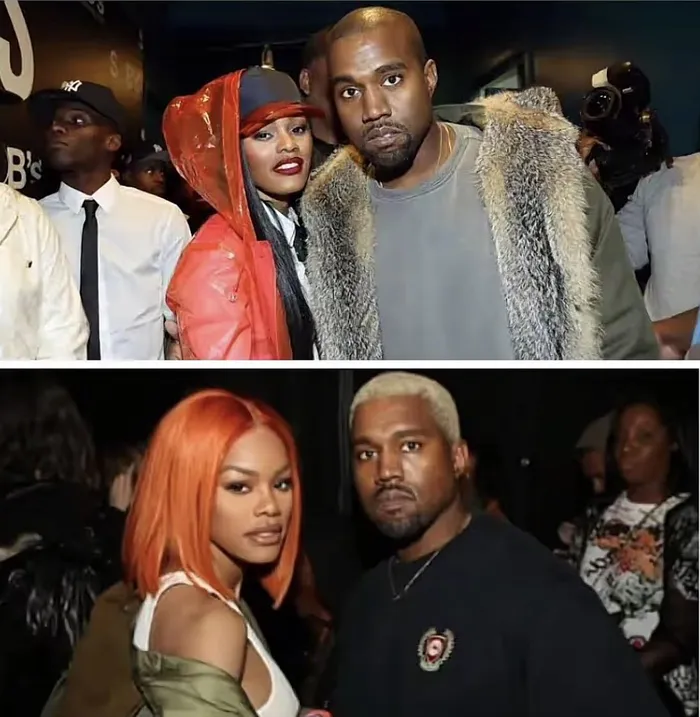
Psychologists frequently underscore the importance of healthy accountability as a balance between establishing boundaries and maintaining connections.
Image: social media
Today, with cancel culture so common, it can be hard to stay friends with people who have lost public support. For actress and singer Teyana Taylor, who recently won a Golden Globe for her role in Paul Thomas Anderson’s "One Battle After Another", this challenge is very real.
Her enduring connection with Ye (formerly known as Kanye West), one of Hollywood’s most polarising figures, offers a poignant lens into what it means to hold space for love, accountability and acceptance in relationships.
Speaking candidly in a recent "Vanity Fair" interview with Lindsey Underwood, Taylor addressed the complicated dynamics of her friendship with Ye, a man whose career has been riddled with controversy, particularly following his antisemitic comments, erratic public behaviour and divisive political stunts.
Despite the fallout, Taylor made it clear that her loyalty to their personal bond transcends public opinion, even as she firmly distances herself from his worldview.
“I don’t have to agree with everything he does or says, but I’m not going to abandon him and be like, ‘Yeah, eff that motherf***er,’” Taylor shared. “My brothers do shit that I don’t agree with … I don’t get into none of that.”
This statement struck a powerful chord, not just because of the high-profile nature of their relationship but because it mirrors the universal challenge of walking the tightrope between accountability and compassion when someone you care about crosses a moral line.
A history of collaboration and friendship
Taylor’s connection to Ye is deeply rooted in their creative partnership. She first gained mainstream recognition after starring in his 2016 “Fade” music video, her electrifying dance moves cementing her as a cultural force.
Beyond that, she contributed to Ye’s critically acclaimed 2010 album "My Beautiful Dark Twisted Fantasy" and worked with him again on her 2018 album "K.T.S.E.", which he produced.
But as Ye’s public persona began to unravel, culminating in incendiary remarks like his 2022 declaration to go “death con 3 on Jewish people” and his open admiration for Adolf Hitler, many of his longtime collaborators distanced themselves.
Major corporations, including Adidas, Balenciaga, and Universal Music Group, severed ties. Yet Taylor’s approach offers a nuanced alternative to outright rejection.
The cost of loyalty
Ye’s actions have made him a lightning rod for criticism. From promoting antisemitic conspiracy theories to wearing a "White Lives Matter" shirt at Paris Fashion Week, his behaviour has alienated fans, former colleagues and even close friends.
For many, his rhetoric and associations with far-right figures, such as Nick Fuentes, have crossed an unforgivable line.
Taylor, however, frames her loyalty differently. While she makes it clear she doesn’t condone his actions, she also doesn’t believe in abandoning people entirely because of their mistakes.
This perspective resonates with anyone who’s ever grappled with the question: How do you love someone who has hurt others?
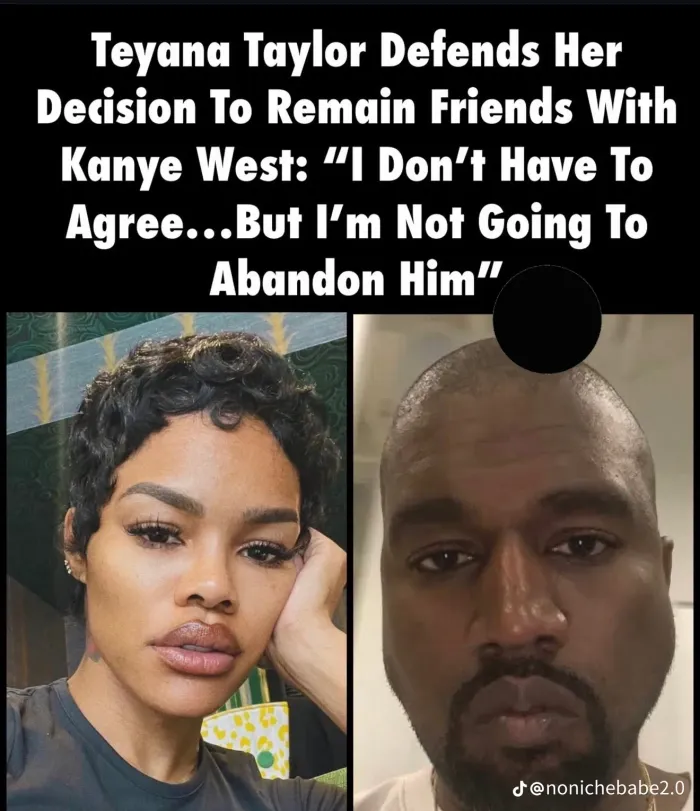
In navigating her friendship with Ye without losing sight of her values, Teyana Taylor inspires a broader conversation
Image: social media
Her stance is not without complexity. Forgiveness and understanding do not equate to endorsement.
Taylor’s approach reflects that distinction. She does not endorse Ye’s words. She does not engage in his controversies. But she also refuses to reduce a complex human being to their worst actions, a stance that feels deeply personal.
In a culture driven by algorithms and outrage, her words challenge us to sit with discomfort. What do we owe the people we once loved? Where does compassion end and self-protection begin?
These aren’t celebrity questions; they’re deeply human ones. Psychologists often describe healthy accountability as a balance between boundaries and belonging. Total rejection can entrench harmful beliefs, while unchecked loyalty enables them.
Taylor’s approach, staying emotionally present while refusing to cosign behaviour, sits in that uneasy middle ground. It’s not neat.
By holding space without losing herself, Teyana Taylor reminds us: you can reject someone's behaviour without denying shared humanity. Accountability in relationships is often quiet.
Sometimes it looks like stepping back, choosing yourself, and letting silence speak where arguments no longer can. And in a time that rewards extremes, that kind of consideration feels quietly revolutionary.