

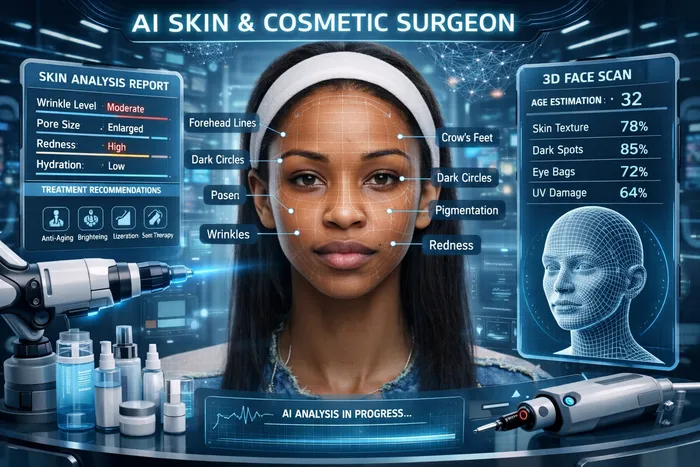
As artificial intelligence gains traction in cosmetic medicine, a leading South African plastic surgeon is warning of the real risks behind the hype.
Image: Supplied
With the tap of a button, an artificial intelligence (AI) tool on your smartphone can analyse facial features, simulate potential surgical results, and suggest cosmetic procedures within minutes.
However, while many are selling AI as the future of cosmetic medicine, one of South Africa's most senior plastic surgeons cautions that the technology is being widely misunderstood, both for private use and for its capabilities in the theatre, with real risks for patients who rely on it uncritically.
Professor Chrysis Sofianos, triple board-certified plastic surgeon and Academic Head of the Division of Plastic and Restorative Surgery at the University of the Witwatersrand, says many patients arrive at consultations with AI-generated images and expectations that cannot realistically be met.
Put simply, he says, "It’s an image – a surface-level visual estimate based on patterns, not rigorous scientific modelling. In some cases, it’s simply a marketing tool used to sell a product or service. While the entertainment value of such apps is clear, it should not translate to realistic expectations of what can be achieved, even with technology used in the theatre rapidly advancing."
In recent months, Professor Sofianos says he has seen patients arrive with AI-generated images showing dramatically altered noses, jawlines or breasts. In several cases, the images depicted anatomical changes that would be surgically impossible and unsafe.
A fast-growing industry meeting fast-moving technology
South Africa’s AI market is projected to grow tenfold by 2033, while the country’s aesthetic surgery sector is expected to double over the same period.
Professor Sofianos notes that this expansion will drive significant innovation across healthcare, with cosmetic surgery likely to benefit as new tools and techniques move from development into everyday clinical practice.
AI is already changing how cosmetic procedures are planned and explained to patients. With the right tools and human expertise, doctors can review more information in less time and show realistic visual examples of what a procedure may involve, helping patients make informed decisions. These tools, however, are guided by clinical judgement and differ significantly from consumer visualisation apps.
Risk arises when that clinical oversight is removed. AI is increasingly used by the public and, in some cases, by those promoting aesthetic procedures and quick cosmetic fixes in ways that blur the line between illustration and medical prediction.
"AI systems are only as good as the data they’re trained on. In its current state, the technology cannot make the nuanced clinical judgements that doctors develop over years of practice. Its limitations are especially evident in Africa, where AI lacks the depth and diversity of data needed to interpret variations in skin tone and texture, anatomy, and healing patterns across African populations. This is particularly true for the general-purpose AI tools commonly found on social media.
“Addressing these gaps – and understanding what AI can and cannot do – will be a critical step in adopting artificial intelligence responsibly in cosmetic surgery and ensuring patients benefit from the technology where it’s used appropriately.”
The misconceptions shaping unrealistic patient expectations
Professor Sofianos says a small number of persistent myths continue to shape how patients interpret artificial intelligence in cosmetic medicine, often creating expectations that do not align with clinical reality. These misconceptions usually begin with tools that appear simple and convincing on-screen but lead patients to misunderstand what the technology can realistically predict or guarantee.
At his clinic, three myths appear most often:
1.“The AI on my phone shows me exactly what’s possible.”
The professor explains that visual simulations are based on patterns drawn from existing images – often the ideal – rather than unique biological realities. They cannot predict how tissue will behave during surgery, how the body heals afterwards, or how unexpected findings in the operating theatre may change a surgical plan in real time.
2. “Using AI makes my surgery safer.”
Technology can support planning and help doctors analyse complex information more efficiently, but safety in the operating theatre still depends on clinical judgement, training, and the ability to respond to complications. No system can replace the experience required to recognise risk, make rapid decisions under pressure, and adapt when conditions change during a procedure.
3. “AI is as good as a medical authority.”
AI remains a support tool. It may assist with analysis and improve precision, but it does not carry professional judgement, ethical responsibility, or accountability for patient care. Medical authority still rests with the surgeon, who must assess risk, make decisions, and take responsibility for the outcome.
Ultimately, Professor Sofianos says he is not anti-technology.
“Modern cosmetic technology has reshaped how we help patients, and innovation continues to make surgery safer and recovery faster. AI holds real promise for improving precision and reducing uncertainty in the future. For now, we must recognise that it remains a limited and highly flawed tool still early in its development. If a phone app promises a guaranteed surgical result, treat it as informational, not medical advise. A proper consultation with a qualified surgeon remains that only reliable way to understand what is possible, Professor Sofianos says.”