

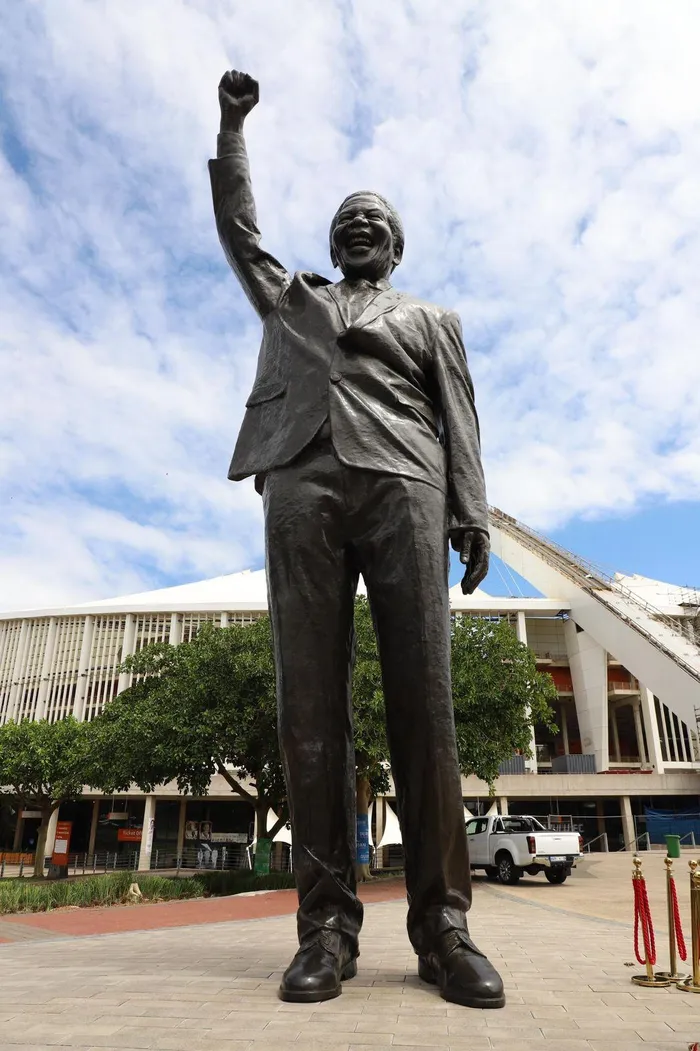
The writer says that if the law cannot rescue you from bad priorities, then your vote must make sure that those in office have your interests at heart.
Image: Thuli Dlamini
The recent article (Independent Online April 13 2026) about the Department of Co-operative Governance and Traditional Affairs’ (CoGTA) inability to probe eThekwini’s Municipality’s R22 million expenditure on the Nelson Mandela and Oliver Tambo statues should not comfort residents. It should wake them up.
To date, much of the public reaction has focused on whether KwaZulu-Natal’s (KZN) provincial government can intervene. That is understandable. When a city is battling water failures, sewage spills, decaying infrastructure and collapsing public confidence, people naturally ask whether somebody higher up can step in and stop a spending decision that feels disconnected from residents’ daily reality.
But the article points to a harder truth. If there is no proven illegality, no procurement breach and no clear non-compliance with the law, then the spending choice stands. And that means the real issue is not only oversight – it is representation.
That is the theme residents need to grasp: if the law cannot rescue you from bad priorities, then your vote must make sure that those in office have your interests at heart.
Too many voters still treat elections and budgets as if they are separate things. They are not. The roads that are not repaired, the pipes that are not fixed, the sewage that is not contained, the infrastructure that is not maintained, the projects that are funded and the ones that are neglected all flow from political choices.
And at local government level, those choices are made in council by councillors representing political parties.
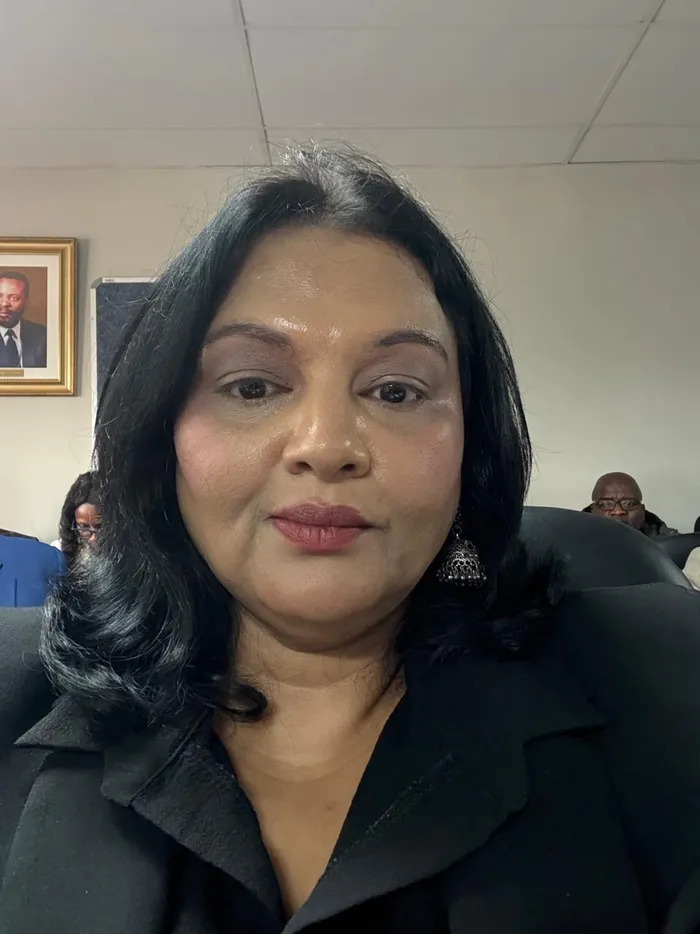
DA MPL Marlaine Nair
Image: Supplied
That is precisely why this matter is so politically important. It is not enough for residents to be angry after the fact. They must connect the dots. This spending did not fall from the sky. It did not happen by magic. It was passed because some councillors voted for it. A budget is not an abstract document. It is a moral and political map of what those in power think matters most.
No one disputes that Nelson Mandela and Oliver Tambo are giants of our history. No serious person argues that they are unworthy of honour. But that is not the real argument. The real argument is about priorities. In a city where so many residents still struggle due to a basic lack of services from local government, should millions of rands be directed to symbolism ahead of visible, urgent, resident-centred need?
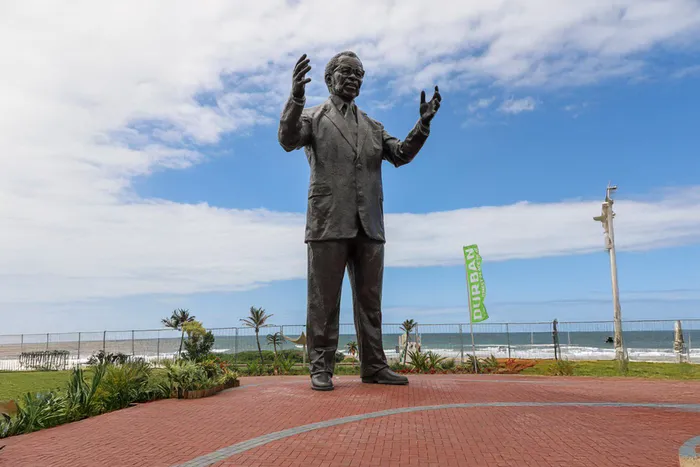
The writer says no one disputes that Nelson Mandela and Oliver Tambo are giants of our history.
Image: File
That is where political parties reveal themselves.
It is easy for parties to sound compassionate during campaigns. It is easy to speak the language of service delivery and history when asking for votes. It is easy to tell communities that they care. But when the budget is before council, words stop mattering. Votes matter. That is the moment when parties show who they really serve, what they really prioritise and whether they truly carry the interests of residents into the chamber.
And that is also why the oversight point in the article matters so much. If CoGTA’s role is limited - and if intervention depends on irregularities or unlawful conduct - then residents cannot rely on after-the-fact rescue every time a municipality makes a lawful but misguided decision. In those cases, the real accountability mechanism is political. It lies with the parties that supported the expenditure. It lies with the councillors who lifted their hands in favour of it. And it lies with voters who must decide whether those parties still deserve their trust.
That is why voters must become more politically wise. They must stop rewarding parties for slogans while ignoring what those parties do with actual power. What is the use of voting for a party if, once elected, it goes into council and does not fight for your priorities? What is the use of sending representatives to City Hall if they will not put your needs first when budget choices are made?
Residents must start judging parties less by what they say outside council and more by how they vote inside it.
That is where the Democratic Alliance’s (DA) position matters. The DA did not support this expenditure. And the reason is not disrespect for history. It is definitely not hostility towards Mandela or Tambo. It is not a failure to recognise their place in our national story. It is the opposite. It is a belief that honouring leaders of that stature cannot become an excuse for sidelining the needs of people who are alive now and depending on local government now.
The DA’s position is simple: we are elected to serve residents first. We are elected to prioritise basic services, infrastructure, accountability and dignity. We are elected to ask whether each major spending choice reflects the lived reality of the people paying rates, enduring water and electricity outages, stepping around sewage and waiting for government to do the basics properly. When we have a surplus – which will not be any time soon – then we can talk about nice-to-haves such as statues.
That is what political representation is supposed to mean.
So yes, the article may be legally correct in saying provincial oversight has limits. But politically, that is exactly why this story matters. Because once you understand that lawful council decisions may stand unless there is proven irregularity, then the burden shifts back where it belongs: onto the political parties that voted for those decisions - and onto the voters who empowered them.
That is the lesson eThekwini residents should take from this controversy. If you want budgets that reflect your priorities, elect councillors who will vote that way. If you want a city that puts residents before prestige, then vote for parties that do the same in council. And if parties repeatedly show - through their actual votes - that they do not have your interests at heart, then they must be exposed, rejected and replaced.
Because in the end, cities are not only shaped by policy. They are shaped by who we elect to vote on our behalf.
MPL Marlaine Nair is a member of the DA Caucus in the KZN Legislature and the DA KZN spokesperson on Co-operative Governance and Traditional Affairs.
The views expressed do not represent those of the Sunday Tribune or IOL.