

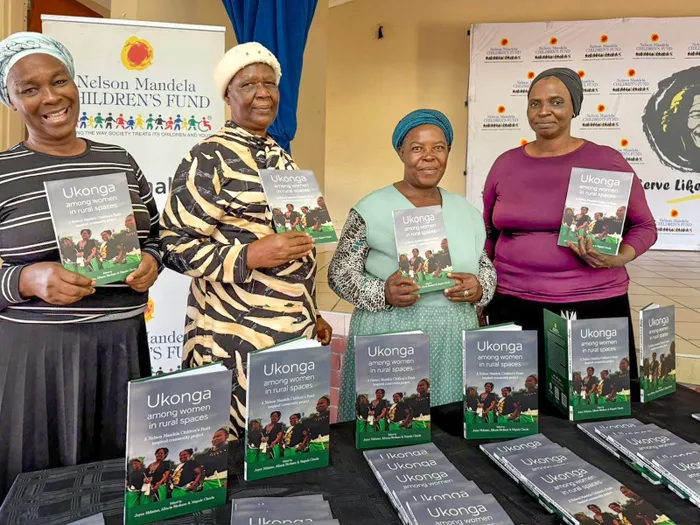
Siso Ntenga, Cynthia Shange, Winile Ntenga and Winile Dlunge are changemakers whose stories are captured in the book Ukonga among women in rural spaces, that was launched this week.
Image: Supplied
In the rural hills of uMlalazi Local Municipality, eShowe, a quiet but powerful transformation is unfolding. What began as small self-help savings groups among unemployed women has evolved into a network of community-led initiatives driving financial independence, food security, and long-term resilience.
The programme, known as Ukonga Among Women in Rural Spaces, a Nelson Mandela Children’s Fund inspired community project, is changing lives in villages like eNkanini, where women are using collective savings and shared skills to rebuild their futures. Their stories have been documented in a new book, Ukonga among women in rural spaces.
Winile Dlunge remembers when that future felt uncertain.
In 2009, she was among the first recruits to join a self-help group established by the KwaZulu Regional Christian Council (KRCC), supported at the time by the Nelson Mandela Children’s Fund. Recently widowed and raising her one-year-old daughter alone, Dlunge had no income and limited options.
She joined the Masakhane savings group without hesitation.
Starting with just 20 women contributing R2 a week, the group pooled their savings to create a small lending system. Members could take out loans to meet basic household needs. For Dlunge, it was a turning point.
Her first loan bought a few chickens, which she sold in her neighbourhood. The modest venture steadily grew, allowing her to earn enough to begin building a home—one bag of cement at a time. Eventually, she constructed a one-room house.
Over the years, her income enabled her to support her daughter through school and into tertiary education—an outcome she once thought impossible.
But the impact of the self-help groups extended beyond financial relief. Members received training in gardening, small business development, and cooperative formation, as well as education on maternal and child health.
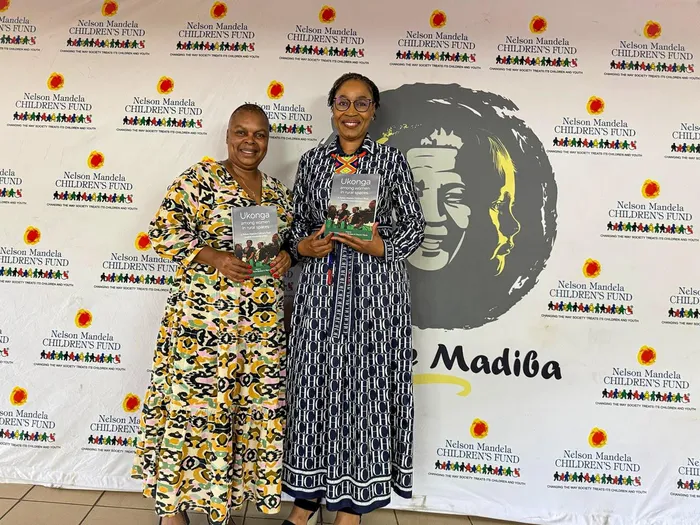
Eunice Seleke, Sustainable Livelihoods Programme Manager with Dr Linda Ncube-Nkomo, Chief Executive Officer of the Nelson Mandela Children's Fund attending the Ukonga among woman in rural spaces.
Image: Supplied
Using these skills, Dlunge established a backyard garden, growing tomatoes, sweet potatoes, lettuce, and onions—improving both her household nutrition and income.
The Masakhane group itself expanded into a block-making business after receiving technical training through the local municipality and external partners. With land allocated by Inkosi Magwaza, the group now supplies building materials to surrounding communities.
Dlunge’s leadership and commitment later earned her a role as a Community Facilitator with KRCC, further strengthening her financial stability. Even after external funding ended in 2021, she has remained self-reliant.
Across the village, similar stories of resilience are emerging.
Jean Shange, widely known as “MaBiyela,” has spent more than two decades working within her community. The 72-year-old mother previously ran a soup kitchen for children in eNkanini before being recruited by KRCC to mobilise other women.
Shange helped form savings groups of 10 to 15 women, encouraging them to contribute small weekly amounts that could be reinvested to support families and schoolchildren.
She was also among five women selected for specialised training in the North West province, where they learned to build climate-resilient concrete water tanks for rainwater harvesting in schools and churches.
Shange has since passed these skills on, mentoring women in construction and income-generating activities while continuing her own agricultural work to support her household.
Today, she is widely credited with inspiring women across generations to pursue self-sufficiency.
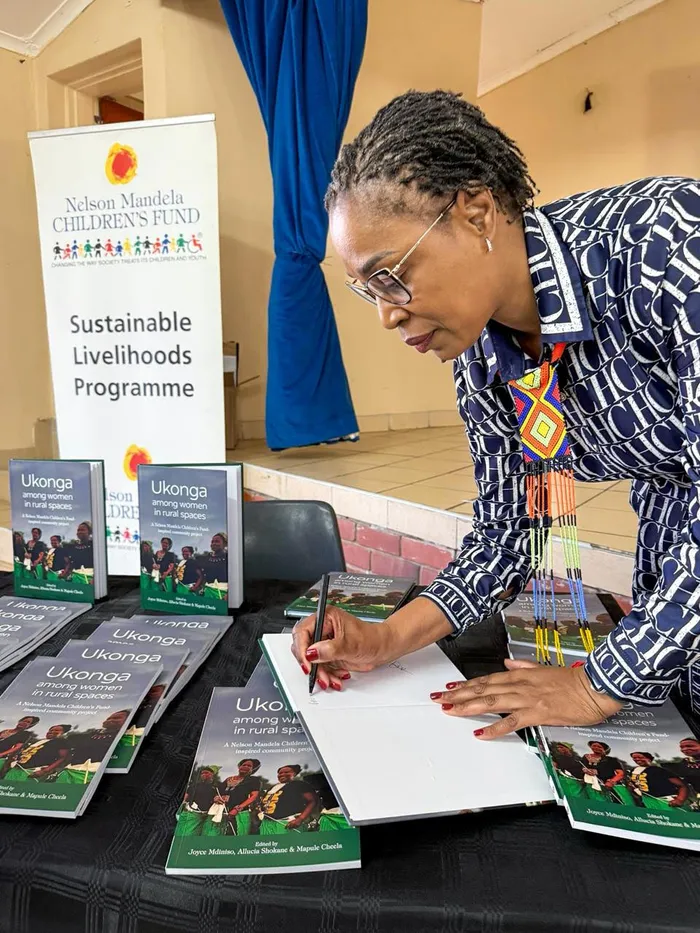
Dr Linda Ncube-Nkomo, Chief Executive Officer of Nelson Mandela Children's Fund at the Ukonga among women in rural spaces book launch.
Image: Supplied
The broader Ukonga model is designed to be community-driven, placing rural women at the centre of development efforts, explains Dr Linda Ncube-Nkomo, the Chief Executive Officer of the Nelson Mandela Children’s Fund.
By combining financial systems, skills training, and local collaboration, it addresses the root causes of poverty while strengthening social cohesion.
“This model is effective due to its focus on economic and financial empowerment, social cohesion, and community-led solutions, said Ncube-Nkomo.
“By equipping women with skills, access to resources, and platforms for collaboration, Ukonga creates an ecosystem where livelihoods can be strengthened and intergenerational poverty can be disrupted. It also restores dignity and agency, which are often eroded in traditional top-down development approaches,” she said.
With its success in eShowe, there is growing recognition that the model could be expanded to other rural areas facing similar challenges.
“With the right support from the government and private sector, this approach can be scaled to drive meaningful and lasting change in rural areas. Importantly, the model addresses the structural barriers that women in rural areas face, including limited access to economic opportunities, education, and support networks. Creating inclusive and locally relevant interventions ensures that the solutions are not only impactful but also sustainable over time,” said Ncube-Nkomo.